-
Use Cases
-
Resources
-
Pricing
The Umayyad Caliphate was the second of the four major Islamic caliphates, established after the First Fitna in 661 CE. Centered in Damascus, it transformed the caliphate into a hereditary dynasty and oversaw rapid territorial expansion, making it one of the largest empires in history, stretching from Spain to Central Asia. The dynasty fell in 750 CE to the Abbasid Revolution, though a surviving branch continued in al-Andalus (Muslim Spain) as the Emirate and later Caliphate of Córdoba until 1031. More Less
647
% complete
Arab armies began their campaigns into Byzantine North Africa in 647, launching decades of expansion that would eventually bring Egypt, Libya, Tunisia, and Algeria under Islamic control during and after the rise of the Umayyads.
Image source: Muslim conquest of the Maghreb
661
% complete
Following the assassination of Ali, Muawiyah I, governor of Syria, established himself as the first caliph of the Umayyad dynasty. He moved the capital to Damascus and founded a hereditary system of succession, marking the formal beginning of the Umayyad Caliphate.
Image source: Mu'awiya I
705 - 715
% complete
Under generals Qutayba ibn Muslim and al-Hajjaj's patronage, Arab forces pushed beyond the Oxus River into Central Asia, conquering Bukhara, Samarkand, and Khwarazm, extending Umayyad influence deep into Central Asia.
Image source: Muslim conquest of Transoxiana
711
% complete
Berber commander Tariq ibn Ziyad crossed into Iberia and defeated the Visigothic king Roderic at the Battle of Guadalete, opening the conquest of most of the Iberian Peninsula within a few years.
Image source: Muslim conquest of Spain
711
% complete
Muhammad bin Qasim led an Arab army that conquered the Indus Valley region of Sindh, bringing parts of modern Pakistan under Umayyad control and establishing the easternmost province of the caliphate.
Image source: Umayyad conquest of Sindh
756
% complete
Abd al-Rahman I defeated the Abbasid-appointed governor of al-Andalus and proclaimed himself emir of Córdoba, preserving Umayyad rule in Iberia for centuries after the dynasty's fall in the east.
Image source: Emirate of Córdoba
656 - 661
% complete
The First Fitna, a civil war within the early Islamic community, pitted Ali ibn Abi Talib against Muawiyah over the succession to Uthman. Its conclusion in 661 with Ali's death and Muawiyah's accession set the stage for Umayyad rule.
Image source: First Fitna
674 - 678
% complete
Umayyad fleets launched annual assaults on Constantinople between 674 and 678. The siege ultimately failed, partly due to Byzantine use of Greek fire, marking one of the earliest major setbacks for Arab expansion into Anatolia.
Image source: Siege of Constantinople (674–678)
Oct 10, 680
% complete
Husayn ibn Ali, grandson of the Prophet Muhammad, was killed along with his small band of followers by Umayyad forces at Karbala in Iraq. The event became a defining tragedy for Shi'a Islam and fueled lasting opposition to Umayyad legitimacy.
Image source: Battle of Karbala
682 - 692
% complete
The Second Fitna was a prolonged period of internal conflict following Yazid's death, featuring rival claimants including Abd Allah ibn al-Zubayr in Mecca and later anti-Umayyad movements in Iraq. It severely destabilized the caliphate.
Image source: Second Fitna
717 - 718
% complete
A massive Umayyad land and naval assault on Constantinople ended in catastrophic failure due to Byzantine defenses, Greek fire, disease, and Bulgar attacks, halting further Arab advances toward Europe from Anatolia.
Image source: Siege of Constantinople (717–718)
721
% complete
Aquitanian Duke Odo the Great routed an invading Umayyad army before the walls of Toulouse, inflicting heavy casualties and temporarily blunting the northward advance of Muslim forces from Spain into Francia.
Image source: Battle of Toulouse (721)
Oct 10, 732
% complete
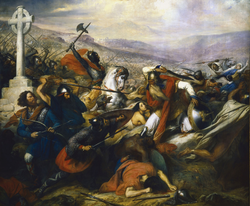
Frankish leader Charles Martel decisively defeated an Umayyad raiding force led by Abdul Rahman Al Ghafiqi near Tours, checking further Arab expansion into Western Europe and cementing Frankish power.
Image source: Battle of Tours
740 - 743
% complete
Inspired by Kharijite teachings and resentment over unequal treatment, Berber tribes rose against Umayyad rule in North Africa. The revolt devastated the region and permanently severed much of the Maghreb from effective caliphal control.
744 - 750
% complete
The death of Caliph Walid II triggered a destructive civil war among competing Umayyad princes. Marwan II ultimately prevailed but exhausted the dynasty's strength just as the Abbasid movement gathered force in the east.
Image source: Third Fitna
747 - 750
% complete
The Abbasid movement, drawing support from disaffected non-Arab converts and Shi'a sympathizers, launched open revolt in Khorasan under Abu Muslim. Its armies swept westward, decisively defeating Umayyad forces.
Image source: Abbasid Revolution
Jan 25, 750
% complete
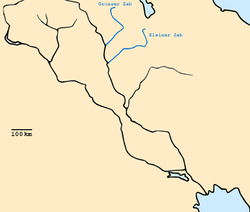
Abbasid forces under Abu Abbas al-Saffah annihilated the last major Umayyad army on the banks of the Great Zab River, sealing the fate of the dynasty and opening the road to Damascus.
Image source: Battle of the Zab
680
% complete
Yazid I became caliph after his father Muawiyah's death, establishing hereditary succession in practice. His reign was immediately challenged by opposition from Husayn ibn Ali and Ibn al-Zubayr, leading to major crises.
Image source: Yazid I
685 - 705
% complete
Abd al-Malik ibn Marwan acceded to the throne amid the Second Fitna and went on to reunify the caliphate, defeat rival claimants, and implement sweeping administrative reforms that centralized power in Damascus.
Image source: Abd al-Malik ibn Marwan
694 - 714
% complete
Al-Hajjaj ibn Yusuf governed Iraq and the east with notorious severity, crushing rebellions and restoring order for the Umayyad court. He also sponsored the standardization of the Quranic text and supported military expansion eastward.
Image source: Al-Hajjaj ibn Yusuf
700
% complete
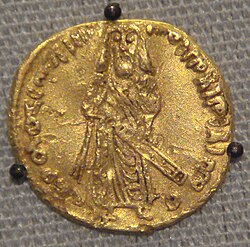
Abd al-Malik made Arabic the official language of government administration across the caliphate, replacing Greek and Persian in official records, and introduced an Islamic coinage bearing Arabic inscriptions, strengthening cultural cohesion.
744
% complete
Marwan II shifted the administrative center from Damascus to Harran in northern Mesopotamia, reflecting his military base of support but alienating Syrian loyalists who had long anchored Umayyad power.
Image source: Marwan II
688 - 691
% complete
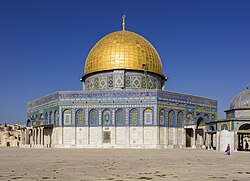
Caliph Abd al-Malik commissioned the Dome of the Rock in Jerusalem, completed around 691. One of the earliest surviving works of Islamic architecture, it symbolized the growing confidence and artistic achievement of the Umayyad state.
Image source: Dome of the Rock
705 - 715
% complete
Al-Walid I presided over a golden age of Umayyad architecture, commissioning the Great Mosque of Damascus, expansions of the Prophet's Mosque in Medina, and the Al-Aqsa Mosque, showcasing imperial splendor.
Image source: Al-Walid I
706 - 715
% complete
Built on the site of a former church in Damascus, the Umayyad Mosque became a masterpiece of early Islamic art and architecture, adorned with mosaics that depicted paradisiacal landscapes across its vast courtyard.
Image source: Umayyad Mosque
750
% complete
Surviving the Abbasid massacre of the Umayyad family, Abd al-Rahman I fled across North Africa to Iberia, where he would found a lasting Umayyad successor state in Cordoba.
Image source: Abd al-Rahman I
Or browse the full history timeline directory, with more than 2,000 topics.
This Umayyad Caliphate timeline was generated with the help of AI, using information found on the internet.
We work hard to keep these timelines accurate, but mistakes do get through. If you spot one, email us at [email protected] and we'll fix it for future visitors.
Generate yours with AI or build it from scratch, for free.
Export your timeline, add your own events, edit or remove AI-generated events, and much more
No credit card required.
Cancel anytime.
Cancel anytime.
You can create an unlimited number of timelines with up to 10 events on each one, customize how they look, export them to PDF, PNG, PowerPoint, CSV, and Excel, and share them with a link. Paid plans raise the event limit and add features like spreadsheet imports and collaborators.
Yes. You can cancel your subscription from your account page at any time, and you will not be charged again. Your subscription stays active for the rest of the period you already paid for.
Yes. We will email you a reminder before the annual renewal, and we will also email you a receipt.
Yes. You can email us within 15 days of any payment, and we will issue you a full refund.
Check out our pricing docs or send us an email anytime: [email protected].