-
Use Cases
-
Resources
-
Pricing
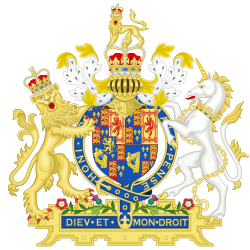
William of Orange (William III of England) was a Dutch prince who became King of England, Ireland, and Scotland following the Glorious Revolution of 1688. His reign marked a turning point in British constitutional history, establishing parliamentary supremacy and shaping European politics through his opposition to French expansion under Louis XIV. More Less
1650
% complete
Following the death of William II, the Dutch province of Holland and other provinces declined to appoint a new stadtholder. The States of Holland, led by Grand Pensionary Johan de Witt, governed the Dutch Republic without a stadtholder for over two decades.
Image source: First Stadtholderless Period
1670
% complete
Despite earlier exclusion policies, William was appointed to the Dutch Council of State at age 20, marking the beginning of his political career and growing influence within the Republic.
Image source: William III of England
1672
% complete
France, England, and their allies invaded the Dutch Republic, flooding the land by opening dikes to stop the advance. This 'Disaster Year' triggered a popular backlash against the de Witt regime and created an opportunity for William's rise to power.
Image source: Rampjaar
Jul 1672
% complete
In the wake of national crisis, William was appointed stadtholder of Holland and Zeeland and captain-general of the Dutch army, restoring the House of Orange to leadership of the Republic.
Image source: Stadtholder
Aug 20, 1672
% complete
Grand Pensionary Johan de Witt and his brother Cornelis were brutally murdered by a mob in The Hague. While William did not order the killings, he failed to punish the perpetrators and benefited politically from their deaths, consolidating his power.
Image source: Johan de Witt
Aug 11, 1674
% complete
William led the Dutch army against French forces under Condé in one of the bloodiest battles of the Franco-Dutch War. Though tactically inconclusive, it demonstrated William's personal courage and commitment to resisting French expansion.
Image source: Battle of Seneffe
1678
% complete
The peace treaty between France and the Dutch Republic ended the war, though William personally opposed the terms, which ceded territory to France. He remained committed to forming coalitions against Louis XIV's expansionism.
Image source: Treaties of Nijmegen
1686
% complete
William worked diplomatically to build a European coalition against Louis XIV, contributing to the formation of the League of Augsburg, which opposed French expansion and set the stage for the Nine Years' War.
Image source: Grand Alliance (League of Augsburg)
Nov 4, 1650
% complete
William Henry of Orange was born in The Hague, Netherlands, just eight days after the death of his father, William II, Prince of Orange. His mother was Mary Henrietta Stuart, daughter of King Charles I of England, linking him to both Dutch and English royalty from birth.
Nov 6, 1650
% complete
William's father died of smallpox just days before William's birth, leaving the infant prince to inherit the title of Prince of Orange and the hereditary stadtholderates, though these offices would be suppressed during his childhood.
Image source: William II, Prince of Orange
Aug 5, 1667
% complete
The States of Holland passed a perpetual edict declaring that no stadtholder would ever again be appointed in Holland, formally excluding young William from holding high office in the Republic.
Nov 4, 1677
% complete
William married his cousin Mary, eldest daughter of James, Duke of York (the future James II), strengthening his dynastic ties to the English throne. Their marriage proved affectionate though childless.
Image source: Mary II of England
Dec 28, 1694
% complete
Queen Mary died of smallpox at Kensington Palace at age 32. William, devastated by grief, ruled alone for the remainder of his reign, and his popularity suffered in the aftermath of her death.
Mar 8, 1702
% complete
William died at Kensington Palace at age 51 after complications from a fall from his horse, Sorrel. He was succeeded in Great Britain by his sister-in-law Queen Anne, while in the Netherlands the stadtholderate lapsed again in most provinces.
1688 - 1697
% complete
William committed England to the continental war against Louis XIV's France, fighting campaigns in Flanders alongside Dutch and allied forces for nearly a decade, establishing Britain's pattern of involvement in European wars.
Image source: Nine Years' War
Feb 13, 1689
% complete
The Bill of Rights limited royal power, prohibited Catholics from succeeding to the throne, and established constitutional principles including free elections, regular parliaments, and freedom of speech in Parliament, fundamentally reshaping the English constitution.
Image source: Bill of Rights 1689
Apr 1689
% complete
The Scottish Convention declared James had forfeited the throne and accepted William and Mary. Supporters of the exiled James, known as Jacobites, rose in rebellion in the Scottish Highlands under Viscount Dundee.
Image source: Claim of Right 1689
Apr 11, 1689
% complete
William III and Mary II were jointly crowned at Westminster Abbey, accepting the crown along with the Bill of Rights conditions. William held executive power while Mary deferred to her husband.
Apr 18, 1689 - Jul 28, 1689
% complete
The Protestant defenders of Derry in Ireland resisted the besieging Jacobite army loyal to James II for 105 days, enduring starvation before relief arrived by ship, becoming a defining episode of the Williamite War.
Image source: Siege of Derry
Jul 27, 1689
% complete
Jacobite Highlanders under Bonnie Dundee defeated a government army in Scotland, but Dundee was killed in the victory, depriving the rising of its charismatic leader and dooming the campaign.
Image source: Battle of Killiecrankie
Feb 13, 1692
% complete
Government troops, hosted as guests by members of Clan MacDonald in Glen Coe, Scotland, turned on their hosts and killed 38 men, with more dying fleeing into the snow. The massacre became notorious and damaged the reputation of William's administration.
Image source: Massacre of Glencoe
Jul 27, 1694
% complete
Established to finance the war against France through loans, the Bank of England revolutionized public credit and became central to Britain's emerging financial system, enabling sustained warfare and economic growth.
Image source: Bank of England
Sep 20, 1697
% complete
The peace treaty ended the war with France, forcing Louis XIV to recognize William III as king of England and return most conquered territories, though unresolved issues about the Spanish succession loomed.
Image source: Peace of Ryswick
1701
% complete
Parliament passed the Act of Settlement ensuring the Protestant line of succession, designating Princess Sophia of Hanover as heir after Anne, securing Protestant rule and shaping British monarchy permanently.
Image source: Act of Settlement 1701
Jun 10, 1688
% complete
The birth of a son to King James II of England created the prospect of a Catholic dynasty, alarming Protestant elites who had previously tolerated James with the expectation of a Protestant succession under his daughters Mary and Anne.
Image source: James Francis Edward Stuart
Jun 30, 1688
% complete
Seven prominent Englishmen, including Lord Danby, Compton, Russell, Sidney, Shrewsbury, Lumley, and Herbert, sent William a letter inviting him to invade England and defend Protestantism and constitutional liberties.
Image source: Invitation to William
Sep 1688
% complete
William issued a declaration explaining his reasons for intervention, citing the need to preserve English liberties and the Protestant religion, framing his invasion as a defensive act on behalf of English freedom.
Oct 1688 - Nov 1688
% complete
After weeks of adverse winds, favorable easterly winds allowed William's fleet of around 463 ships carrying 21,000 troops to sail across the North Sea, evading the larger English navy in what became known as the 'Protestant Wind.'
Image source: Glorious Revolution
Nov 5, 1688
% complete
William landed with his army at Brixham in Torbay, Devon, beginning his march toward London. Support for James collapsed as nobles and military officers defected to William's cause.
Nov 24, 1688
% complete
James II's key officers, including John Churchill (later Duke of Marlborough), defected to William's side, fatally undermining the king's ability to mount effective resistance.
Image source: John Churchill, 1st Duke of Marlborough
Dec 23, 1688
% complete
After initially attempting to flee and being captured at Faversham, James successfully escaped to France where Louis XIV provided him refuge and support for future attempts to regain his throne.
Image source: James II of England
Jan 22, 1689
% complete
An assembly summoned by William met to resolve the constitutional crisis, debating whether the throne was vacant and how to legitimize a new monarchy following James's flight.
Image source: Convention Parliament (1689)
Or browse the full history timeline directory, with more than 2,000 topics.
This William of Orange timeline was generated with the help of AI, using information found on the internet.
We work hard to keep these timelines accurate, but mistakes do get through. If you spot one, email us at [email protected] and we'll fix it for future visitors.
Generate yours with AI or build it from scratch, for free.
Export your timeline, add your own events, edit or remove AI-generated events, and much more
No credit card required.
Cancel anytime.
Cancel anytime.
You can create an unlimited number of timelines with up to 10 events on each one, customize how they look, export them to PDF, PNG, PowerPoint, CSV, and Excel, and share them with a link. Paid plans raise the event limit and add features like spreadsheet imports and collaborators.
Yes. You can cancel your subscription from your account page at any time, and you will not be charged again. Your subscription stays active for the rest of the period you already paid for.
Yes. We will email you a reminder before the annual renewal, and we will also email you a receipt.
Yes. You can email us within 15 days of any payment, and we will issue you a full refund.
Check out our pricing docs or send us an email anytime: [email protected].