-
Use Cases
-
Resources
-
Pricing
The 1940s was a transformative decade dominated by World War II (1939–1945), which involved most of the world's nations and resulted in an estimated 70–85 million fatalities. The war's end brought revelations of the Holocaust, the use of atomic weapons on Hiroshima and Nagasaki, and the founding of the United Nations. The decade also saw the beginning of the Cold War between the United States and the Soviet Union, the partition of Germany, the independence of India and Pakistan, and the establishment of Israel. Postwar recovery efforts like the Marshall Plan and the creation of NATO set the stage for the geopolitical order of the second half of the twentieth century. More Less
Jan 1, 1937 - Dec 31, 1942
% complete
The Atanasoff-Berry computer, built by John Vincent Atanasoff and Clifford Berry at Iowa State University during 1937–1942, is now considered one of the first electronic digital computing devices.
Image source: Atanasoff–Berry computer
Jan 1, 1941 - Dec 31, 1946
% complete
Construction in early 1941 of the Heath Robinson Bombe and the Colossus computer provided British codebreakers at Bletchley Park with machines used to read Enigma encrypted German messages during World War II; it remained operational until 1946, when it was destroyed under orders from Winston Churchill.
Image source: Colossus computer
Apr 28, 1947 - Aug 7, 1947
% complete
In 1947, Thor Heyerdahl's raft Kon-Tiki crossed the Pacific Ocean from Peru to Tahiti, proving the practical possibility that people from South America could have settled Polynesia in pre-Columbian times.
Image source: Kon-Tiki expedition
Oct 14, 1947
% complete
The sound barrier was broken in October 1947, when Chuck Yeager piloted the Bell X-1 faster than the speed of sound, achieving a milestone in aviation history.
Image source: Sound barrier
Dec 16, 1947
% complete
The transistor was invented in December 1947 at Bell Labs by John Bardeen, Walter Brattain, and William Shockley, revolutionizing electronics and laying the foundation for modern computing.
Image source: Transistor

Jun 14, 1949
% complete
On June 14, 1949, Albert II, a rhesus macaque monkey, became the first mammal in space during a U.S. V-2 rocket flight, reaching an altitude of about 83 miles.
Image source: Albert II (monkey)
Sep 1, 1939 - Jun 25, 1941
% complete
From 1939 to 1941, Nazi Germany invaded Poland, Denmark, Norway, the Benelux countries, and the French Third Republic, spreading war across Western Europe with devastating blitzkrieg campaigns.
Image source: Invasion of Poland
Sep 17, 1939 - Aug 27, 1941
% complete
From 1939 to 1941, the Soviet Union invaded Poland and Finland and occupied Latvia, Estonia, Lithuania, and the Romanian region of Bessarabia, expanding its territory under the Molotov-Ribbentrop Pact.
Image source: Soviet invasion of Poland
Jul 10, 1940 - Oct 31, 1940
% complete
Germany faces the United Kingdom in the Battle of Britain in 1940, a prolonged aerial campaign in which the Royal Air Force defended the skies over England against the German Luftwaffe, thwarting Hitler's plans for invasion.
Image source: Battle of Britain
Jun 22, 1941
% complete
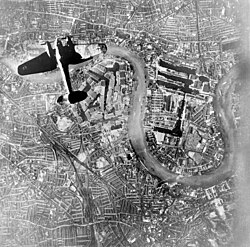
On June 22, 1941, Germany launched Operation Barbarossa, a massive invasion of the Soviet Union that opened the Eastern Front, one of the largest and deadliest military campaigns in history.
Image source: Operation Barbarossa
Jun 25, 1941 - Sep 19, 1944
% complete
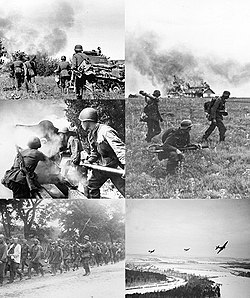
The Continuation War was fought by Finland and Nazi Germany against the Soviet Union from June 25, 1941 to September 19, 1944, as Finland sought to regain territory lost during the Winter War.
Image source: Continuation War
Dec 7, 1941
% complete
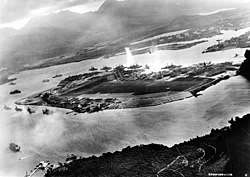
The United States entered World War II after the Japanese attack on Pearl Harbor on December 7, 1941, a surprise strike on the US Pacific Fleet in Hawaii that galvanized American involvement in both theaters of the war.
Image source: Attack on Pearl Harbor
Jun 4, 1942 - Feb 2, 1943
% complete
Germany, Italy, and Japan suffered decisive defeats at Stalingrad, El Alamein, and Midway in 1942 and 1943, marking major turning points that shifted momentum in favor of the Allies.
Image source: Battle of Stalingrad
Apr 19, 1943 - May 16, 1943
% complete
The Warsaw Ghetto Uprising of 1943 was the largest Jewish uprising in Nazi-occupied Poland, as Jewish residents of the Warsaw Ghetto resisted deportation to extermination camps before being brutally suppressed.
Image source: Warsaw Ghetto Uprising
Jun 6, 1944
% complete
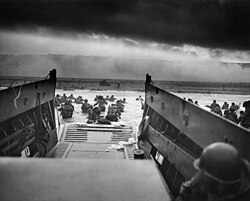
The forces of the Western Allies landed on the beaches of Normandy in Northern France on June 6, 1944, launching Operation Overlord and opening the Western Front that would lead to the liberation of France.
Image source: Normandy landings
Aug 1, 1944 - Oct 2, 1944
% complete
The Warsaw Uprising against the Nazis in 1944 was the single largest military effort taken by any European resistance movement during World War II, as the Polish Home Army fought to liberate Warsaw from German occupation.
Image source: Warsaw Uprising
Sep 18, 1944
% complete
The United States Army Air Forces sent support for Poles on September 18, 1944, when 110 B-17s of the Eighth Air Force airdropped supplies to Polish soldiers fighting in the Warsaw Uprising.
Feb 4, 1945 - Feb 11, 1945
% complete
The Yalta Conference was a wartime meeting from February 4–11, 1945 among President Franklin D. Roosevelt, Prime Minister Winston Churchill, and Joseph Stalin to plan the postwar order and the defeat of Germany.
Image source: Yalta Conference
May 7, 1945 - May 8, 1945
% complete
The German Instrument of Surrender was signed on May 7–8, 1945, ending World War II in Europe and marking Victory in Europe Day as Nazi Germany capitulated unconditionally to the Allied powers.
Image source: German Instrument of Surrender
Aug 6, 1945 - Aug 9, 1945
% complete
The atomic bombings of Hiroshima on August 6 and Nagasaki on August 9, 1945 devastated the two Japanese cities and led to Japan's surrender on August 15, ending World War II.
Image source: Atomic bombings of Hiroshima and Nagasaki
Sep 2, 1945
% complete
World War II officially ended on September 2, 1945, with Japan's formal surrender aboard the USS Missouri in Tokyo Bay, concluding six years of global conflict.
Image source: End of World War II in Europe
Jan 1, 1940 - Dec 31, 1944
% complete
The 1940 and 1944 Olympic Games were cancelled because of World War II, leaving a twelve-year gap in the modern Olympics between Berlin 1936 and London 1948.
Image source: List of Olympic Games host cities
Oct 23, 1945
% complete
In 1945, Branch Rickey signed Jackie Robinson to a players contract with the Brooklyn Dodgers, opening the door to the integration of Major League Baseball and ending professional discrimination in the sport since the 19th century.
Image source: Jackie Robinson
Nov 1, 1947
% complete
In 1947, Wataru Misaka of the New York Knicks became the first person of color to play in modern professional basketball, just months after Jackie Robinson broke the color barrier in Major League Baseball.
Image source: Wat Misaka
Jul 29, 1948 - Aug 14, 1948
% complete
The Summer Olympics resumed in 1948 in London while the Winter games were held that year in St. Moritz, symbolizing recovery from World War II.
Image source: 1948 Summer Olympics
Feb 7, 1940 - Aug 13, 1942
% complete
During the early 1940s, the Walt Disney Studios released the animated feature films Pinocchio (1940), Fantasia (1940), Dumbo (1941), and Bambi (1942), classics of American animation.
Image source: Walt Disney Animation Studios
Sep 1, 1941
% complete
Citizen Kane directed by Orson Welles premiered in 1941 and became one of Hollywood's most notable films of the 1940s, widely regarded as one of the greatest films ever made.
Image source: Citizen Kane
Jan 1, 1943
% complete
Casablanca, directed by Michael Curtiz in 1942, won the Academy Award for Best Picture for 1943, joining other winners of the decade such as Rebecca, How Green Was My Valley, Going My Way, and All the King's Men.
Image source: Casablanca (film)
Jan 1, 1945 - Dec 31, 1949
% complete
Italian neorealism flourished after the war with films such as Roma, città aperta (Rossellini, 1945), Sciuscià (De Sica, 1946), Paisà (Rossellini, 1946), La terra trema (Visconti, 1948), Bicycle Thieves (De Sica, 1948), and Bitter Rice (De Santis, 1949).
Image source: Italian neorealism
Feb 12, 1947
% complete
On February 12, 1947, Christian Dior unveiled his debut collection in Paris, instantly dubbed the 'New Look': softer shoulders, cinched waists, emphasized hips, and dramatically fuller skirts that contrasted with wartime austerity. Earlier in the decade, with French couture cut off after the Fall of France, American ready-to-wear designers like Claire McCardell had forged an emerging 'American Look'.
Image source: The New Look (TV series)
Jan 1, 1948
% complete
Akira Kurosawa directed The Men Who Tread on the Tiger's Tail (1945), Drunken Angel (1948), and Stray Dog (1949). Drunken Angel marked the beginning of Kurosawa's successful collaboration with actor Toshiro Mifune that lasted until 1965.
Image source: Drunken Angel
Jun 8, 1949
% complete
George Orwell published Nineteen Eighty-Four in 1949, alongside other landmark works of the decade including For Whom the Bell Tolls (Hemingway, 1940), The Stranger and The Myth of Sisyphus (Camus, 1942), The Little Prince (1943), Ficciones (Borges, 1944), Pippi Longstocking (1945), The Diary of Anne Frank (1947), Death of a Salesman (Miller, 1949), and The Aleph (Borges, 1949).
Image source: Nineteen Eighty-Four
Jun 17, 1944
% complete
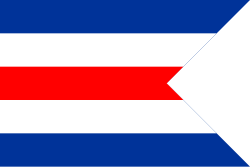
Iceland declared independence from Denmark in 1944, ending centuries of union with the Danish crown and establishing itself as a sovereign republic during World War II.
May 8, 1945 - Dec 31, 1949
% complete
After their surrender in 1945, Germany and Japan came under Allied occupation, with Allied authorities overseeing demilitarization, democratization, and reconstruction throughout the late 1940s.
Image source: Allied-occupied Germany
Jun 26, 1945
% complete
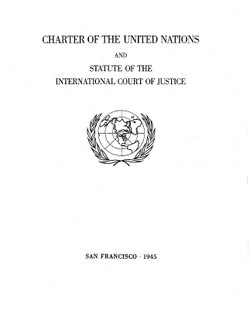
The United Nations Charter was signed on June 26, 1945 and took effect October 24, 1945, establishing the United Nations as an international organization dedicated to maintaining peace and security after World War II.
Image source: Charter of the United Nations
Aug 15, 1945
% complete
Korea was liberated after Japan's surrender in 1945, ending decades of Japanese colonial rule, although the peninsula was soon divided into Soviet and American occupation zones along the 38th parallel.
Image source: Surrender of Japan
Aug 17, 1945 - Dec 27, 1949
% complete
Indonesia declared independence from the Netherlands in 1945, though recognition only became effective in 1949 after a bitter armed and diplomatic struggle known as the Indonesian National Revolution.
Image source: Indonesian National Revolution
Oct 17, 1945
% complete
In 1945, workers gathered in Plaza de Mayo in Buenos Aires to demand the liberation of Juan Perón, who had been arrested. The massive mobilization secured his release and propelled him toward the presidency.
Image source: Loyalty Day (Argentina)
Mar 30, 1946 - Oct 16, 1949
% complete
The Greek Civil War extended from 1946 to 1949, pitting government forces backed by Britain and the United States against communist insurgents, becoming an early flashpoint of the Cold War.
Image source: Greek Civil War
Apr 17, 1946
% complete
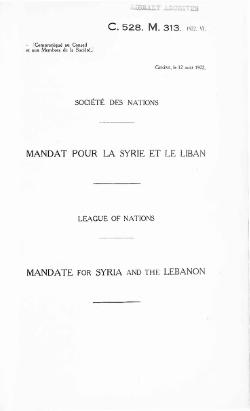
The French Mandate for Syria and the Lebanon dissolved in 1946, giving rise to the independent states of Syria and Lebanon after more than two decades of French administration.
Image source: Mandate for Syria and the Lebanon
Apr 20, 1946
% complete
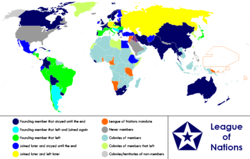
The League of Nations was dissolved on April 20, 1946, formally ending the interwar international organization and transferring its assets and mission to the newly founded United Nations.
Image source: League of Nations
Jun 2, 1946
% complete
The 1946 Italian institutional referendum saw Italians vote to replace the monarchy with a republic, leading King Umberto II into exile and founding the modern Italian Republic.
Image source: 1946 Italian institutional referendum
Aug 15, 1947
% complete
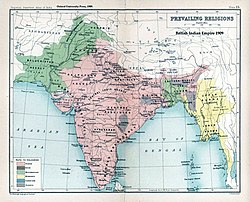
The Partition of British India in 1947 created a secular Union of India and a predominantly Muslim Dominion of Pakistan, triggering mass migrations and violence that led to the deaths of millions.
Image source: Partition of India
Jan 4, 1948
% complete
British rule in Burma ended in 1948 when the country gained independence from the United Kingdom after decades of colonial administration and the turmoil of Japanese occupation during World War II.
Image source: Burmese Declaration of Independence
May 15, 1948 - Mar 10, 1949
% complete
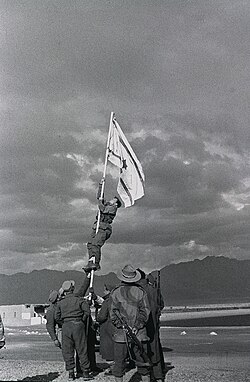
The 1948 Arab–Israeli War was fought between the newly declared State of Israel and its Arab neighbours. After Arab rejection of the UN Partition Plan (Resolution 181), Egypt, Iraq, Jordan, Lebanon and Syria attacked Israel following the termination of the British Mandate of Palestine in mid-May 1948.
Image source: 1948 Arab–Israeli War
Apr 4, 1949
% complete
The North Atlantic Treaty Organization (NATO), a collective defence alliance of North American and European nations, was established on April 4, 1949 amid rising Cold War tensions with the Soviet Union.
Image source: NATO
Oct 1, 1949
% complete
The People's Republic of China was officially proclaimed on October 1, 1949 by Mao Zedong following the Communist victory in the Chinese Civil War, transforming the political landscape of Asia.
Image source: Proclamation of the People's Republic of China
Or browse the full history timeline directory, with more than 2,000 topics.
This 1940s timeline was generated with the help of AI, using information found on the internet.
We work hard to keep these timelines accurate, but mistakes do get through. If you spot one, email us at [email protected] and we'll fix it for future visitors.
Generate yours with AI or build it from scratch, for free.
Export your timeline, add your own events, edit or remove AI-generated events, and much more
No credit card required.
Cancel anytime.
Cancel anytime.
You can create an unlimited number of timelines with up to 10 events on each one, customize how they look, export them to PDF, PNG, PowerPoint, CSV, and Excel, and share them with a link. Paid plans raise the event limit and add features like spreadsheet imports and collaborators.
Yes. You can cancel your subscription from your account page at any time, and you will not be charged again. Your subscription stays active for the rest of the period you already paid for.
Yes. We will email you a reminder before the annual renewal, and we will also email you a receipt.
Yes. You can email us within 15 days of any payment, and we will issue you a full refund.
Check out our pricing docs or send us an email anytime: [email protected].