-
Use Cases
-
Resources
-
Pricing
The 1970s was a turbulent and transformative decade marked by political scandal, economic upheaval, cultural shifts, and technological progress. It saw the Watergate scandal and President Nixon's resignation, the withdrawal of U.S. forces from Vietnam, the 1973 oil crisis, and the rise of disco, punk rock, and personal computing. The decade reshaped global politics, popular culture, and everyday life. More Less
Apr 13, 1970 - Apr 17, 1970
% complete
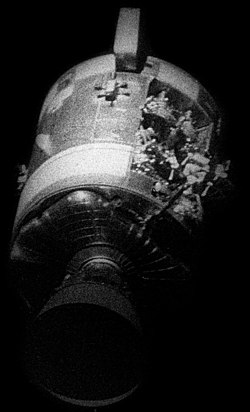
Apollo 13's planned lunar landing was aborted after an oxygen tank exploded en route to the Moon. Through remarkable ingenuity by NASA engineers and the calm heroism of astronauts Jim Lovell, Jack Swigert, and Fred Haise, the crew safely returned to Earth in one of the most dramatic rescues in spaceflight history.
Image source: Apollo 13
Feb 9, 1971
% complete
A magnitude 6.6 earthquake struck the San Fernando Valley near Los Angeles, killing 64 people and causing over $500 million in damage. The collapse of the newly built Olive View Hospital and freeway structures prompted major revisions to California seismic building standards.
Image source: 1971 San Fernando earthquake
Nov 15, 1971
% complete
Intel released the 4004, the world's first commercially available single-chip microprocessor. Developed with Federico Faggin and Ted Hoff, this tiny chip packed the computing power of earlier room-sized machines onto a single piece of silicon, laying the foundation for the personal computer revolution.
Image source: Intel 4004
Dec 7, 1972 - Dec 19, 1972
% complete
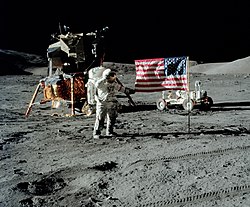
Apollo 17 carried astronauts Eugene Cernan and Harrison Schmitt to the lunar surface, the final crewed Moon landing of the Apollo program. Cernan became the last human to walk on the Moon, concluding a program that had transformed humanity's understanding of our nearest celestial neighbor.
Image source: Apollo 17
Apr 4, 1975
% complete
Childhood friends Bill Gates and Paul Allen founded Microsoft in Albuquerque, New Mexico, to develop software for the Altair 8800 microcomputer. The company's BASIC interpreter launched what would become one of the most influential technology companies in history.
Image source: History of Microsoft

Jan 21, 1976
% complete
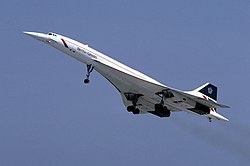
The Anglo-French Concorde supersonic airliner began passenger flights with British Airways and Air France, cutting transatlantic flight times to under three and a half hours. Though commercially limited by cost and noise restrictions, it remains an icon of aviation engineering ambition.
Image source: Concorde
Jul 1, 1976
% complete
Steve Wozniak's hand-built Apple I went on sale for $666.66, designed and assembled by Steve Jobs and Wozniak in a Los Altos garage. Though modest by later standards, it helped launch the personal computer industry and established Apple Computer, incorporated in early 1977.
Image source: Apple I
Jul 20, 1976
% complete
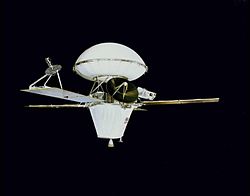
NASA's Viking 1 lander touched down on the Chryse Planitia region of Mars, returning the first clear photographs from the Martian surface. Its experiments searched for signs of life in the soil and its orbiter mapped much of the planet, revolutionizing planetary science.
Image source: Viking 1
Aug 20, 1977 - Sep 5, 1977
% complete
NASA launched twin probes Voyager 2 and Voyager 1 on an ambitious grand tour of the outer solar system. Carrying the golden records with sounds and images of Earth, they transmitted stunning discoveries from Jupiter and Saturn—and continue transmitting from interstellar space decades later.
Image source: Voyager program
Mar 28, 1979
% complete
A partial meltdown occurred in Reactor 2 at the Three Mile Island nuclear plant near Harrisburg, Pennsylvania. Though releases of radiation were minimal and no deaths resulted, the accident devastated public confidence in nuclear power and halted new plant construction in the United States.
Image source: Three Mile Island accident
Apr 22, 1970
% complete
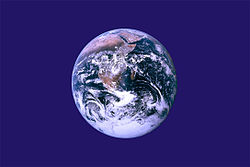
The first Earth Day was celebrated on April 22, 1970, with millions of Americans participating in rallies and teach-ins across the country. It marked the birth of the modern environmental movement, raising public awareness about pollution and ecological issues and leading to the creation of the Environmental Protection Agency later that year.
Image source: Earth Day
Feb 4, 1974
% complete
Newspaper heiress Patty Hearst was abducted from her Berkeley apartment by the Symbionese Liberation Army. Her apparent conversion to her captors' cause—captured in surveillance footage of her robbing a bank—made her case one of the most bizarre and talked-about stories of the decade.
Image source: Patty Hearst
Oct 30, 1974
% complete
In Kinshasa, Zaire, Muhammad Ali used his famous 'rope-a-dope' strategy to wear down champion George Foreman before knocking him out in the eighth round. Ali reclaimed the heavyweight championship four years after being stripped of it, in one of boxing's greatest upsets.
Image source: The Rumble in the Jungle
Jul 4, 1976
% complete
Americans celebrated the 200th anniversary of the Declaration of Independence with parades, fireworks, tall ship festivals, and the Operation Sail review in New York Harbor. Amid post-Watergate disillusionment, the bicentennial sparked a wave of patriotic renewal and national reflection.
Image source: United States Bicentennial
Oct 17, 1979
% complete
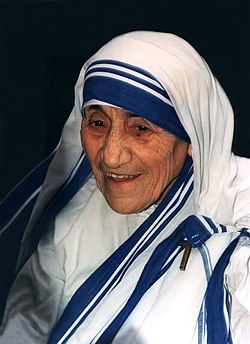
Mother Teresa received the Nobel Peace Prize for her work with the poorest of the poor in Calcutta through the Missionaries of Charity. The honor brought worldwide attention to humanitarian service among society's most marginalized and cemented her reputation as a symbol of compassion.
Image source: Mother Teresa
May 4, 1970
% complete
National Guardsmen opened fire on anti-war protesters at Kent State University in Ohio, killing four students and wounding nine. The tragedy shocked the nation, intensified opposition to the Vietnam War, and sparked student strikes at hundreds of campuses across the United States.
Image source: Kent State shootings
Feb 21, 1972 - Feb 28, 1972
% complete
President Richard Nixon made a historic trip to the People's Republic of China, meeting Chairman Mao Zedong and Premier Zhou Enlai. The visit ended over two decades of diplomatic isolation between the two nations and reshaped Cold War geopolitics by opening relations between Washington and Beijing.
Image source: 1972 visit by Richard Nixon to China
Jan 22, 1973
% complete
The US Supreme Court ruled in Roe v. Wade that a woman had a constitutional right to abortion, legalizing it nationwide. The landmark decision fundamentally shaped American politics and society, energizing both reproductive rights movements and pro-life activism for decades.
Image source: Roe v. Wade
Jan 27, 1973
% complete
The Paris Peace Accords were signed by the United States, North Vietnam, South Vietnam, and the Viet Cong, formally ending direct American military involvement in the Vietnam War. The last US combat troops departed in March 1973, though fighting between North and South Vietnam continued until 1975.
Image source: Paris Peace Accords
Oct 17, 1973 - Mar 18, 1974
% complete
Arab members of OPEC declared an oil embargo against nations supporting Israel during the Yom Kippur War, quadrupling crude prices within months. Long lines at gas stations, rationing, and inflation followed, triggering a global recession and prompting Western nations to pursue energy conservation and alternative sources.
Image source: 1973 oil crisis
Aug 8, 1974
% complete
Facing certain impeachment over the Watergate cover-up, President Nixon announced his resignation in a televised address and left office the next day, becoming the only US president ever to resign. Gerald Ford was sworn in as president and later pardoned Nixon, a controversial act that shadowed his own presidency.
Image source: Presidency of Richard Nixon
Apr 30, 1975
% complete
North Vietnamese forces captured Saigon, the capital of South Vietnam, as American helicopters evacuated the last personnel and thousands of refugees in chaotic rooftop airlifts. The city's fall unified Vietnam under communist rule and ended the two-decade-long Vietnam War.
Image source: Fall of Saigon
Sep 5, 1978 - Sep 17, 1978
% complete
President Jimmy Carter hosted Egyptian President Anwar Sadat and Israeli Prime Minister Menachem Begin at Camp David for thirteen days of intense negotiation. The resulting accords laid the groundwork for the 1979 Egypt–Israel peace treaty, the first such agreement between Israel and an Arab state.
Image source: Camp David Accords
Jan 16, 1979 - Feb 11, 1979
% complete
Widespread protests toppled the monarchy of Shah Mohammad Reza Pahlavi, who fled Iran in January. Ayatollah Ruhollah Khomeini returned from exile and an Islamic Republic was proclaimed, dramatically reshaping Middle East politics and US–Iran relations for generations.
Image source: Iranian Revolution
Mar 26, 1979
% complete
Egyptian President Anwar Sadat and Israeli Prime Minister Menachem Begin signed a formal peace treaty at the White House witnessed by President Carter. Egypt regained the Sinai Peninsula while recognizing Israel, ending three decades of war and earning both leaders Nobel Peace Prizes.
Image source: Egypt–Israel peace treaty
May 4, 1979
% complete
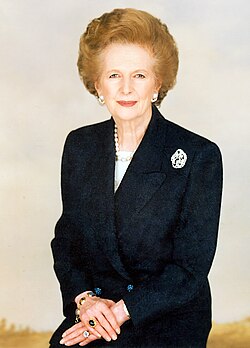
The Conservative Party won the general election and Margaret Thatcher became Britain's first female prime minister. Her victory began eleven years of transformative rule marked by free-market reforms, privatization, and confrontations with trade unions that earned her the nickname 'the Iron Lady.'
Image source: Margaret Thatcher
Jun 18, 1979
% complete
President Carter and Soviet leader Leonid Brezhnev signed the second Strategic Arms Limitation Treaty in Vienna, capping strategic missile launchers and bombers. Although never ratified due to the Soviet invasion of Afghanistan, both sides generally observed its limits through the decade's end.
Image source: Strategic Arms Limitation Talks
Oct 20, 1973
% complete
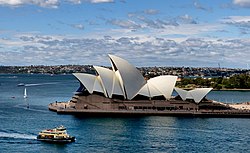
After fourteen years of construction, Jørn Utzon's iconic Sydney Opera House officially opened on Sydney Harbour, inaugurated by Queen Elizabeth II. With its distinctive sail-shaped shells, it became one of the most recognizable buildings in the world and a symbol of modern Australia.
Image source: Sydney Opera House
May 25, 1977
% complete
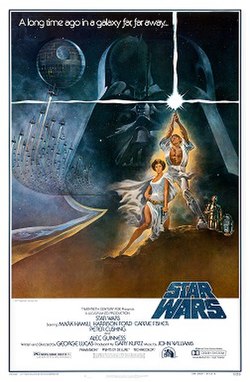
George Lucas's space epic Star Wars premiered to unprecedented box-office success, grossing hundreds of millions and igniting a cultural phenomenon. Its success ushered in the era of the blockbuster franchise and revolutionized film merchandising, special effects, and science fiction filmmaking.
Image source: Star Wars (film)
Aug 16, 1977
% complete
The King of Rock and Roll died at his Memphis home Graceland at age 42, shocking fans worldwide. His death triggered an outpouring of grief, record-breaking album sales, and enduring debate about the pressures of fame that had shaped his final years.
Image source: Elvis Presley
Jul 1, 1979
% complete
Sony launched the TPS-L2 Walkman in Japan, the first affordable portable cassette player. It allowed people to carry their music anywhere, transforming listening habits, popularizing personal audio culture, and paving the way for future portable media devices.
Image source: Walkman
Or browse the full history timeline directory, with more than 2,000 topics.
This 1970s timeline was generated with the help of AI, using information found on the internet.
We work hard to keep these timelines accurate, but mistakes do get through. If you spot one, email us at [email protected] and we'll fix it for future visitors.
Generate yours with AI or build it from scratch, for free.
Export your timeline, add your own events, edit or remove AI-generated events, and much more
No credit card required.
Cancel anytime.
Cancel anytime.
You can create an unlimited number of timelines with up to 10 events on each one, customize how they look, export them to PDF, PNG, PowerPoint, CSV, and Excel, and share them with a link. Paid plans raise the event limit and add features like spreadsheet imports and collaborators.
Yes. You can cancel your subscription from your account page at any time, and you will not be charged again. Your subscription stays active for the rest of the period you already paid for.
Yes. We will email you a reminder before the annual renewal, and we will also email you a receipt.
Yes. You can email us within 15 days of any payment, and we will issue you a full refund.
Check out our pricing docs or send us an email anytime: [email protected].