-
Use Cases
-
Resources
-
Pricing
The Stuart Period spans from 1603, when James I united the crowns of England and Scotland, until 1714 with the death of Queen Anne. It was a turbulent era marked by conflict between crown and Parliament, including the English Civil War, the execution of Charles I, Cromwell's Commonwealth, the Restoration of the monarchy under Charles II, the Great Plague and Fire of London, and the Glorious Revolution of 1688, which established constitutional monarchy. More Less
Mar 24, 1603
% complete
Upon the death of Queen Elizabeth I, James VI of Scotland inherited the English throne, becoming James I of England. This union of the crowns created a personal union between England and Scotland, inaugurating the Stuart dynasty in England and beginning the Stuart period.
Image source: James VI and I
Apr 12, 1606
% complete
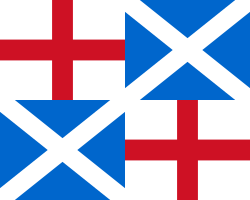
Following the Union of the Crowns, a royal decree combined the crosses of St George of England and St Andrew of Scotland into a new flag for ships. This early Union Flag symbolized the unified kingdoms under one monarch.
Image source: Union Jack

Mar 27, 1625
% complete
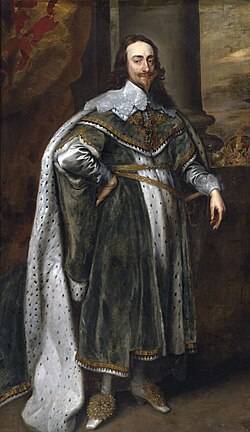
King James I died and his son Charles I succeeded him. Charles believed firmly in the divine right of kings, and his autocratic style, conflicts with Parliament, and unpopular policies would ultimately plunge the kingdoms into civil war.
Image source: Charles I of England
Jan 30, 1649
% complete
After being tried by a specially constituted High Court of Justice for treason, Charles I was beheaded outside Whitehall Palace in London. The unprecedented execution of an anointed monarch shocked Europe and marked the abolition of the monarchy and the establishment of the Commonwealth.
Image source: Execution of Charles I
May 29, 1660
% complete
Charles II returned from exile and was proclaimed king amid popular rejoicing, restoring the monarchy, the Church of England, and the House of Lords. The Restoration marked a cultural flowering but also renewed political tensions between Crown and Parliament.
Image source: Stuart Restoration
Feb 6, 1685
% complete
Charles II died without legitimate heirs and his openly Catholic brother became James II. His attempts to promote Catholicism and rule without Parliament alienated both parties and set the stage for revolution.
Image source: James II of England
Nov 5, 1688 - Feb 13, 1689
% complete
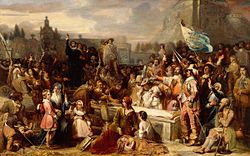
William of Orange landed in England with a Dutch army, and James II fled abroad without a fight. Parliament declared William III and Mary II joint sovereigns, establishing parliamentary supremacy and securing Protestant succession in the Glorious Revolution.
Image source: Glorious Revolution
Dec 28, 1694
% complete
Queen Mary II died of smallpox, leaving William III to rule alone. Her death was widely mourned; she had been a beloved co-sovereign who supported her husband through the turbulent post-revolution years.
Image source: Mary II of England
Apr 1603
% complete
Puritan clergymen presented the Millenary Petition to King James I, reportedly signed by over a thousand ministers, calling for reforms to eliminate Catholic practices from the Church of England. The petition led to the Hampton Court Conference and shaped religious policy early in the reign.
Image source: Millenary Petition
Jan 1604
% complete
King James I met with Puritan and Anglican representatives at Hampton Court to discuss religious reform. While James rejected most Puritan demands, he approved a new translation of the Bible, which became the King James Version, one of the most influential books in the English language.
May 14, 1607
% complete
English colonists established Jamestown in Virginia, the first permanent English settlement in North America. Named after King James I, the colony marked the beginning of sustained English colonization in America and the growth of the British Empire during the Stuart era.
Image source: Jamestown, Virginia
1609
% complete
The organized colonization of Ulster in northern Ireland began, with English and Scottish Protestant settlers receiving confiscated land. The plantation transformed Irish demographics and sowed seeds of sectarian conflict that would endure for centuries.
Image source: Plantation of Ulster
Jun 7, 1628
% complete
Parliament forced Charles I to accept the Petition of Right, which prohibited arbitrary imprisonment, taxation without parliamentary consent, and billeting soldiers in private homes. It became a foundational document of constitutional liberty in England.
Image source: Petition of Right
Mar 10, 1629 - Apr 13, 1640
% complete
Angered by Parliamentary opposition, Charles I dissolved Parliament and governed without it for eleven years, known as the Personal Rule. He raised revenue through controversial means such as Ship Money, provoking widespread resentment that would erupt into crisis in 1640.
Nov 3, 1640 - Mar 16, 1660
% complete
Desperate for money after defeat by the Scots, Charles I summoned what became the Long Parliament. Led by figures like John Pym, it abolished hated institutions such as Star Chamber, passed the Triennial Act, and set England on a collision course with the Crown.
Image source: Long Parliament
May 19, 1649
% complete
With the monarchy abolished, England was declared a Commonwealth governed by the Rump Parliament and a Council of State. Executive power gradually concentrated in the hands of Oliver Cromwell and the army leadership.
Image source: The Protectorate
Dec 16, 1653 - Sep 3, 1658
% complete
After dissolving the Rump Parliament, Cromwell was installed as Lord Protector under the Instrument of Government, ruling England, Scotland, and Ireland with near-monarchical authority. The Protectorate period saw relative stability, religious tolerance for many Protestants, and successful foreign wars.
Image source: Oliver Cromwell
Sep 3, 1658
% complete
Oliver Cromwell died on September 3, 1658, and was briefly succeeded as Lord Protector by his son Richard Cromwell. Richard lacked support from the army and resigned within months, leaving a power vacuum that paved the way for the Restoration.
1678 - 1681
% complete
Titus Oates fabricated a supposed Catholic conspiracy to murder Charles II, triggering panic and executions. The ensuing Exclusion Crisis saw Parliament attempt to bar the Catholic James, Duke of York, from the throne, deepening divisions between Whigs and Tories.
Image source: Popish Plot
Dec 16, 1689
% complete
The Bill of Rights limited royal power, required parliamentary consent for taxation and standing armies, and guaranteed free elections and free speech in Parliament. It became a cornerstone of the British constitutional settlement and inspired later democratic documents.
Image source: Bill of Rights 1689
Jul 27, 1694
% complete
The Bank of England was established to finance William III's war against France, pioneering national debt management and modern public finance. Its creation helped transform London into the world's leading financial center.
Image source: Bank of England
Nov 5, 1605
% complete
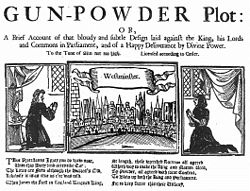
A group of English Catholics, including Guy Fawkes, plotted to blow up the House of Lords during the State Opening of Parliament and assassinate King James I. The plot was discovered when Fawkes was found guarding barrels of gunpowder beneath the chamber, leading to executions and harsher laws against Catholics.
Image source: Gunpowder Plot
May 23, 1618 - Oct 24, 1648
% complete
The devastating conflict between Catholic and Protestant forces swept across Europe. Although Britain stayed officially neutral, James I pursued marriage diplomacy to aid his son-in-law Frederick V, the deposed King of Bohemia, entangling Britain in Continental politics.
Image source: Thirty Years' War
1639 - 1640
% complete
Charles I's attempt to impose Anglican worship on Presbyterian Scotland provoked Scottish Covenanters to resist. His military campaigns against the Scots failed disastrously, forcing him to recall Parliament to raise funds and fatally weakening royal authority.
Image source: Bishops' Wars
Oct 23, 1641
% complete
Irish Catholics rose up against English and Scottish Protestant settlers in Ulster, amid massacres and atrocities reported with horror in England. The rebellion deepened the constitutional crisis, as Parliament and the king disputed who should control the army needed to suppress it.
Image source: Irish Rebellion of 1641
Aug 22, 1642 - 1646
% complete
Charles I raised his standard at Nottingham, beginning open war between Royalists (Cavaliers) and Parliamentarians (Roundheads). Key battles included Edgehill, Marston Moor, and Naseby, where Oliver Cromwell's New Model Army proved decisive in defeating the king.
Image source: First English Civil War
Jun 14, 1645
% complete
The New Model Army under Thomas Fairfax and Oliver Cromwell crushed the Royalist army at Naseby. The decisive victory destroyed Charles I's main field force, effectively dooming the Royalist cause in the First Civil War.
Image source: Battle of Naseby
1649 - 1653
% complete
Oliver Cromwell led a brutal campaign to reconquer Ireland, marked by the massacres at Drogheda and Wexford. The conquest resulted in massive confiscation of Catholic land and a lasting legacy of bitterness between Ireland and England.
1665 - 1667
% complete
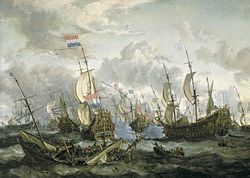
England and the Dutch Republic clashed over trade and naval supremacy. The war included the humiliating Dutch Raid on the Medway in 1667, when the Dutch fleet burned English ships at anchor, leading to the Treaty of Breda.
Image source: Second Anglo-Dutch War
Jun 11, 1685 - Jul 15, 1685
% complete
James Scott, Duke of Monmouth, Charles II's illegitimate son, launched a Protestant rising against James II. The rebellion was defeated at Sedgemoor and followed by the brutal Bloody Assizes presided over by Judge Jeffreys.
Image source: Monmouth Rebellion
1611
% complete
The King James Bible was published, a masterful English translation produced by committees of scholars. Its majestic prose profoundly influenced English literature, language, and religious life, becoming the definitive English Bible for centuries.
Image source: King James Version
Apr 23, 1616
% complete
William Shakespeare, the greatest playwright of the Elizabethan and Jacobean ages, died at Stratford-upon-Avon. His later works, including 'The Tempest' and 'Macbeth', were written during the reign of James I, whose patronage supported his company, the King's Men.
Image source: William Shakespeare
1665 - 1666
% complete
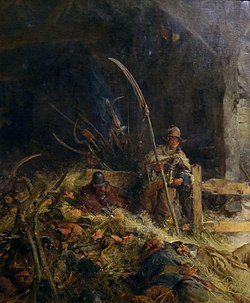
Bubonic plague ravaged London, killing an estimated 100,000 people, nearly a quarter of the city's population. The catastrophe emptied the capital until the epidemic subsided, only to be followed by another disaster the next year.
Image source: Great Plague of London
Sep 2, 1666 - Sep 6, 1666
% complete
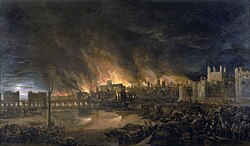
A fire that began in a bakery on Pudding Lane consumed much of central London, destroying around 13,000 houses and St Paul's Cathedral. The rebuilding, guided by Christopher Wren, transformed the capital into a city of brick and stone with magnificent new churches.
Image source: Great Fire of London
Jul 5, 1687
% complete
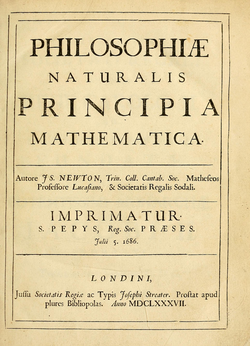
Isaac Newton published his monumental work laying out the laws of motion and universal gravitation. The Scientific Revolution flourished during the Stuart era, alongside the founding of the Royal Society in 1660 and breakthroughs by scientists like Robert Hooke and Robert Boyle.
Image source: Philosophiæ Naturalis Principia Mathematica
Or browse the full history timeline directory, with more than 2,000 topics.
This Stuart Period timeline was generated with the help of AI, using information found on the internet.
We work hard to keep these timelines accurate, but mistakes do get through. If you spot one, email us at [email protected] and we'll fix it for future visitors.
Generate yours with AI or build it from scratch, for free.
Export your timeline, add your own events, edit or remove AI-generated events, and much more
No credit card required.
Cancel anytime.
Cancel anytime.
You can create an unlimited number of timelines with up to 10 events on each one, customize how they look, export them to PDF, PNG, PowerPoint, CSV, and Excel, and share them with a link. Paid plans raise the event limit and add features like spreadsheet imports and collaborators.
Yes. You can cancel your subscription from your account page at any time, and you will not be charged again. Your subscription stays active for the rest of the period you already paid for.
Yes. We will email you a reminder before the annual renewal, and we will also email you a receipt.
Yes. You can email us within 15 days of any payment, and we will issue you a full refund.
Check out our pricing docs or send us an email anytime: [email protected].