-
Use Cases
-
Resources
-
Pricing
The Migration Period, also known as the Barbarian Invasions, was a era of large-scale migrations of peoples such as the Huns, Goths, Vandals, Franks, Anglo-Saxons, and Slavs into and within Europe. These movements contributed to the fall of the Western Roman Empire and laid the foundations for medieval European kingdoms. More Less
100 - 199
The Bulgars, originally a nomadic group probably originating from Central Asia, occupied the Pontic steppe north of the Caucasus beginning in the 2nd century, establishing themselves as a significant power in the region.
Image source: Bulgars
600 - 699
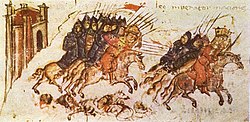
Pushed by the Khazars, the majority of the Bulgars migrated west and dominated Byzantine territories along the lower Danube during the 7th century.
Image source: Old Great Bulgaria

600 - 699
After being pushed westward by the Khazars, the Bulgars came to dominate Byzantine territories along the lower Danube in the 7th century, founding a lasting state in the region.
Image source: First Bulgarian Empire

650
By the mid seventh century, Serb tribes were invading northern Albania, part of the wider movement of Slavic peoples into the Balkans during this era.
Image source: Slavic migrations to the Balkans

800 - 900
By the ninth century, the central Balkans and the area of southern and central Albania became invaded and settled by Bulgars, extending Bulgar control across much of the region.
200 - 299
From the 3rd century onward, the leaders of the Franks, a fusion of western Germanic tribes, had been aligned with Rome, a relationship that would later facilitate their gradual entry into Roman Gaul.
Image source: Franks

235 - 284
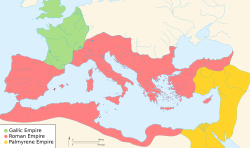
The Crisis of the Third Century caused significant changes within the Roman Empire in both its western and its eastern portions, reshaping the imperial structures with which migrating peoples would interact.
Image source: Crisis of the Third Century
300 - 399
In the 4th century, the Roman Empire settled a very large group of Goths as foederati within the Roman Balkans, integrating barbarian warriors into the empire's military and political framework.
300 - 399
During the 4th century, the Franks were settled south of the Rhine in Roman Gaul, marking an early stage of Germanic settlement within the Western Empire's territory.
400 - 499
In Gaul, the Franks entered Roman lands gradually during the 5th century, expanding from their foothold south of the Rhine deeper into the former imperial provinces.
This Migration Period timeline was generated with the help of AI, using information found on the internet.
We work hard to keep these timelines accurate, but mistakes do get through. If you spot one, email us at [email protected] and we'll fix it for future visitors.
Generate yours with AI or build it from scratch, for free.