-
Use Cases
-
Resources
-
Pricing
The Early Modern Period was an era of profound transformation in world history, roughly spanning from the end of the Middle Ages around 1500 to the onset of modernity around 1800. It was marked by European overseas exploration and colonization, the Renaissance's cultural rebirth, the Protestant Reformation's religious upheaval, the rise of centralized nation-states, groundbreaking scientific discoveries, and Enlightenment ideas about reason, rights, and government that laid the foundations for the modern political and intellectual world. More Less
May 29, 1453
% complete
Ottoman forces under Sultan Mehmed II captured Constantinople, ending the Byzantine Empire after over a thousand years. The conquest shifted trade routes and intensified European efforts to find new paths to Asia, helping spur the Age of Exploration.
Image source: Fall of Constantinople
Oct 31, 1517
% complete
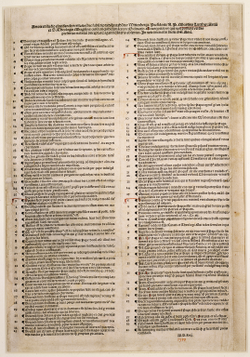
Martin Luther published his Ninety-five Theses criticizing indulgences, igniting the Protestant Reformation. The movement shattered Western Christendom's unity and reshaped the religious and political landscape of Europe.
Image source: Ninety-five Theses
Sep 25, 1555
% complete
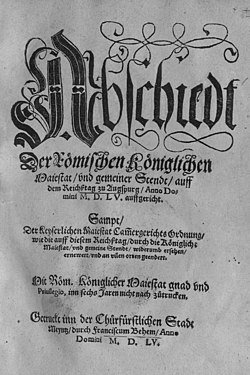
The Peace of Augsburg allowed Holy Roman Empire princes to choose Lutheranism or Catholicism for their territories, temporarily easing religious conflict. Its settlement held until religious tensions reignited in the Thirty Years' War.
Image source: Peace of Augsburg
1562 - 1598
% complete
France was torn by decades of conflict between Catholics and Huguenots, including the St. Bartholomew's Day Massacre. The wars ended with Henry IV's Edict of Nantes granting toleration to Protestants.
Image source: French Wars of Religion
Jul 1588 - Aug 1588
% complete
England's navy and storms destroyed Philip II's Spanish Armada sent to invade England. The defeat marked the beginning of Spain's decline and England's rise as a naval power.
Image source: Spanish Armada
Apr 13, 1598
% complete
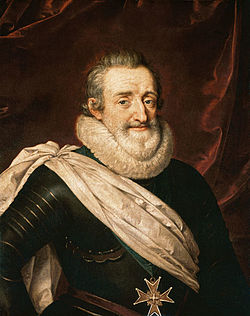
Henry IV of France issued the Edict of Nantes, granting Huguenots substantial rights and ending the French Wars of Religion. It stood as a landmark of religious toleration until its revocation in 1685.
Image source: Edict of Nantes
1618 - 1648
% complete
A devastating conflict beginning in Bohemia engulfed the Holy Roman Empire and much of Europe, blending religious and dynastic rivalries. It caused enormous casualties before ending with the Peace of Westphalia.
Image source: Thirty Years' War
Oct 19, 1453
% complete
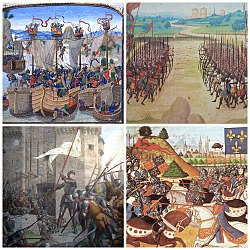
The Battle of Castillon ended the Hundred Years' War between England and France. France emerged as a centralized monarchy while England turned toward internal struggles that would culminate in the Wars of the Roses.
Image source: Hundred Years' War
Jun 7, 1520 - Jun 24, 1520
% complete
Henry VIII of England and Francis I of France met in an extravagant summit near Calais designed to strengthen their alliance. Despite its splendor, diplomatic tensions soon resumed between the two monarchs.
Image source: Field of the Cloth of Gold
1642 - 1651
% complete
Conflict between King Charles I and Parliament erupted into civil war, ending in the king's execution and, briefly, republican rule under Oliver Cromwell before the Restoration of the monarchy in 1660.
Image source: English Civil War
Nov 1688 - 1689
% complete
William III and Mary II replaced James II largely without bloodshed, and the Bill of Rights of 1689 limited royal power. The revolution affirmed parliamentary supremacy and constitutional monarchy in Britain.
Image source: Glorious Revolution
1455
% complete
Johannes Gutenberg's movable-type printing press produced the first major book printed in Europe, revolutionizing the spread of knowledge. The printing press enabled the rapid dissemination of ideas central to the Reformation, Renaissance, and Scientific Revolution.
Image source: Gutenberg Bible
Nov 17, 1558
% complete
Elizabeth I ascended the English throne, beginning a golden age marked by flourishing drama, poetry, maritime expansion, and the consolidation of Protestantism in England.
Image source: Elizabethan era
1623
% complete
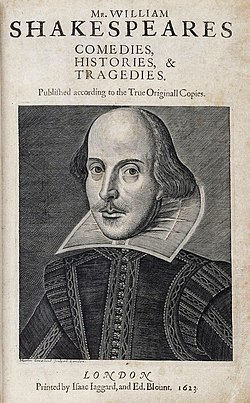
Seven years after Shakespeare's death, colleagues published the First Folio collecting thirty-six of his plays. Without it, many of the most celebrated works in English literature might have been lost.
Image source: First Folio
Oct 12, 1492
% complete
Sailing under the Spanish crown, Christopher Columbus landed in the Bahamas, initiating sustained contact between Europe and the Americas. His voyages launched the Columbian Exchange and centuries of European colonization.
Image source: Voyages of Christopher Columbus
Jun 7, 1494
% complete
Spain and Portugal signed a treaty dividing newly encountered lands outside Europe along a meridian in the Atlantic Ocean. The agreement granted Portugal claim to Brazil and shaped the colonial map of the Americas.
Image source: Treaty of Tordesillas
May 20, 1498
% complete
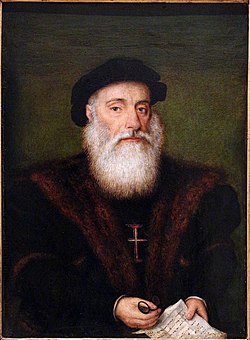
Portuguese explorer Vasco da Gama arrived at Calicut after rounding the Cape of Good Hope, opening a direct sea route from Europe to Asia. This established Portuguese dominance in the spice trade for decades.
Image source: Vasco da Gama
Feb 1519 - Aug 13, 1521
% complete
Hernán Cortés and indigenous allies captured Tenochtitlan, toppling the Aztec Empire. The conquest brought vast territories and wealth under Spanish control and devastated indigenous populations through war and disease.
Image source: Fall of Tenochtitlan
Sep 20, 1519 - Sep 6, 1522
% complete
An expedition begun by Ferdinand Magellan completed the first circumnavigation of the Earth, proving the planet could be circled by sea. Magellan died in the Philippines, but Juan Sebastián Elcano led the surviving crew home to Spain.
Image source: Magellan expedition
Mar 20, 1602
% complete
The VOC, often considered the first multinational corporation with publicly traded shares, was established to control Dutch trade in Asia. It became a dominant commercial and colonial power in the East Indies.
Image source: Dutch East India Company
May 14, 1607
% complete
English colonists established Jamestown in Virginia, the first permanent English settlement in North America. Despite early hardship and famine, it survived and anchored England's American empire.
Image source: Jamestown, Virginia
Nov 1620
% complete
English Puritan Separatists aboard the Mayflower founded Plymouth Colony in New England and signed the Mayflower Compact, an early experiment in self-governance in America.
Image source: Plymouth Colony
1543
% complete
Nicolaus Copernicus published 'De revolutionibus orbium coelestium,' proposing that the Sun, not the Earth, was the center of the universe. The work laid the foundation for the Scientific Revolution.
Image source: De revolutionibus orbium coelestium
Jan 7, 1610
% complete
Using his improved telescope, Galileo discovered four moons orbiting Jupiter, providing evidence against strict geocentrism. His observations strengthened the Copernican model and advanced modern astronomy.
Image source: Galilean moons
1637
% complete
René Descartes articulated methodological skepticism and the famous dictum 'cogito, ergo sum.' The work laid philosophical foundations for modern rationalism and the Scientific Revolution.
Image source: Discourse on the Method
Jul 5, 1687
% complete
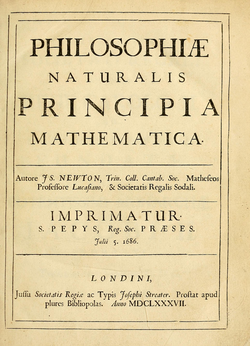
Isaac Newton formulated the laws of motion and universal gravitation, unifying terrestrial and celestial mechanics. The Principia is widely regarded as the pinnacle of the Scientific Revolution.
Image source: Philosophiæ Naturalis Principia Mathematica
Or browse the full history timeline directory, with more than 2,000 topics.
This Early Modern Period timeline was generated with the help of AI, using information found on the internet.
We work hard to keep these timelines accurate, but mistakes do get through. If you spot one, email us at [email protected] and we'll fix it for future visitors.
Generate yours with AI or build it from scratch, for free.
Export your timeline, add your own events, edit or remove AI-generated events, and much more
No credit card required.
Cancel anytime.
Cancel anytime.
You can create an unlimited number of timelines with up to 10 events on each one, customize how they look, export them to PDF, PNG, PowerPoint, CSV, and Excel, and share them with a link. Paid plans raise the event limit and add features like spreadsheet imports and collaborators.
Yes. You can cancel your subscription from your account page at any time, and you will not be charged again. Your subscription stays active for the rest of the period you already paid for.
Yes. We will email you a reminder before the annual renewal, and we will also email you a receipt.
Yes. You can email us within 15 days of any payment, and we will issue you a full refund.
Check out our pricing docs or send us an email anytime: [email protected].