-
Resources
-
Pricing
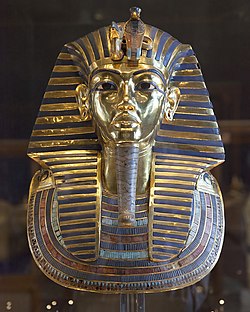
The timeline of Ancient Egypt covers the span of history from the pre-dynastic period in 3100 BCE to the end of the New Kingdom in 1069 BCE, showcasing the rich cultural, religious, and political developments of this ancient civilization. More Less
Build a timeline like this one in minutes, for free. Start Yours →
Part of our collection of ancient history timelines.
5500 BC
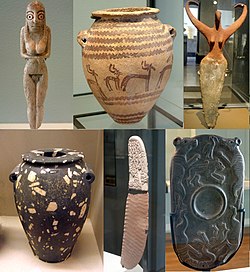
Small tribes living in the Nile valley had developed into distinct cultures by 5500 BC, demonstrating control of agriculture and animal husbandry, as evidenced by their pottery, personal items, and trade practices.
Image source: Prehistoric Egypt
3600 BC
Mutual trade with the Levant was established during Naqada II, around 3600 BC, marking the beginning of trade with Mesopotamia and laying the foundation for long-term economic interactions.
Image source: Gerzeh culture
3100 BC
Ancient Egyptian civilization coalesced around 3100 BC with the political unification of Upper and Lower Egypt under Menes, marking the beginning of dynastic rule and the establishment of a centralized state.
Image source: Ancient Egypt
3000 BC
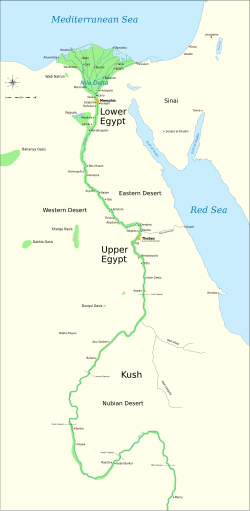
In the Early Dynastic Period, dynastic kings solidified control over lower Egypt by establishing a capital at Memphis, enabling them to control agriculture, trade routes, and the labor force.
Image source: Early Dynastic Period (Egypt)

2200 BC
Severe droughts between 2200 and 2150 BC, coupled with economic erosion, led to the 140-year period of famine and strife known as the First Intermediate Period.
Image source: First Intermediate Period of Egypt
2055 BC
The northern Theban forces under Nebhepetre Mentuhotep II defeated the Herakleopolitan rulers around 2055 BC, reuniting the Two Lands and establishing the Middle Kingdom.
Image source: Mentuhotep II
1785 BC - 1555 BC
The Hyksos, a Western Asian people, seized control of Egypt around 1785 BC, leading to a prolonged conflict with Thebes that lasted more than 30 years until 1555 BC.
Image source: Hyksos
1425 BC
When Tuthmosis III died in 1425 BC, Egypt had an empire extending from Niya in northwest Syria to the Fourth Cataract of the Nile in Nubia, solidifying loyalties and opening access to critical imports.
Image source: Thutmose III
1350 BC
Around 1350 BC, Amenhotep IV ascended the throne and instituted radical reforms, threatening the stability of the New Kingdom and causing societal upheaval.
Image source: Akhenaten
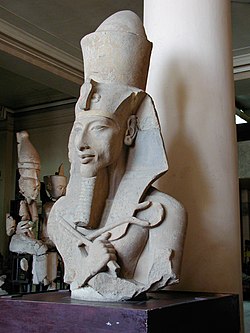
1279 BC
Ramesses II ascended the throne in 1279 BC and led Egypt to a period of great architectural and military achievements, including the Battle of Kadesh and the signing of the first recorded peace treaty around 1258 BC.
Image source: Ramesses II
1078 BC
Following the death of Ramesses XI in 1078 BC, Smendes assumed authority over the northern part of Egypt, ruling from the city of Tanis, marking a decline in central authority.
Image source: Ramesses XI
500 BC - 401 BC
During the 5th century BC, coined money was introduced into Egypt from abroad, leading to the adoption of standardized pieces of precious metal and the reliance on coinage by international traders in subsequent centuries.
Image source: Egyptian pound
300 - 399
Although formal hieroglyphs were used in a ceremonial role until the 4th century AD, by then only a small handful of priests could still read them, signifying the decline of this ancient writing system.
Image source: Egyptian hieroglyphs
200 BC - 499
Meroitic is the oldest written language in Africa other than Egyptian, and was used from the 2nd century BC until the early 5th century AD, contributing to the linguistic diversity of ancient North Africa.
Image source: Meroitic language
1 AD - 99 AD
Around the 1st century AD, the Coptic alphabet started to be used alongside the Demotic script, marking a significant development in Egyptian writing systems.
2012
In 2012, mummies of two 20th dynasty individuals, Ramesses III and 'Unknown Man E', were analyzed by a team of researchers, shedding light on ancient Egyptian genetics and familial relationships.
Image source: Mummy
2017
A 2017 study by Schuenemann et al. analyzed ancient DNA samples from Abusir el-Meleq, providing insights into the genetic diversity and ancestry of ancient Egyptians.
Image source: Genetic history of Egypt
2018
In 2018, the 4000-year-old mummified head of Djehutynakht, a governor in the Middle Kingdom, was analyzed for mitochondrial DNA, offering new perspectives on ancient Egyptian genetic lineages.
Image source: Djehutynakht
2020
A 2020 DNA study by Gad, Hawass et al. analyzed mitochondrial and Y-chromosomal haplogroups from Tutankhamun's family members, providing insights into the genetic composition of the 18th Dynasty rulers.
Image source: Tutankhamun
2023
In 2023, a team of Franco-Egyptian archaeologists discovered what is believed to be the world's oldest port, dating back about 4500 years, near Wadi el-Jarf, providing new insights into ancient Egyptian maritime activities.
Image source: Wadi al-Jarf
Build a timeline like this one in minutes, for free. Start Yours →
Or browse the full history timeline directory, with more than 2,500 topics.
This Ancient Egypt timeline was generated with the help of AI, using information found on the internet.
We work hard to keep these timelines accurate, but mistakes do get through. If you spot one, email us at [email protected] and we'll fix it for future visitors.
Generate yours with AI or build it from scratch, for free.
Export your timeline, add your own events, edit or remove AI-generated events, and much more
No credit card required.
15-day money-back guarantee.
You can create an unlimited number of timelines with up to 10 events on each one, customize how they look, export them to PDF, PNG, PowerPoint, CSV, and Excel, and share them with a link. Timelines made with Timeline Maker AI keep every event the generator created, and you can add up to 5 events of your own. Paid plans remove the event limit, add spreadsheet imports and hide Preceden's branding, and the higher-priced plan also adds collaborators, a custom logo and a custom domain.
Yes. You can cancel your subscription from your account page at any time, and you will not be charged again. Your subscription stays active for the rest of the period you already paid for.
Yes. We email you a reminder 15 days before your annual renewal, and we email you a receipt after every payment.
Yes. You can email us within 15 days of any payment, and we will issue you a full refund.
Check out our pricing docs or send us an email anytime: [email protected].