-
Use Cases
-
Resources
-
Pricing
Andrew Jackson was the seventh President of the United States, serving from 1829 to 1837. A military hero from the War of 1812, particularly the Battle of New Orleans, Jackson rose from humble frontier origins to become the founder of the modern Democratic Party and a champion of the 'common man.' His presidency is marked by the Indian Removal Act, his battle against the Second Bank of the United States, and the Nullification Crisis, leaving a controversial yet transformative legacy in American history. More Less
Mar 15, 1767
% complete
Andrew Jackson was born on March 15, 1767, in the Waxhaws region on the border between North Carolina and South Carolina. His exact birthplace remains disputed, but he was born to Irish immigrant parents shortly after his father's death, growing up in poverty on the American frontier.
Image source: Andrew Jackson
1780 - 1781
% complete
During the American Revolution, teenage Jackson served as a courier for the local militia. He was captured by British forces in 1781 and slashed with a sword after refusing to clean an officer's boots, leaving permanent scars and instilling a lifelong hatred of the British.
Nov 1781
% complete
Jackson's mother died of cholera while nursing American prisoners of war aboard British prison ships in Charleston. Orphaned at age 14, Jackson was left entirely alone, an experience that shaped his fierce independence and combative personality.
Sep 1787
% complete
After studying law in Salisbury, North Carolina, Jackson was admitted to the bar in September 1787. The following year he moved west to Nashville, Tennessee, where he built a successful law practice and became a prominent figure in the frontier community.
Aug 1791
% complete
Jackson married Rachel Donelson Robards, believing her divorce from her first husband had been finalized. When it was later revealed the divorce had only just been completed, they quietly remarried in 1794. Rumors of bigamy would haunt the couple throughout their lives.
Image source: Rachel Jackson
May 30, 1806
% complete
After Dickinson insulted Jackson's wife, the two fought a duel near Nashville. Dickinson fired first, wounding Jackson, but Jackson calmly took aim and killed his opponent. The bullet lodged near Jackson's heart could not be safely removed and caused pain for the rest of his life.
Image source: Charles Dickinson (planter)
Dec 1796
% complete
When Tennessee achieved statehood in 1796, Jackson was elected as its first member of the U.S. House of Representatives, serving briefly before being elected to the United States Senate in 1797.
Image source: Tennessee's congressional delegations
1798 - 1804
% complete
Jackson resigned from the Senate in 1798 and was elected a judge of the Tennessee Superior Court, serving until 1804. Known for his blunt and forceful rulings, he earned respect across the frontier even as he pursued business ventures including slave trading.
1821
% complete
Following Spain's cession of Florida, Jackson briefly served as the territory's first territorial governor. Frustrated by administrative duties and political infighting, he resigned within months and returned to Tennessee.
Image source: List of governors of Florida
1823 - 1825
% complete
The Tennessee legislature elected Jackson to the U.S. Senate in 1823, positioning him for his presidential run. He served until 1825, using his seat to maintain visibility while building the coalition that would become the Democratic Party.
1824
% complete
Jackson won the plurality of both popular and electoral votes in 1824 but no candidate secured a majority. The House of Representatives chose John Quincy Adams after Henry Clay threw his support behind Adams, who then appointed Clay Secretary of State. Jackson denounced the outcome as a 'corrupt bargain.'
Image source: 1824 United States presidential election
1813 - 1814
% complete
Following the Fort Mims massacre, Jackson led Tennessee militia and allied Native American forces against the Red Stick faction of the Creek Nation, winning decisive victories at Talladega, Emuckfaw, Enotachopco Creek, and Horseshoe Bend, which forced the Treaty of Fort Jackson and massive land cessions.
Image source: Creek War
Mar 27, 1814
% complete
At Horseshoe Bend in present-day Alabama, Jackson's forces decisively defeated the Red Stick Creek warriors, killing hundreds and effectively ending the Creek War. The victory made Jackson a national hero and opened vast tracts of Native American land to American settlement.
Image source: Battle of Horseshoe Bend
Jan 8, 1815
% complete
Two weeks after the Treaty of Ghent ended the War of 1812, Jackson led a diverse force of soldiers, pirates, freedmen, and militia to a stunning victory over a much larger British army at New Orleans. With only about 70 American casualties versus over 2,000 British losses, Jackson became the most famous military hero in America since George Washington.
Image source: Battle of New Orleans
1817 - 1818
% complete
Ordered to pursue raiders into Spanish Florida, Jackson exceeded his instructions by capturing Pensacola and overthrowing the Spanish governor. The controversial campaign demonstrated Spain's inability to control Florida and helped pressure Spain into ceding the territory to the United States.
Image source: Seminole Wars
1828 - 1854
% complete
Jackson's movement transformed American politics, championing white male suffrage expansion, the spoils system, and populist rhetoric against elites. His legacy remains deeply contested today, celebrated by some for expanding democratic participation and condemned by others for his role in Native American removal and support of slavery.
1837 - 1845
% complete
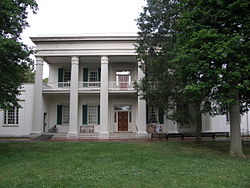
Jackson retired to his Hermitage estate near Nashville, where he lived with his extended family, managed his plantation worked by over 100 enslaved people, advised Democratic politicians, and remained an influential elder statesman of his party.
Image source: The Hermitage (Nashville, Tennessee)
1844 - 1845
% complete
In retirement, Jackson lobbied vigorously for the annexation of Texas, helping persuade James K. Polk to run as an expansionist candidate in 1844. Texas was admitted to the Union in December 1845, months before Jackson's death.
Image source: Texas annexation
Jun 8, 1845
% complete
Andrew Jackson died at age 78 at the Hermitage, suffering from dropsy, tuberculosis, and the effects of numerous old wounds. He was buried beside his beloved Rachel in the garden of his estate, mourned nationally as one of America's most consequential presidents.
Nov 3, 1828
% complete
Running as the champion of the common man against incumbent John Quincy Adams, Jackson won a landslide victory in one of the dirtiest campaigns in history, marred by attacks on Rachel Jackson's marriage. Weeks after the election, Rachel died suddenly, which Jackson blamed on her attackers' slander.
Image source: 1828 United States presidential election
1829 - 1831
% complete
Washington society snubbed Peggy Eaton, wife of Secretary of War John Eaton, echoing slanders once aimed at Rachel Jackson. Jackson fiercely defended her, causing a rift in his cabinet led by Vice President Calhoun's wife. The affair contributed to the resignation of most of the cabinet in 1831.
Image source: Petticoat affair
Mar 4, 1829
% complete
Thousands of supporters flooded Washington for Jackson's inauguration, mobbing the White House reception afterward in a raucous celebration that damaged furniture and forced the new president to escape through a window. The scene symbolized the democratic populism of the Jacksonian era.
Image source: First inauguration of Andrew Jackson
May 28, 1830
% complete
Jackson signed the Indian Removal Act authorizing treaties to relocate eastern Native American tribes to lands west of the Mississippi River. Though framed as voluntary, it coerced tribes through fraud and intimidation, leading to the deaths of thousands during forced removals.
Image source: Indian Removal Act
Sep 27, 1830
% complete
Under pressure from the Jackson administration, the Choctaw Nation signed the Treaty of Dancing Rabbit Creek, ceding millions of acres in Mississippi in exchange for land in Indian Territory. The Choctaw became the first major tribe removed under the act, suffering great hardship along the way.
Image source: Treaty of Dancing Rabbit Creek
Aug 1831
% complete
Nat Turner's slave rebellion in Virginia shocked the nation during Jackson's first term, intensifying Southern fears and hardening attitudes toward slavery. The administration's response included suppressing abolitionist literature in the mails, reflecting Jackson's pro-slavery stance.
Image source: Nat Turner's slave rebellion
Mar 3, 1832
% complete
The Supreme Court ruled that Georgia law had no jurisdiction over Cherokee lands. Famously, Jackson allegedly declined to enforce the decision, reportedly saying Chief Justice John Marshall had made his ruling, now let him enforce it, though the quote is disputed; the ruling went unenforced.
Image source: Worcester v. Georgia
Apr 1832 - Sep 1832
% complete
During Jackson's presidency, Sauk leader Black Hawk crossed back into Illinois with his band, triggering conflict with American forces and militias. The brief war ended with Black Hawk's defeat and capture, accelerating Native American removal from the region.
Image source: Black Hawk War
Jul 10, 1832
% complete
Jackson vetoed Congress's bill rechartering the Second Bank of the United States, denouncing it as an unconstitutional monopoly favoring wealthy elites at the expense of ordinary citizens. The veto became the centerpiece of his 1832 reelection campaign and intensified the Bank War.
Image source: Second Bank of the United States
Nov 5, 1832
% complete
Jackson crushed Henry Clay in the 1832 election, winning 219 electoral votes to Clay's 49, with Martin Van Buren elected vice president. The result was interpreted as popular approval of his war on the bank and his defiant stand against nullification.
Image source: 1832 United States presidential election
Nov 24, 1832 - Mar 2, 1833
% complete
South Carolina declared federal tariff laws null and void, threatening secession. Jackson responded forcefully, securing the Force Bill authorizing military enforcement while supporting a compromise tariff. The crisis ended peacefully but foreshadowed the sectional conflicts leading to the Civil War.
Image source: Nullification crisis
Oct 1, 1833
% complete
Frustrated when the bank's charter survived, Jackson ordered federal deposits withdrawn and redistributed to favored state banks, dubbed 'pet banks.' Treasury Secretary William Duane refused and was fired; Roger Taney carried out the order. The move destabilized the economy and contributed to the Panic of 1837.
Image source: Bank War
Mar 3, 1837
% complete
On his final day in office, Jackson granted diplomatic recognition to the independent Republic of Texas, which had won independence from Mexico at San Jacinto in 1836. Recognition set the stage for future debates over annexation and the expansion of slavery.
Mar 4, 1837
% complete
Jackson's handpicked successor Martin Van Buren won the 1836 election and continued Jacksonian policies. Within weeks of taking office, the nation plunged into the severe economic depression of the Panic of 1837, which critics blamed on Jackson's banking policies.
Image source: Martin Van Buren
1838 - 1839
% complete
Though it occurred largely after Jackson left office, the forced removal of the Cherokee was the direct consequence of his Indian removal policy and the Treaty of New Echota. Around 16,000 Cherokee were marched west, and roughly 4,000 died of starvation, exposure, and disease en route.
Image source: Trail of Tears
Or browse the full history timeline directory, with more than 2,000 topics.
This Andrew Jackson timeline was generated with the help of AI, using information found on the internet.
We work hard to keep these timelines accurate, but mistakes do get through. If you spot one, email us at [email protected] and we'll fix it for future visitors.
Generate yours with AI or build it from scratch, for free.
Export your timeline, add your own events, edit or remove AI-generated events, and much more
No credit card required.
Cancel anytime.
Cancel anytime.
You can create an unlimited number of timelines with up to 10 events on each one, customize how they look, export them to PDF, PNG, PowerPoint, CSV, and Excel, and share them with a link. Paid plans raise the event limit and add features like spreadsheet imports and collaborators.
Yes. You can cancel your subscription from your account page at any time, and you will not be charged again. Your subscription stays active for the rest of the period you already paid for.
Yes. We will email you a reminder before the annual renewal, and we will also email you a receipt.
Yes. You can email us within 15 days of any payment, and we will issue you a full refund.
Check out our pricing docs or send us an email anytime: [email protected].