
-
Use Cases
-
Resources
-
Pricing
The Bay of Pigs Invasion was a failed military operation launched on April 17, 1961, in which Cuban exiles, trained and funded by the U.S. CIA, attempted to overthrow Fidel Castro's communist government in Cuba. The invasion collapsed within three days, strengthening Castro's regime and pushing Cuba closer to the Soviet Union. More Less
Jan 1, 1959
% complete
Fidel Castro's revolutionary forces overthrew the dictatorship of Fulgencio Batista, marking the triumph of the Cuban Revolution. Castro soon established a government aligned with communist ideals, alarming the United States, which had long dominated Cuban political and economic life.
Image source: Cuban Revolution
Feb 1960
% complete
The Castro government began seizing foreign-owned assets, including oil refineries, sugar mills, and telephone companies owned by American corporations. These expropriations escalated tensions with Washington and pushed Cuba toward closer ties with the Soviet Union.
Image source: United States embargo against Cuba
Oct 19, 1960
% complete
President Dwight D. Eisenhower imposed a partial economic embargo on Cuba, cutting off trade in key goods such as sugar in response to Castro's nationalizations and growing Soviet alignment. The embargo deepened hostility between the two nations.
Image source: United States embargo against Cuba
Jan 3, 1961
% complete
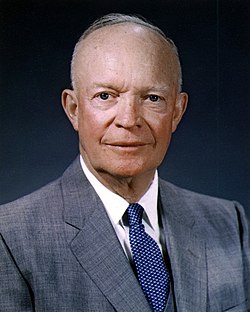
The Eisenhower administration severed formal diplomatic relations with Cuba following repeated disputes over American embassy personnel and continued Cuban drift toward the Soviet bloc. The move left the two countries without official channels of communication.
Image source: Cuba–United States relations
Jan 20, 1961
% complete
John F. Kennedy took office inheriting the CIA's covert plan to overthrow Fidel Castro. During his campaign he had advocated arming Cuban exiles, and shortly after inauguration he authorized the continuation of what would become the Bay of Pigs invasion.
Image source: Presidency of John F. Kennedy
1960
% complete
Under the Eisenhower administration, the CIA launched Operation Patsay to recruit and train Cuban exiles opposed to Castro. Recruits were drawn largely from Miami's exile community and screened for political reliability and military potential.
Image source: Bay of Pigs Invasion
Nov 1960 - Apr 1961
% complete
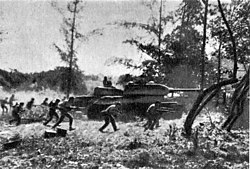
CIA-trained Cuban exiles, organized into Brigade 2506, trained secretly at Retalhuleu and other bases in Guatemala under American instructors. The brigade received instruction in infantry tactics, amphibious landings, artillery, and airborne operations.
Nov 1960
% complete
The overall invasion program, code-named Operation Bumpy Road, was developed by the CIA. It envisioned an amphibious landing establishing a beachhead in southern Cuba, followed by an airborne drop and a popular uprising against Castro that never materialized.
Apr 14, 1961
% complete
After months of internal debate, President Kennedy gave final approval for the invasion but scaled back direct American military involvement, canceling planned follow-up air strikes. This decision proved consequential when the landing force encountered fierce resistance.
Apr 15, 1961
% complete
Eight B-26 bombers painted to resemble Cuban Air Force aircraft attacked three Cuban airfields, destroying several planes. The strikes were intended to cripple Castro's airpower before the landing, though they failed to eliminate all combat aircraft.
Apr 15, 1961
% complete
Adlai Stevenson, the US ambassador to the United Nations, publicly denied American involvement in the air strikes, presenting photographs of the camouflaged B-26s as evidence of defectors' missions. He was later humiliated when the deception was exposed.
Apr 16, 1961
% complete
A crucial dawn air strike scheduled for April 16 was canceled by President Kennedy, who feared exposing American involvement and undermining the cover story. The cancellation left the invading brigade vulnerable to surviving Cuban aircraft and tanks.
Apr 16, 1961
% complete
At a public funeral for Cubans killed in the air raids, Fidel Castro declared that the revolution was socialist and denounced the bombings as American aggression. His speech galvanized Cuban defenses and confirmed the operation could not be disguised as an internal revolt.
Apr 17, 1961
% complete
Shortly after midnight, approximately 1,400 members of Brigade 2506 came ashore at Playa Girón and Playa Larga on Cuba's southern coast. The landing site, chosen partly for its remoteness, featured treacherous reefs and dense swamps that hampered the assault from the start.
Apr 17, 1961
% complete
Cuban Air Force aircraft sank the ships Houston and Río Escondido, destroying much of the brigade's ammunition, communications equipment, and supplies. The losses crippled the invasion force's ability to sustain operations on the beachhead.
Apr 17, 1961
% complete
Brigade paratroopers dropped behind the beaches to block roads leading to the landing zones. They initially succeeded in delaying Cuban militia advances at San Blas and Palpite, buying time for the main force before being overwhelmed by superior numbers.
Apr 17, 1961 - Apr 18, 1961
% complete
At Playa Larga, Brigade 2506 fighters held off waves of Cuban militia and regular troops for nearly a day. Facing relentless bombardment and dwindling ammunition, the defenders withdrew southward toward Playa Girón, inflicting heavy casualties along the way.
Apr 17, 1961 - Apr 20, 1961
% complete
Although American naval vessels stood offshore, President Kennedy refused to authorize direct combat intervention to save the brigade. Frustration among commanders and pilots mounted as requests for air cover were denied, sealing the invasion's fate.
Apr 18, 1961 - Apr 19, 1961
% complete
The remnants of Brigade 2506 made their last stand at Playa Girón against Cuban tanks, artillery, and infantry. Cut off from resupply and reinforcement, the exhausted brigade ran out of ammunition by midday on April 19, ending effective resistance.
Apr 19, 1961
% complete
On the final day, four American civilian pilots flying supply and cover missions for the CIA were shot down over Cuba and killed. Their deaths underscored the depth of covert American involvement despite official denials.
Apr 19, 1961
% complete
By April 19, the invasion had collapsed completely. Of roughly 1,400 men who landed, more than 100 were killed and over 1,200 captured. Castro's forces suffered far fewer casualties, and the operation ended in humiliating failure for the United States.
Apr 19, 1961
% complete
Approximately 1,202 captured members of Brigade 2506 were imprisoned in Cuba, where many endured harsh conditions and interrogations. Their families formed committees to press for release, turning the prisoners into a prolonged political issue in the United States.
Apr 20, 1961
% complete
Fidel Castro personally took command of Cuban forces during the battle and proclaimed victory, declaring that the revolution had defeated 'Yankee imperialism.' The triumph cemented his authority and rallied domestic support around his government.
Apr 21, 1961
% complete
President Kennedy addressed the American Society of Newspaper Editors and acknowledged sole responsibility for the failed operation, stating that victory had a hundred fathers and defeat is an orphan. Despite the fiasco, his approval ratings rose in subsequent polls.
May 1, 1961
% complete
Riding the wave of nationalist unity after repelling the invasion, Castro formally declared Cuba a socialist state. The announcement eliminated any pretense of ideological neutrality and accelerated Cuba's integration into the Soviet sphere.
Image source: History of Cuba
Aug 1961
% complete
Spurred by the invasion threat, Soviet leader Nikita Khrushchev expanded military aid to Cuba, stationing advisors and defensive weapons on the island. This growing commitment set the stage for the deployment of nuclear missiles the following year.
Image source: Cuban Missile Crisis
Nov 30, 1961
% complete
Following the Bay of Pigs failure, President Kennedy authorized Operation Mongoose, a covert campaign of sabotage, propaganda, and assassination plots aimed at destabilizing Castro's government. The program intensified rather than ended American efforts against Cuba.
Image source: Operation Mongoose
Oct 16, 1962 - Oct 28, 1962
% complete
The discovery of Soviet nuclear missiles in Cuba brought the world to the brink of nuclear war. Kennedy imposed a naval quarantine and negotiated with Khrushchev until the Soviets agreed to withdraw the missiles, partially resolving the crisis the Bay of Pigs helped precipitate.
Dec 29, 1962
% complete
After lengthy negotiations brokered through lawyers including James Donovan, Castro released most of the imprisoned brigade members in exchange for $53 million worth of food, medicine, and tractors. The freed men returned to Miami, where Kennedy greeted them at the Orange Bowl.
1963
% complete
Historians have long cited the Bay of Pigs as a cautionary example of flawed groupthink, poor intelligence, and overreliance on covert action. The disaster shaped later decisions during the Cuban Missile Crisis, when Kennedy deliberately sought broader counsel through the ExComm process.
Or browse the full history timeline directory, with more than 2,000 topics.
This Bay of Pigs Invasion timeline was generated with the help of AI, using information found on the internet.
We work hard to keep these timelines accurate, but mistakes do get through. If you spot one, email us at [email protected] and we'll fix it for future visitors.
Generate yours with AI or build it from scratch, for free.
Export your timeline, add your own events, edit or remove AI-generated events, and much more
No credit card required.
Cancel anytime.
Cancel anytime.
You can create an unlimited number of timelines with up to 10 events on each one, customize how they look, export them to PDF, PNG, PowerPoint, CSV, and Excel, and share them with a link. Paid plans raise the event limit and add features like spreadsheet imports and collaborators.
Yes. You can cancel your subscription from your account page at any time, and you will not be charged again. Your subscription stays active for the rest of the period you already paid for.
Yes. We will email you a reminder before the annual renewal, and we will also email you a receipt.
Yes. You can email us within 15 days of any payment, and we will issue you a full refund.
Check out our pricing docs or send us an email anytime: [email protected].