-
Use Cases
-
Resources
-
Pricing
Buckingham Palace is the official residence and administrative headquarters of the British monarch in London. Originally built in 1703 as a townhouse for the Duke of Buckingham, it was acquired by King George III in 1761 and expanded into a palace by architect John Nash. It became the principal royal residence under Queen Victoria in 1837 and remains a symbol of the British monarchy today. More Less
1531 - 1536
% complete
In 1531, Henry VIII acquired the Hospital of St James, which became St James's Palace, from Eton College, and in 1536 he took the Manor of Ebury from Westminster Abbey. This land, at the north-west corner of today's palace site, remained in royal hands and was later leased to various owners.
Image source: Buckingham Palace
1624
% complete
Possibly the first house erected within the site of today's Buckingham Palace was that of William Blake, built around 1624. The land had been in private ownership for at least 150 years.
1633
% complete
George Goring, 1st Earl of Norwich, extended Blake's house from 1633, which came to be known as Goring House. He also developed much of today's garden, then known as Goring Great Garden.
1640
% complete
Unbeknown to Goring, in 1640 his interest in the property failed to pass the Great Seal before Charles I fled London, which it needed to do for legal execution, creating later complications over ownership.
1649
% complete
In Anarchia Anglicana (1649), Clement Walker referred to "new-erected sodoms and spintries at the Mulberry Garden at St. James's", reflecting the notoriety of the gardens near the palace site during this period.
1670
% complete
Various owners leased the land from royal landlords, and the freehold was subject to frenzied speculation during the 17th century. Eventually, in the late 17th century, the freehold was inherited from property tycoon Hugh Audley by the great heiress Mary Davies.
1674 - 1675
% complete
When the improvident Goring defaulted on his rents, Henry Bennet, 1st Earl of Arlington purchased the lease of Goring House and was occupying it when it burned down in 1674. He then constructed Arlington House on the site — now the location of the southern wing of today's palace.
1698
% complete
In 1698, John Sheffield, later Duke of Buckingham and Normanby, acquired the lease of the property that would form the core of today's Buckingham Palace.
1703
% complete
Buckingham House was built in 1703 for John Sheffield, Duke of Buckingham and Normanby, to the design of William Winde. This large townhouse forms the building at the core of today's palace.
1762
% complete
Remodelling of Buckingham House began in 1762 after its acquisition by George III, transforming it into a suitable residence for the royal family.
1789
% complete
Some furnishings were transferred from Carlton House and others had been bought in France after the French Revolution of 1789, enriching the interiors of the growing royal residence.
1820
% complete
After his accession to the throne in 1820, George IV continued the renovation of the house, initially intending to create a small, comfortable home.
1826
% complete
In 1826, while work was in progress, George IV decided to modify the house into a palace with the help of his architect John Nash, who enlarged it with three wings around a central courtyard alongside Edward Blore.
Image source: John Nash (architect)
1829
% complete
The cost of the renovations grew dramatically, and by 1829 the extravagance of Nash's designs resulted in his removal as the architect.
1830
% complete
On the death of George IV in 1830, his younger brother William IV hired Edward Blore to finish the work on the palace. In 1834, after the Palace of Westminster was destroyed by fire, William offered to convert Buckingham Palace into a new Houses of Parliament, but his offer was declined.
Image source: Edward Blore
1840
% complete
Following Queen Victoria's marriage in 1840, Prince Albert concerned himself with a reorganisation of the household offices and staff, and with addressing the design faults of the palace. By the end of 1840, all the problems had been rectified.
1847 - 1850
% complete
By 1847, Victoria and Albert found the palace too small for court life and their growing family. A new wing designed by Edward Blore was built by Thomas Cubitt between 1847 and 1850, enclosing the central quadrangle. It was paid for by the sale of Brighton Pavilion in 1850, whose fittings were once again plundered for the new east wing.
Image source: Thomas Cubitt
1854
% complete
State banquets take place in the Ballroom, built in 1854. At 120 feet long, 60 feet wide and 45 feet high, it is the largest room in the palace, featuring a throne dais beneath a giant domed velvet canopy, or shamiana, used at the Delhi Durbar of 1911.
1873
% complete
In 1873, lacquer doors were brought from the Brighton Pavilion for use in the Chinese-style saloon of the palace, which would later be enhanced by Queen Mary.
1901
% complete
In 1901, the new king, Edward VII, began redecorating the palace, bringing a fresh aesthetic to the interiors after decades of Victorian neglect.
1911
% complete
Aston Webb redesigned Blore's 1850 East Front in 1913 to resemble in part Giacomo Leoni's Lyme Park in Cheshire. As part of a grand memorial to Queen Victoria, he also designed The Mall, the ceremonial approach route to the palace, completed in 1911, along with gilded railings and gates completed by the Bromsgrove Guild in 1911.
Image source: Aston Webb
1927
% complete
Queen Mary enhanced the Chinese-style saloon, working with designer Charles Allom to create a more "binding" Chinese theme in the late 1920s. She also installed many new fixtures and fittings, such as marble Empire style chimneypieces by Benjamin Vulliamy in the ground floor Bow Room.
1938
% complete
In 1938, the northwest pavilion, originally designed by Nash as a conservatory, was converted into a swimming pool.
1970
% complete
Buckingham Palace was designated a Grade I listed building in 1970, recognising its exceptional architectural and historic importance.
1761
% complete
The house was sold by Buckingham's illegitimate son, Charles Sheffield, in 1761 to George III for £21,000 as a private residence for Queen Charlotte, becoming known as The Queen's House.
1762
% complete
The Rococo styled gilt coach, designed by William Chambers in 1760 with painted panels by Giovanni Battista Cipriani, was first used for the State Opening of Parliament by George III in 1762 and has been used for every coronation since William IV.
Image source: Gold State Coach
1775
% complete
In 1775, an Act of Parliament settled the property on Queen Charlotte, in exchange for her rights to nearby Old Somerset House. Fourteen of her fifteen children were born there. Sheffield's leasehold on the mulberry garden site, whose freehold was still owned by the royal family, was due to expire in 1774.
1791
% complete
While St James's Palace remained the official and ceremonial royal residence, the name "Buckingham Palace" was used from at least 1791, marking a shift in popular usage.
Jun 1837
% complete
Buckingham Palace became the London residence and principal royal residence of the British monarch on the accession of Queen Victoria in June 1837. She was the first monarch to reside there.
1861
% complete
Widowed in 1861, the grief-stricken Queen withdrew from public life and left Buckingham Palace to live at Windsor Castle, Balmoral Castle and Osborne House.
1936
% complete
In 1936, the suite briefly became the private apartments of the palace when Edward VIII occupied them during his short reign.
2022
% complete
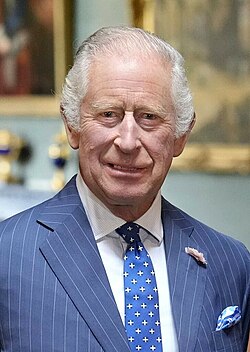
On the accession of King Charles III in 2022, Buckingham Palace's unbroken run of occupation by monarchs since Queen Victoria ended, as Charles continues to reside at nearby Clarence House while conducting official duties at the palace.
Image source: Charles III
2023
% complete
The palace had been the London residence and office of the Duke of York, as well as a weekday home of Queen Elizabeth II and Prince Philip, until 2023 when the Duke ceased to occupy it.
Image source: Prince Andrew, Duke of York
1838 - 1841
% complete
The boy Jones was an intruder who gained entry to the palace on three occasions between 1838 and 1841, causing considerable embarrassment and highlighting security weaknesses.
Image source: The boy Jones
1864
% complete
In 1864, a note was found pinned to the palace fence saying: "These commanding premises to be let or sold, in consequence of the late occupant's declining business." Public opinion eventually persuaded the Queen to return to London, though she preferred to live elsewhere whenever possible.
1919 - 1932
% complete
George V arranged a series of command performances featuring jazz musicians such as the Original Dixieland Jazz Band (1919; the first jazz performance for a head of state), Sidney Bechet and Louis Armstrong (1932), earning the palace a 2009 nomination for a (Kind of) Blue Plaque by the Brecon Jazz Festival.
1958
% complete
In 1958, Queen Elizabeth II abolished the presentation parties for débutantes, replacing them with Garden Parties held at the palace for up to 8,000 invitees in the Garden.
1962
% complete
Built on the site of the chapel destroyed during the war, the purpose-built gallery opened in 1962 to exhibit works of art from the Royal Collection, displaying a changing selection of items.
Image source: King's Gallery
1968
% complete
In 1968, Charles Tryon, 2nd Baron Tryon, acting as treasurer to Queen Elizabeth II, sought to exempt Buckingham Palace from full application of the Race Relations Act 1968.
Image source: Race Relations Act 1968
Jul 9, 1982
% complete
Michael Fagan broke into the palace twice in 1982 and entered Queen Elizabeth II's bedroom on the second occasion on 9 July. At least 12 people have managed unauthorised entry since 1914. In a 2012 interview with The Independent, Fagan said the Queen ran out of the room and no conversation took place.
Image source: Michael Fagan
1993
% complete
The palace's state rooms have been open to the public during summer and on selected dates throughout the year since 1993. Admission fees were originally put towards the rebuilding of Windsor Castle after the 1992 fire devastated many of its staterooms.
2007
% complete
It was only in 2007 that trespassing on the palace grounds became a specific criminal offence, strengthening legal protections against intruders.
2015 - 2016
% complete
In 2015, the State Dining Room was closed for a year and a half because its ceiling had become potentially dangerous.
Nov 2016
% complete
A 10-year schedule of maintenance work, including new plumbing, wiring, boilers and radiators, and the installation of solar panels on the roof, estimated to cost £369 million, was approved by the prime minister in November 2016. In 2017, the House of Commons backed funding for the project by 464 votes to 56.
2025 - Mar 31, 2025
% complete
In the year to 31 March 2025, 683,000 people visited the palace, and 174,000 visited the gallery, demonstrating the enduring appeal of the landmark to visitors from around the world.
1914 - 1918
% complete
During the First World War, which lasted from 1914 until 1918, the palace escaped unscathed despite the wider devastation of the conflict.
1939 - 1945
% complete
During the Second World War, which broke out in 1939, the palace was bombed nine times. A German bomb destroyed the palace chapel in 1940, the most serious and publicised incident.
Sep 15, 1940
% complete
On 15 September 1940, known as Battle of Britain Day, RAF pilot Ray Holmes of No. 504 Squadron attacked a German bomber heading for the palace. Holmes became a King's Messenger after the war and died at the age of 90 in 2005.
May 8, 1945
% complete
On VE Day – 8 May 1945 – the palace was the centre of British celebrations as huge crowds gathered to celebrate the end of the war in Europe, with the royal family appearing on the balcony.
Image source: Victory in Europe Day
Or browse the full history timeline directory, with more than 2,000 topics.
This Buckingham Palace timeline was generated with the help of AI, using information found on the internet.
We work hard to keep these timelines accurate, but mistakes do get through. If you spot one, email us at [email protected] and we'll fix it for future visitors.
Generate yours with AI or build it from scratch, for free.
Export your timeline, add your own events, edit or remove AI-generated events, and much more
No credit card required.
Cancel anytime.
Cancel anytime.
You can create an unlimited number of timelines with up to 10 events on each one, customize how they look, export them to PDF, PNG, PowerPoint, CSV, and Excel, and share them with a link. Paid plans raise the event limit and add features like spreadsheet imports and collaborators.
Yes. You can cancel your subscription from your account page at any time, and you will not be charged again. Your subscription stays active for the rest of the period you already paid for.
Yes. We will email you a reminder before the annual renewal, and we will also email you a receipt.
Yes. You can email us within 15 days of any payment, and we will issue you a full refund.
Check out our pricing docs or send us an email anytime: [email protected].