
-
Use Cases
-
Resources
-
Pricing
Topkapi Palace was the primary residence and administrative headquarters of the Ottoman sultans in Istanbul for nearly 400 years. Built on the Seraglio Point overlooking the Bosphorus, the palace complex served as the heart of the Ottoman Empire, housing the imperial court, harem, treasury, and government offices before being replaced by Dolmabahce Palace. More Less
May 29, 1453
% complete
Sultan Mehmed II captured Constantinople, ending the Byzantine Empire and establishing the Ottoman capital. He initially resided in the Old Palace (Eski Saray) in the city center while planning a grander imperial residence on the Seraglio Point peninsula overlooking the Golden Horn, the Bosphorus, and the Sea of Marmara.
Image source: Fall of Constantinople
1459
% complete
Mehmed II ordered construction of a new palace on the acropolis of ancient Byzantium at Seraglio Point in 1459. Built around a series of courtyards rather than as a single monumental structure, it reflected both Islamic traditions and the sultan's desire for privacy and administrative efficiency.
Image source: Topkapı Palace
1465
% complete
The initial complex was largely complete by 1465, becoming known as Topkapı Sarayı ('Cannon Gate Palace'). It served as the primary residence of the Ottoman sultans and the administrative heart of the empire for nearly four centuries.
1579 - 1585
% complete
Sultan Murad III commissioned the lavishly decorated Privy Chamber (Has Oda), featuring exquisite 16th-century İznik tiles considered among the finest examples of Ottoman ceramic art. The chamber served as his private residence and audience hall.
Image source: Murad III
1600 - 1604
% complete
During the reigns of Murad III and Mehmed III, the Harem section was greatly expanded, adding the Courtyard of the Favorites and private apartments. The Harem grew to over 400 rooms, housing the sultan's family, concubines, and the Valide Sultan's influential household.
Image source: Topkapı Palace
1639
% complete
Murad IV commissioned the Baghdad Kiosk in the Fourth Courtyard to commemorate his reconquest of Baghdad. The elegant pavilion, with its gilded dome and İznik tiles, is regarded as one of the finest examples of classical Ottoman architecture in the palace.
1718 - 1730
% complete
During the Tulip Period under Ahmed III, the palace and its gardens were embellished with pavilions, fountains, and elaborate tulip displays. This cultural renaissance introduced baroque influences into Ottoman architecture and celebrated refined courtly pleasures.
Image source: Tulip Period
1470
% complete
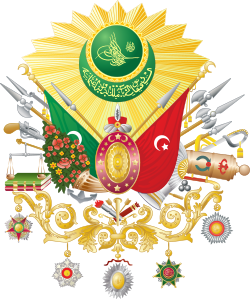
New sultans were girded with the Sword of Osman in a solemn accession ceremony within the palace grounds, symbolizing their succession to the founder Osman I. The ritual became one of the most important state ceremonies held at Topkapi over the centuries.
1470
% complete
The Enderun, or Palace School, educated talented Christian boys recruited through the devshirme system, training them in Islamic sciences, arts, and administration. Graduates filled elite positions including Grand Vizier, making the school a key institution of Ottoman meritocracy.
1478
% complete
The sprawling palace kitchens, arranged in a row of twenty chimneys along the Second Courtyard, prepared meals for up to 5,000 people daily during festivals. Ten separate sections cooked for the sultan, the harem, and various palace staff, reflecting the scale of court life.
1520
% complete
Four times weekly, the Imperial Council (Divan-i Humayun), led by the Grand Vizier, met in the domed Kubbealti chamber in the Second Courtyard to govern the empire. The sultan could observe proceedings unseen behind a grilled window, ensuring oversight without direct interference.
Image source: Imperial Council (Ottoman Empire)
1520 - 1566
% complete
Under Suleiman the Magnificent, Topkapi Palace reached its golden age as the center of a vast empire stretching across three continents. The palace hosted grand ceremonies, diplomatic audiences with European ambassadors, and the flourishing of Ottoman art, law, and architecture.
Image source: Suleiman the Magnificent
1533 - 1558
% complete
Hürrem Sultan (Roxelana), the favorite and later legal wife of Suleiman the Magnificent, broke tradition by residing permanently within the palace harem. Her marriage to the sultan and political influence transformed the role of women in the palace and elevated the status of the harem household.
Image source: Hürrem Sultan
Sep 1730 - Nov 1730
% complete
The Patrona Halil revolt forced Ahmed III to abdicate, ending the Tulip Period and demonstrating the vulnerability of the palace establishment to janissary unrest. The rebellion marked a conservative reaction against the extravagance associated with Topkapi court life.
Image source: Patrona Halil
1789 - 1807
% complete
Selim III launched the Nizam-i Cedid reform program, hosting European-style embassies and modernizing aspects of court administration at Topkapi. His reforms provoked opposition from conservatives and janissaries, ultimately leading to his deposition.
Image source: Selim III
Jun 1826
% complete
Mahmud II destroyed the Janissary corps in the 'Auspicious Incident', removing the military faction that had long influenced life at Topkapi. The reform cleared the way for modernization of the army and centralized power more firmly in the palace.
Image source: Auspicious Incident
1876 - 1877
% complete
For a short period after his accession, Abdulhamid II resided at Topkapi Palace, the last sultan to do so significantly. He soon moved to Yildiz Palace, where he governed for over three decades amid growing constitutional turmoil.
Image source: Abdul Hamid II
1500 - 1900
% complete
The palace conservatively preserved the clothing of successive sultans, accumulating thousands of imperial kaftans and robes. Carefully stored in sealed bundles, these textiles form one of the world's most significant collections of historical garments.
1500 - 1800
% complete
Over three centuries, Topkapi amassed one of the world's great armories, including swords of the early caliphs, jeweled ceremonial weapons, and ornate helmets and mail of the sultans. The collection testifies to the martial foundations of the Ottoman dynasty.
1517
% complete
With Ottoman custodianship of Islam's holiest sites, the keys and ceremonial items of the Kaaba in Mecca were kept at Topkapi Palace. Each year the new kiswah (covering) for the Kaaba was ceremonially dispatched from Istanbul, underscoring the palace's religious prestige.
Image source: Kiswah
1517
% complete
After Selim I's conquest of Egypt brought custody of Mecca and Medina to the Ottomans, the Sacred Safekeeping Room began housing relics of Prophet Muhammad, including his cloak, sword, and standard. These holy relics made Topkapi a site of immense religious significance.
Image source: Topkapı Dagger
1700
% complete
The Spoonmaker's Diamond, an 86-carat pear-shaped diamond among the largest in the world, entered the imperial treasury at Topkapi. Its legendary origins are debated, but it remains one of the most dazzling objects displayed in the palace's Treasury section.
Image source: Spoonmaker's Diamond
1747
% complete
The famous Topkapi Dagger, encrusted with diamonds, emeralds, and rubies, was crafted as an intended gift for the Persian shah Nadir Shah. When he was assassinated before receiving it, the dagger returned to Istanbul and became one of the palace's most celebrated treasures.
1856
% complete
Sultan Abdulmejid I moved the imperial residence to the newly built, European-styled Dolmabahçe Palace in 1856. Topkapi ceased to be the home of the sultan, though it retained ceremonial functions and continued housing the sacred relics and imperial treasury.
Image source: Dolmabahçe Palace
Nov 1, 1922
% complete
The Turkish Grand National Assembly abolished the sultanate, ending six centuries of Ottoman rule. The last sultan, Mehmed VI, departed Constantinople into exile, leaving the imperial palaces, including Topkapi, subject to the new national government.
Image source: Abolition of the Ottoman sultanate
Mar 3, 1924
% complete
Turkey abolished the caliphate and expelled all members of the Ottoman dynasty. With the imperial family gone, Topkapi Palace passed fully into the hands of the Republic of Turkey, which began considering its future use.
Image source: Abolition of the Caliphate
Apr 3, 1924
% complete
Official legislation designated Topkapi as an imperial museum under the Ministry of Education, formalizing its transformation from royal residence to public institution. The museum gradually restored sections of the palace for exhibition.
Oct 9, 1924
% complete
By decree of Atatürk's government, Topkapi Palace was converted into a museum and opened to the public on October 9, 1924, becoming one of the first monuments of the young republic. Visitors could now explore the former seat of Ottoman power, its courtyards, chambers, and collections.
1925
% complete
In 1925, the Department of Religious Affairs opened the Sacred Safekeeping Room to visitors, allowing the public to view relics of Prophet Muhammad for the first time. Continuous Quran recitation was maintained there, preserving the room's spiritual character.
1960
% complete
After decades of restoration, parts of the palace Harem were opened to visitors in the mid-20th century. The labyrinth of over 400 rooms revealed the domestic life of the imperial family and became one of the museum's most popular attractions.
1964
% complete
The caper film 'Topkapi', starring Peter Ustinov and Melina Mercouri, depicted a fictional plot to steal the palace's jeweled dagger. The film's international success drew global attention to the museum and its treasures.
Image source: Topkapi (film)
1985
% complete
As part of the Historic Areas of Istanbul, Topkapi Palace was inscribed on the UNESCO World Heritage List in 1985. The designation recognized the palace's outstanding universal value as a masterpiece of Ottoman architecture and a repository of imperial heritage.
Image source: Historic Areas of Istanbul
Or browse the full history timeline directory, with more than 2,000 topics.
This Topkapi Palace timeline was generated with the help of AI, using information found on the internet.
We work hard to keep these timelines accurate, but mistakes do get through. If you spot one, email us at [email protected] and we'll fix it for future visitors.
Generate yours with AI or build it from scratch, for free.
Export your timeline, add your own events, edit or remove AI-generated events, and much more
No credit card required.
Cancel anytime.
Cancel anytime.
You can create an unlimited number of timelines with up to 10 events on each one, customize how they look, export them to PDF, PNG, PowerPoint, CSV, and Excel, and share them with a link. Paid plans raise the event limit and add features like spreadsheet imports and collaborators.
Yes. You can cancel your subscription from your account page at any time, and you will not be charged again. Your subscription stays active for the rest of the period you already paid for.
Yes. We will email you a reminder before the annual renewal, and we will also email you a receipt.
Yes. You can email us within 15 days of any payment, and we will issue you a full refund.
Check out our pricing docs or send us an email anytime: [email protected].