-
Use Cases
-
Resources
-
Pricing
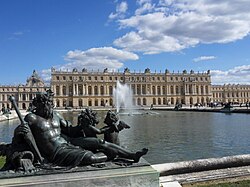
The Palace of Versailles is a former royal residence located about 20 km southwest of Paris. Beginning as a modest hunting lodge built by Louis XIII in 1623, it was transformed by his son Louis XIV into one of the largest and most opulent palaces in Europe, becoming the seat of French political power from 1682 until the French Revolution in 1789. Renowned for its Hall of Mirrors, vast formal gardens, and lavish court life, Versailles stands as a symbol of absolute monarchy and French artistic achievement, and it is now a UNESCO World Heritage Site and major museum. More Less
1623
% complete
King Louis XIII of France constructed a modest brick-and-stone hunting lodge on the site of Versailles, a small village southwest of Paris. This unassuming lodge would later become the foundation for one of the most magnificent palaces in the world.
Image source: Palace of Versailles
1631 - 1634
% complete
Between 1631 and 1634, Louis XIII commissioned architect Philibert Le Roy to rebuild and enlarge his hunting lodge into a true château, creating the core structure that his son Louis XIV would later dramatically expand.
1661
% complete
In 1661, shortly after taking personal control of the French government, Louis XIV launched ambitious expansion works at Versailles, entrusting architects Louis Le Vau and later Jules Hardouin-Mansart with transforming the château into an unparalleled palace.
1661
% complete
Landscape architect André Le Nôtre began work in 1661 on the vast formal gardens of Versailles, featuring geometric parterres, grand canals, fountains, and tree-lined avenues that became the definitive example of the French formal garden style.
Image source: Gardens of Versailles
1664
% complete
Charles Le Brun, appointed First Painter to King Louis XIV in 1664, directed much of the interior decoration of Versailles, including the lavish painted ceilings of state apartments celebrating the glory of Apollo and the Sun King.
Image source: Charles Le Brun
1670 - 1687
% complete
Louis XIV commissioned a retreat within the grounds of Versailles, culminating under Hardouin-Mansart in 1687 with the pink marble Grand Trianon, an elegant pavilion where the king could escape the formality of court life.
Image source: Grand Trianon
1678 - 1684
% complete
Between 1678 and 1684, Jules Hardouin-Mansart built the Hall of Mirrors, a 73-meter gallery lined with 357 mirrors facing arched windows over the gardens. It became the most celebrated room of the palace and a symbol of absolute royal power.
Image source: Hall of Mirrors
1710
% complete
The magnificent Royal Chapel, designed by Hardouin-Mansart and finished by Robert de Cotte, was consecrated in 1710. Its two-story design and soaring vaults made it a masterpiece of French Baroque religious architecture.
Image source: Chapels of Versailles
1762 - 1768
% complete
Built between 1762 and 1768 by architect Ange-Jacques Gabriel for Louis XV and Madame de Pompadour, the refined Neoclassical Petit Trianon later became famously associated with Marie Antoinette as her private refuge.
Image source: Petit Trianon
Sep 5, 1638
% complete
The future Sun King, Louis XIV, was born in 1638. His long reign would transform Versailles from a modest royal retreat into the grandest palace in Europe and the seat of French political power.
Image source: Louis XIV
May 1664
% complete
In May 1664, Louis XIV staged the 'Pleasures of the Enchanted Island,' a spectacular week-long festival of ballets, feasts, and fireworks at Versailles. The event showcased the palace's growing magnificence and helped establish its reputation across Europe.
May 6, 1682
% complete
On May 6, 1682, Louis XIV officially relocated the French court and government to Versailles. By concentrating the nobility at the palace, the king kept potential rivals close and established Versailles as the political heart of France until the Revolution.
Sep 1, 1715
% complete
Louis XIV died at Versailles on September 1, 1715, after reigning for 72 years. He had ruled from the palace for over three decades, and his death marked the end of the most glorious era of the court.
May 16, 1770
% complete
The future Louis XVI married the Austrian archduchess Marie Antoinette in a lavish ceremony at the Royal Chapel of Versailles on May 16, 1770. The union cemented the Franco-Austrian alliance but would end tragically during the Revolution.
Image source: Marie Antoinette
1783 - 1787
% complete
Between 1783 and 1787, Marie Antoinette commissioned the rustic Hameau de la Reine, a picturesque model village near the Petit Trianon where she could play shepherdess away from the rigid etiquette of court.
Image source: Hameau de la Reine
1805 - 1815
% complete
Emperor Napoleon I occasionally used the Grand Trianon as a residence between 1805 and 1815 and had parts of the palace restored for official use, though he preferred Fontainebleau and never fully reoccupied Versailles.
Aug 10, 1678
% complete
The Peace of Nijmegen in 1678 ended the Franco-Dutch War with significant French territorial gains. Flush with triumph, Louis XIV accelerated construction at Versailles, intending it to reflect France's new status as Europe's dominant power.
Image source: Treaties of Nijmegen
Feb 22, 1787
% complete
Facing financial crisis, Louis XVI convened the Assembly of Notables at Versailles in February 1787. The body's refusal to approve sweeping fiscal reforms deepened the crisis and pushed France toward revolution.
Image source: Assembly of Notables
May 5, 1789
% complete
Louis XVI summoned the Estates-General to Versailles in May 1789, the first such assembly since 1614. Disputes over voting procedures quickly exposed the deep divisions in French society and set the Revolution in motion.
Image source: Estates General of 1789
Jun 20, 1789
% complete
On June 20, 1789, locked out of their meeting hall, deputies of the Third Estate gathered in a tennis court at Versailles and swore not to disband until France had a constitution — a pivotal act of defiance launching the French Revolution.
Image source: Tennis Court Oath
Oct 5, 1789 - Oct 6, 1789
% complete
On October 5–6, 1789, thousands of Parisian women marched to Versailles demanding bread and protesting royal indifference. They forced Louis XVI and Marie Antoinette to return to Paris, effectively ending the palace's role as the seat of power.
Image source: Women's March on Versailles
1792 - 1793
% complete
After the fall of the monarchy in 1792, the palace was ransacked, its furniture dispersed or auctioned, and artworks seized. The once-glittering residence stood largely empty and neglected through the Revolutionary years.
Jan 18, 1871
% complete
Following France's defeat in the Franco-Prussian War, Wilhelm I was proclaimed German Emperor in the Hall of Mirrors on January 18, 1871 — a deliberate humiliation of France staged in the heart of its most iconic palace.
Image source: Proclamation of the German Empire
May 10, 1871
% complete
The preliminary peace treaty ending the Franco-Prussian War was signed at Versailles on May 10, 1871, ceding Alsace-Lorraine to Germany and deepening French resentment toward the palace's occupiers.
Image source: Treaty of Versailles (1871)
Jun 28, 1919
% complete
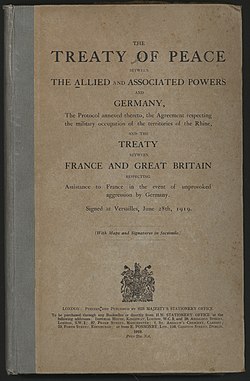
Exactly five years after Franz Ferdinand's assassination, the Treaty of Versailles was signed in the Hall of Mirrors on June 28, 1919, formally ending World War I and imposing heavy terms on Germany — chosen deliberately to erase the memory of 1871.
Image source: Treaty of Versailles
1837
% complete
King Louis Philippe transformed Versailles into a museum dedicated to 'all the glories of France,' opening it in 1837. The palace's galleries were filled with paintings and sculptures celebrating French history from its origins onward.
Image source: Musée de l'Histoire de France (Versailles)
1871
% complete
After the Third Republic was proclaimed, the palace passed to state ownership and gradually became a national museum, though parts served briefly as the seat of the National Assembly after the Paris Commune.
1920
% complete
From the early 20th century onward, successive governments undertook extensive restoration of Versailles, returning rooms to their historical appearance, refurnishing them with original pieces, and opening more areas to the public.
1979
% complete
UNESCO inscribed the Palace and Park of Versailles on the World Heritage List in 1979, recognizing its outstanding universal value as one of the greatest achievements of 17th-century French art and architecture.
2003
% complete
In 2003, the French government launched the Grand Versailles program, a multi-decade, multi-million-euro restoration covering the roof, facades, gardens, fountains, and interiors to preserve the estate for future generations.
Or browse the full history timeline directory, with more than 2,000 topics.
This Palace of Versailles timeline was generated with the help of AI, using information found on the internet.
We work hard to keep these timelines accurate, but mistakes do get through. If you spot one, email us at [email protected] and we'll fix it for future visitors.
Generate yours with AI or build it from scratch, for free.
Export your timeline, add your own events, edit or remove AI-generated events, and much more
No credit card required.
Cancel anytime.
Cancel anytime.
You can create an unlimited number of timelines with up to 10 events on each one, customize how they look, export them to PDF, PNG, PowerPoint, CSV, and Excel, and share them with a link. Paid plans raise the event limit and add features like spreadsheet imports and collaborators.
Yes. You can cancel your subscription from your account page at any time, and you will not be charged again. Your subscription stays active for the rest of the period you already paid for.
Yes. We will email you a reminder before the annual renewal, and we will also email you a receipt.
Yes. You can email us within 15 days of any payment, and we will issue you a full refund.
Check out our pricing docs or send us an email anytime: [email protected].