-
Use Cases
-
Resources
-
Pricing
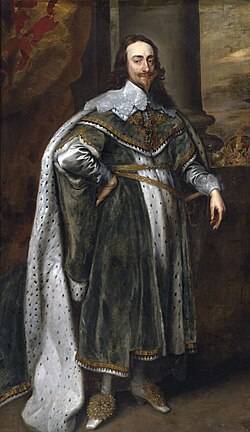
Charles I was King of England, Scotland, and Ireland from 1625 until his execution in 1649. His reign was marked by conflicts with Parliament over money and religion, disputes over royal authority, and ultimately the English Civil War. Believing strongly in the divine right of kings, his inflexibility led to civil war, defeat by Parliamentary forces, trial for treason, and his beheading—the first execution of an English monarch. More Less
Nov 19, 1600
% complete
Charles was born at Dunfermline Palace in Scotland, the second son of King James VI of Scotland and Anne of Denmark. A sickly child, he initially struggled with physical frailty and a speech impediment, but he overcame these challenges through determination and careful upbringing.
Image source: Charles I of England
Nov 6, 1612
% complete
The sudden death of Charles's popular elder brother Henry from typhoid fever made Charles the heir apparent to the thrones of England, Scotland, and Ireland. He was created Prince of Wales shortly thereafter, transforming his life's trajectory entirely.
Image source: Henry Frederick, Prince of Wales
Nov 4, 1616
% complete
Charles was formally invested as Prince of Wales at Whitehall, cementing his position as heir to the throne. The ceremony marked his formal entry into public life as the future king of England.
Image source: Prince of Wales
Feb 1623 - Oct 5, 1623
% complete
Charles and his friend George Villiers, Duke of Buckingham, traveled incognito to Spain to negotiate a marriage with the Spanish Infanta Maria Anna. The mission ended in humiliating failure, souring Anglo-Spanish relations and pushing England toward conflict with Spain.
Image source: Spanish match
Mar 27, 1625
% complete
Charles became King of England, Scotland, and Ireland following the death of his father, James I. His reign would be marked by persistent conflicts with Parliament over money, religion, and royal authority.
May 11, 1625
% complete
Charles married Henrietta Maria, sister of King Louis XIII of France, by proxy in Paris before her arrival in England. The marriage alliance with France was controversial among English Protestants due to her Catholic faith.
Image source: Henrietta Maria of France
Feb 2, 1626
% complete
Charles was formally crowned King of England at Westminster Abbey. Tensions were already high, and the ceremony reflected the king's high conception of royal prerogative that would define his reign.
Image source: Coronation of Charles II of England
Jun 1627 - Nov 1627
% complete
An English expedition led by Buckingham attempted to aid French Huguenots at La Rochelle but suffered disastrous losses. The fiasco deepened parliamentary anger at Buckingham and the king's foreign policy.
Image source: Siege of La Rochelle
Aug 23, 1628
% complete
Buckingham, Charles's closest advisor and favorite, was stabbed to death by John Felton at Portsmouth. Charles was deeply affected by the loss of his trusted companion, and Henrietta Maria soon rose to become his chief confidante.
Image source: George Villiers, 1st Duke of Buckingham
1629
% complete
Charles extended ship money, traditionally paid only by coastal towns for naval defense, to inland counties during peacetime. The levy, enforced vigorously by officials like Thomas Wentworth, was widely resented and challenged legally by John Hampden in 1637.
Image source: Ship money
Mar 10, 1629
% complete
Furious at parliamentary attacks on his policies, Charles dissolved parliament and began ruling alone for eleven years. This 'Personal Rule' relied on unconventional means of raising revenue and provoked growing resentment.
Sep 1633
% complete
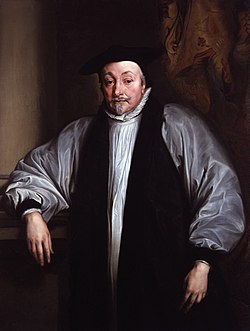
Charles elevated William Laud to Archbishop of Canterbury. Laud promoted Arminian ceremonial reforms emphasizing ritual and order, alarming Puritans who saw the changes as dangerously close to Catholicism.
Image source: William Laud
May 23, 1637
% complete
Charles attempted to impose a new prayer book and canons on the Church of Scotland without consulting its clergy or parliament. The move ignited fierce resistance, famously erupting when Jenny Geddes threw a stool at the dean of St Giles' Cathedral in Edinburgh.
Image source: Scottish Prayer Book (1637)
Feb 28, 1638
% complete
Scottish presbyterians signed the National Covenant pledging to defend their reformed church against episcopal and royal innovations. The covenanting movement mobilized widespread opposition across Scotland to Charles's religious policies.
Image source: Covenanters
1639
% complete
Charles marched north with an ill-equipped army to suppress the Scottish Covenanters, but the campaign fizzled into the short Pacification of Berwick. The king lacked funds for a sustained war, forcing him toward compromise.
Image source: Bishops' Wars
1640
% complete
A Scottish army invaded northern England and defeated English forces at the Battle of Newburn. With Scots occupying Newcastle, Charles had no choice but to summon parliament to raise money, ending the Personal Rule.
Image source: Bishops' Wars
Apr 13, 1640 - May 5, 1640
% complete
After eleven years without parliament, Charles summoned one to fund the Scottish war, but members refused to grant revenue until grievances were addressed. After just three weeks, the king angrily dissolved it.
Image source: Short Parliament
Nov 3, 1640
% complete
Facing bankruptcy and occupation of the north, Charles summoned the Long Parliament. It moved swiftly to dismantle the machinery of the Personal Rule, impeaching Strafford and Laud and passing laws preventing dissolution without consent.
Image source: Long Parliament
May 12, 1641
% complete
Parliament impeached Strafford for tyranny, and after impeachment failed, passed a special bill of attainder. Under immense pressure from crowds and his queen, Charles reluctantly signed the death warrant, an act that haunted him deeply.
Image source: Thomas Wentworth, 1st Earl of Strafford
Oct 23, 1641
% complete
Catholic rebels in Ulster rose against English and Scottish Protestant settlers amid massacres and atrocities. Rumors exaggerated the violence, fueling panic in England and intensifying demands that control of the army be taken from the king.
Image source: Irish Rebellion of 1641
Jan 4, 1642
% complete
Charles entered the House of Commons with soldiers to arrest five leading opponents including John Pym. Forewarned, they had fled; the unprecedented violation of parliamentary privilege destroyed trust and pushed both sides toward war.
Image source: Five Members
Aug 22, 1642
% complete
Having left London, Charles formally declared war by raising his banner at Nottingham, marking the start of the First English Civil War between Royalists (Cavaliers) and Parliamentarians (Roundheads).
Image source: First English Civil War
Oct 23, 1642
% complete
The first major pitched battle of the civil war proved indecisive. Prince Rupert's cavalry routed Parliamentary horse but plundered instead of pressing home the attack, allowing both sides to claim victory and prolonging the conflict.
Image source: Battle of Edgehill
Sep 25, 1643
% complete
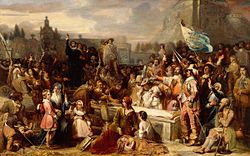
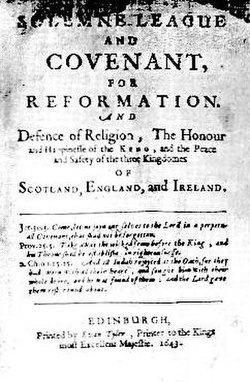
Parliament allied with the Scottish Covenanters, committing England to Presbyterianism. The alliance brought Scottish armies south, significantly strengthening Parliament's military position against the king.
Image source: Solemn League and Covenant
Jan 1645
% complete
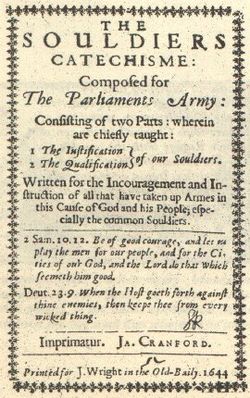
Parliament created a professional, centrally organized army under Sir Thomas Fairfax, with Oliver Cromwell as cavalry commander. Its discipline and meritocratic promotion transformed the war's fortunes in Parliament's favor.
Image source: New Model Army
Jun 14, 1645
% complete
The New Model Army decisively crushed Charles's main field army at Naseby. The king lost his infantry, artillery, baggage, and correspondence, effectively dooming the Royalist cause in the First Civil War.
Image source: Battle of Naseby
May 5, 1646
% complete
With the Royalist cause collapsing, Charles surrendered himself to a Scottish Covenanter army at Southwell near Newark, hoping to negotiate terms. The Scots later handed him over to the English Parliament for £100,000.
Nov 1647 - Dec 1648
% complete
After failed negotiations with Parliament and the army, Charles escaped Hampton Court and fled to the Isle of Wight, where he was detained at Carisbrooke Castle. From captivity he secretly negotiated the Engagement with the Scots, triggering a second civil war that ended in his complete defeat.
Image source: Carisbrooke Castle
Dec 6, 1648
% complete
Colonel Thomas Pride forcibly excluded Presbyterian MPs who favored negotiating with the king, leaving a 'Rump Parliament' dominated by army supporters willing to put Charles on trial. It was a decisive military coup against constitutional government.
Image source: Pride's Purge
Jan 20, 1649 - Jan 27, 1649
% complete
A specially constituted High Court of Justice tried the king on charges of treason against his own people. Charles refused to plead, denying the court's legitimacy, and was convicted and sentenced to death as a 'tyrant, traitor, murderer, and enemy of the state.'
Image source: High Court of Justice (1649)
Jan 30, 1649
% complete
Charles was beheaded on a scaffold outside Whitehall's Banqueting House, where he had commissioned paintings glorifying divine kingship. Facing death with dignity, he declared himself a martyr for his people's liberties. The monarchy was abolished and England became a republic under Cromwell.
Image source: Execution of Charles I
Or browse the full history timeline directory, with more than 2,000 topics.
This Charles I of England timeline was generated with the help of AI, using information found on the internet.
We work hard to keep these timelines accurate, but mistakes do get through. If you spot one, email us at [email protected] and we'll fix it for future visitors.
Generate yours with AI or build it from scratch, for free.
Export your timeline, add your own events, edit or remove AI-generated events, and much more
No credit card required.
Cancel anytime.
Cancel anytime.
You can create an unlimited number of timelines with up to 10 events on each one, customize how they look, export them to PDF, PNG, PowerPoint, CSV, and Excel, and share them with a link. Paid plans raise the event limit and add features like spreadsheet imports and collaborators.
Yes. You can cancel your subscription from your account page at any time, and you will not be charged again. Your subscription stays active for the rest of the period you already paid for.
Yes. We will email you a reminder before the annual renewal, and we will also email you a receipt.
Yes. You can email us within 15 days of any payment, and we will issue you a full refund.
Check out our pricing docs or send us an email anytime: [email protected].