-
Use Cases
-
Resources
-
Pricing
Charles II (1630–1685) was King of England, Scotland, and Ireland whose restoration to the throne in 1660 ended eleven years of republican rule following the English Civil War and the execution of his father, Charles I. His reign, known for the Great Plague of London, the Great Fire of London, and cultural revival after the Puritan era, marked the return of the Stuart monarchy. More Less
May 29, 1630
% complete
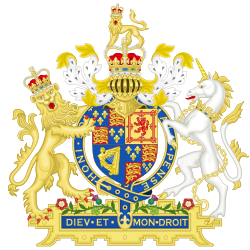
Charles II was born on 29 May 1630 at St James's Palace, the eldest surviving son of Charles I and Henrietta Maria. He would later become King of Scotland from 1649 to 1651, and King of England, Scotland, and Ireland from the Restoration of 1660 until his death in 1685.
Image source: Charles II of England
Aug 1642
% complete
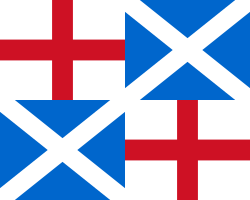
In August 1642, the long-running dispute between Charles I and Parliament culminated in the outbreak of the First English Civil War, pitting Royalist forces loyal to the king against Parliamentarian forces.
Image source: First English Civil War
Jan 1645
% complete
In January 1645, during the First English Civil War, the young Charles was given his own Council and made titular head of Royalist forces in the West Country.
1646
% complete
By spring 1646, most of the West Country had been occupied by Parliamentarian forces, and Charles went into exile to avoid capture. He later took refuge in Jersey, where he was provided with a pinnace for his amusement.
May 1646
% complete
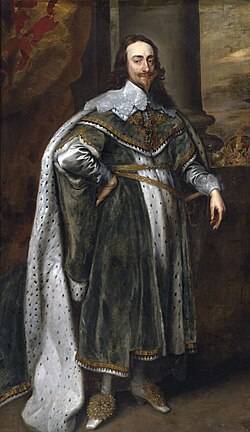
Charles I surrendered into captivity in May 1646, marking a decisive turn against the Royalist cause in the English Civil War.
Image source: Charles I of England
Jan 30, 1649
% complete
Despite his son's diplomatic efforts to save him, Charles I was executed at Whitehall on 30 January 1649, at the climax of the English Civil War. England became a republic.
Image source: Execution of Charles I
1648
% complete
During the Second English Civil War in 1648, Charles moved to The Hague, where his sister Mary and his brother-in-law William II, Prince of Orange, seemed more likely to provide substantial aid to the Royalist cause than his mother's French relations.
Image source: Second English Civil War
Feb 5, 1649
% complete
After Charles I's execution, the Parliament of Scotland proclaimed Charles II King of Scotland on 5 February 1649, making him the rightful heir to the Stuart monarchy in exile.
Jun 23, 1650
% complete
Upon his arrival in Scotland on 23 June 1650, Charles formally agreed to the Covenant. His abandonment of Episcopal church governance won him support in Scotland but left him unpopular in England.
Sep 3, 1650
% complete
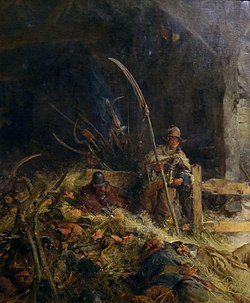
On 3 September 1650, the Covenanters were defeated at Dunbar by a much smaller force commanded by Oliver Cromwell, as part of the Anglo-Scottish War of 1650 to 1652 sparked by Charles's alliance with the Scots.
Image source: Battle of Dunbar (1650)
Jan 1, 1651
% complete
Nevertheless, the Scots remained Charles's best hope of restoration, and he was crowned King of Scotland at Scone Abbey on 1 January 1651.
Image source: Stone of Scone
Sep 3, 1651
% complete
Opposition to what was primarily a Scottish army meant few English Royalists joined as it moved south, and the invasion ended in defeat at the Battle of Worcester on 3 September 1651. Cromwell defeated Charles II, who fled to mainland Europe.
Image source: Battle of Worcester
1653
% complete
Under the Instrument of Government passed by Parliament, Cromwell was appointed Lord Protector of England, Scotland and Ireland in 1653, effectively placing the British Isles under military rule.
Image source: The Protectorate
1654
% complete
Despite Stuart family connections through Henrietta Maria and the Princess of Orange, France and the Dutch Republic allied themselves with Cromwell's government from 1654, forcing Charles to leave France and turn to Spain for aid, which ruled the Southern Netherlands.
1656
% complete
In exile, Charles made the Treaty of Brussels with Spain in 1656, securing Spanish support for his cause while France had aligned itself with Cromwell's Commonwealth.
Image source: Treaty of Brussels (1656)
1657
% complete
The Commonwealth made the Treaty of Paris with France in 1657 to join them in war against Spain in the Netherlands, further isolating Charles and his Royalist followers.
Image source: Anglo-Spanish War (1654–1660)
Jun 14, 1658
% complete
At the Battle of the Dunes in 1658, as part of the larger Spanish force, Charles's army of around 2,000 clashed with Commonwealth troops fighting alongside the French, suffering a defeat that dashed hopes of an early restoration.
Image source: Battle of the Dunes (1658)
Sep 3, 1658
% complete
After Oliver Cromwell's death in 1658, Charles's initial chances of regaining the Crown seemed slim; Cromwell was succeeded as Lord Protector by his son Richard, but the new Lord Protector had little experience of either military or civil administration.
Image source: Oliver Cromwell
1659
% complete
A political crisis after Cromwell's death resulted in turmoil: in 1659, the Rump Parliament was recalled and Richard Cromwell resigned, opening the way for the restoration of the monarchy in 1660 and Charles's invitation to return to Britain.
Image source: Richard Cromwell
Feb 1660
% complete
General George Monck and his army marched into the City of London and forced the Rump Parliament to readmit members of the Long Parliament who had been excluded in December 1648 during Pride's Purge, paving the way for the Restoration.
Image source: George Monck, 1st Duke of Albemarle
Apr 25, 1660
% complete
The so-called Convention Parliament assembled on 25 April 1660, and soon afterwards welcomed the Declaration of Breda, in which Charles promised lenience and tolerance.
Image source: Declaration of Breda
May 8, 1660
% complete
The English Parliament resolved to proclaim Charles king and invite him to return, a message that reached Charles at Breda on 8 May 1660.
Image source: Stuart Restoration
May 29, 1660
% complete
Charles set out for England from Scheveningen, arrived in Dover on 25 May 1660, and reached London on 29 May, his 30th birthday, where he was received to public acclaim.
May 29, 1660 - May 29, 1859
% complete
The anniversary of the Restoration, which was also Charles's birthday, was recognised in England until the mid-nineteenth century as Oak Apple Day, commemorating the Royal Oak in which Charles hid during his escape from Oliver Cromwell's forces after the Battle of Worcester.
Image source: Royal Oak
Feb 2, 1685 - Feb 6, 1685
% complete
Charles suffered a sudden apoplectic fit on the morning of 2 February 1685, and died four days later at the Palace of Whitehall at 11:45 am, aged 54, having ruled alone since dissolving Parliament in 1681.
Jul 6, 1685
% complete
Charles's eldest illegitimate son, the Duke of Monmouth, led a rebellion against James II, but was defeated at the Battle of Sedgemoor on 6 July 1685, captured and executed.
Image source: Monmouth Rebellion
1688
% complete
James II, Charles's brother and successor, was eventually dethroned in 1688 in the course of the Glorious Revolution.
Image source: Glorious Revolution
Oct 1660
% complete
In the latter half of 1660, Charles's joy at the Restoration was tempered by the deaths of his siblings Henry and Mary from smallpox.
Jun 23, 1661
% complete
On 23 June 1661, a marriage treaty was signed; England acquired Catherine's dowry of Tangier in North Africa, the Seven Islands of Bombay in India, valuable trading privileges in Brazil and the East Indies, religious and commercial freedom in Portugal, and two million Portuguese crowns (equivalent to £300,000 then).
Image source: Catherine of Braganza
1662
% complete
The Corporation Act 1661 required municipal officeholders to swear allegiance; the Act of Uniformity 1662 made the use of the 1662 Book of Common Prayer compulsory; the Conventicle Act 1664 prohibited religious assemblies of more than five people outside the Church of England; and the Five Mile Act 1665 barred expelled non-conforming clergymen from coming within five miles of their parishes.
Image source: Act of Uniformity 1662
May 13, 1662 - May 21, 1662
% complete
Catherine journeyed from Portugal to Portsmouth on 13–14 May 1662, but was not visited by Charles there until 20 May. Earlier, in February 1661, the earl of Bristol had travelled to Parma to inspect Farnese, but she refused to marry the English monarch because she wanted to become a nun.
1665
% complete
In 1665, the Great Plague of London began, peaking in September with up to 7,000 deaths per week. Plague cases ebbed over the winter, and Charles returned to London in February 1666.
Image source: Great Plague of London
Sep 2, 1666 - Sep 6, 1666
% complete
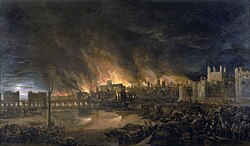
After a long spell of hot and dry weather through mid-1666, the Great Fire of London started on 2 September 1666 in Pudding Lane, destroying much of the City of London.
Image source: Great Fire of London
Jun 1, 1670
% complete
In 1670, Charles, seeking to solve his financial troubles, entered into the Treaty of Dover, an alliance with his cousin Louis XIV of France, under which Louis would pay him £160,000 each year.
Image source: Secret Treaty of Dover
Mar 15, 1672
% complete
In 1672, Charles attempted to introduce religious freedom for Catholics and Protestant dissenters with his Royal Declaration of Indulgence, purporting to suspend all penal laws against them, but the English Parliament forced him to withdraw it.
1678
% complete
In 1678, Titus Oates, who had been alternately an Anglican and Jesuit priest, falsely warned of a 'Popish Plot' to assassinate the king, even accusing the queen of complicity, sparking anti-Catholic hysteria across England.
Image source: Popish Plot
Dec 1678
% complete
Later in 1678, the House of Commons impeached Danby for high treason over his role in negotiations with France. To save Danby from the impeachment trial, Charles dissolved the Cavalier Parliament in January 1679.
Image source: Thomas Osborne, 1st Duke of Leeds
1679
% complete
In 1679, Titus Oates's fabrication of a supposed Popish Plot sparked the Exclusion Crisis when it was revealed that Charles's brother and heir presumptive, James, Duke of York, had become a Catholic. The prospect of a Catholic monarch was vehemently opposed by the 1st Earl of Shaftesbury, whose power base strengthened when the House of Commons of 1679 introduced the Exclusion Bill to bar James from succession.
Image source: Exclusion Crisis
Jul 1679
% complete
Fearing that the Exclusion Bill would be passed, and bolstered by some acquittals in the continuing Plot trials indicating a more favourable public mood towards Catholicism, Charles dissolved the English Parliament for a second time that year in mid-1679.
1681
% complete
Lord Shaftesbury was prosecuted (albeit unsuccessfully) for treason in 1681 and later fled to Holland, where he died.
Image source: Anthony Ashley Cooper, 1st Earl of Shaftesbury
Mar 28, 1681
% complete
When a new Parliament assembled at Oxford in March 1681, Charles dissolved it for a fourth time after just a few days, and subsequently ruled alone until his death in 1685.
Image source: Oxford Parliament (1681)
1682 - 1683
% complete
To destroy opposition in London, Charles first disenfranchised many Whigs in the 1682 municipal elections, and in 1683 the London charter was forfeited. By 1682 political problems had also left the Admiralty Board split along political lines, reducing its ability to function.
Image source: City of London Corporation
1683
% complete
After the discovery of the Rye House Plot to murder Charles and James in 1683, some Whig leaders were executed or forced into exile, strengthening the Crown's position against its opponents.
Image source: Rye House Plot
Jul 15, 1662
% complete
In 1662, Charles granted a royal charter to the formal society of scientists established in 1660, giving a more academic and learned approach to science and conducting experiments in physics and mathematics. He had visited Gresham College in October 1660 to see new telescopes developed by Sir Paul Neile, and Evelyn described a May 1661 visit to view Saturn's rings.
Image source: Royal Society
Mar 4, 1665 - Jul 31, 1667
% complete
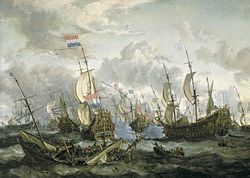
The Second Dutch War (1665–1667) was started by English attempts to muscle in on Dutch possessions in Africa and North America. The conflict began well for the English, with the capture of New Amsterdam (renamed New York after James, Duke of York) and victory at Lowestoft, but ended with the Dutch Raid on the Medway in 1667.
Image source: Second Anglo-Dutch War
1668
% complete
In 1668, England allied itself with Sweden and with its former enemy the Netherlands to oppose Louis XIV in the War of Devolution.
Image source: Triple Alliance (1668)
1668
% complete
Earlier in 1668, Charles leased the islands of Bombay to the company for a nominal sum of £10 paid in gold, laying the foundations for British commercial expansion in India.
Image source: History of Mumbai
1670
% complete
In 1670, Charles granted control of the entire Hudson Bay drainage basin to the Hudson's Bay Company by royal charter, naming the territory Rupert's Land after his cousin Prince Rupert of the Rhine, the company's first governor.
Image source: Rupert's Land
1673
% complete
Although Charles lost interest in the activities of the Royal Society, he continued to support scientific and commercial endeavours, founding the Mathematical School at Christ's Hospital in 1673.
Image source: Christ's Hospital
Feb 9, 1674
% complete
By 1674, England had gained nothing from the war, and the Cavalier Parliament refused to provide further funds, forcing Charles to make peace.
Image source: Third Anglo-Dutch War
Or browse the full history timeline directory, with more than 2,000 topics.
This Charles II of England timeline was generated with the help of AI, using information found on the internet.
We work hard to keep these timelines accurate, but mistakes do get through. If you spot one, email us at [email protected] and we'll fix it for future visitors.
Generate yours with AI or build it from scratch, for free.
Export your timeline, add your own events, edit or remove AI-generated events, and much more
No credit card required.
Cancel anytime.
Cancel anytime.
You can create an unlimited number of timelines with up to 10 events on each one, customize how they look, export them to PDF, PNG, PowerPoint, CSV, and Excel, and share them with a link. Paid plans raise the event limit and add features like spreadsheet imports and collaborators.
Yes. You can cancel your subscription from your account page at any time, and you will not be charged again. Your subscription stays active for the rest of the period you already paid for.
Yes. We will email you a reminder before the annual renewal, and we will also email you a receipt.
Yes. You can email us within 15 days of any payment, and we will issue you a full refund.
Check out our pricing docs or send us an email anytime: [email protected].