-
Use Cases
-
Resources
-
Pricing
Communism is a political and economic ideology advocating for a classless society in which the means of production are owned collectively. Rooted in the works of Karl Marx and Friedrich Engels, it shaped the 20th century through revolutions, the rise of socialist states like the USSR and China, and the global ideological struggle of the Cold War. More Less
Feb 21, 1848
% complete
Karl Marx and Friedrich Engels published The Communist Manifesto, laying out the theory of class struggle, the critique of capitalism, and the call for a proletarian revolution. It became the foundational text of the communist movement, inspiring generations of revolutionaries across the world.
Image source: The Communist Manifesto
Sep 14, 1867
% complete
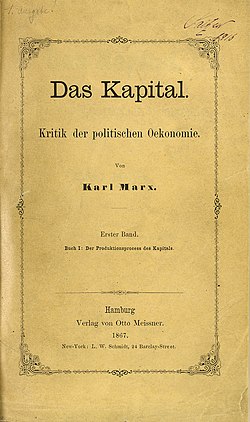
Karl Marx published the first volume of Das Kapital, his critical analysis of capitalism's economic mechanisms. The work examined surplus value, labor exploitation, and capital accumulation, providing the theoretical backbone for Marxist economics.
Image source: Das Kapital
Mar 18, 1871 - May 28, 1871
% complete
The Paris Commune was a revolutionary socialist government that briefly ruled Paris. Though crushed after two months, it became a powerful symbol of working-class revolt and heavily influenced Marx's idea of the dictatorship of the proletariat.
Image source: Paris Commune
Jul 14, 1889
% complete
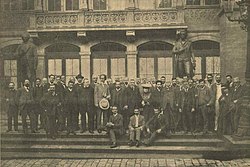
Socialist parties from around the world formed the Second International in Paris to coordinate labor movements and promote Marxism internationally. It collapsed with the outbreak of World War I as member parties split over support for their national war efforts.
Image source: Second International
1902
% complete
Vladimir Lenin argued that a disciplined vanguard party of professional revolutionaries was needed to lead the working class to socialism. This work shaped Bolshevik organization and distinguished Leninism from other strands of Marxism.
Image source: What Is to Be Done? (Tolstoy book)
Jan 22, 1905 - Jun 16, 1907
% complete
Widespread strikes, peasant uprisings, and military mutinies forced Tsar Nicholas II to concede a parliament (the Duma) and civil liberties. The failed revolution served as a dress rehearsal for the Bolsheviks' later success in 1917.
Image source: Russian Revolution of 1905
Mar 8, 1917 - Mar 16, 1917
% complete
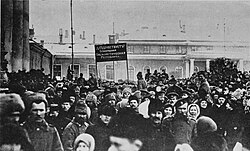
Mass protests and mutinies in Petrograd forced Tsar Nicholas II to abdicate, ending three centuries of Romanov rule. A Provisional Government shared power with the Petrograd Soviet, creating a dual-power situation the Bolsheviks would exploit.
Image source: February Revolution
Nov 7, 1917
% complete
The Bolsheviks, led by Lenin, seized power in Petrograd, overthrowing the Provisional Government. It was the first successful communist revolution in history, leading to the creation of the world's first socialist state.
Image source: October Revolution
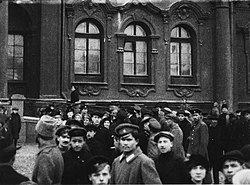
Nov 11, 1917 - Oct 25, 1922
% complete
The Bolshevik Red Army fought the anti-communist White armies, along with foreign intervention forces. The Red victory consolidated Bolshevik control over most of the former Russian Empire at enormous human cost.
Image source: Russian Civil War
Jan 5, 1919 - Jan 15, 1919
% complete
Communists led by Rosa Luxemburg and Karl Liebknecht attempted an uprising in Berlin to establish a soviet republic. The revolt was violently suppressed by government troops and paramilitaries, and its leaders were murdered.
Image source: Spartacist uprising
Mar 2, 1919
% complete
Lenin established the Communist International (Comintern) to promote world revolution and coordinate communist parties worldwide. It enforced adherence to Moscow's line until dissolved by Stalin in 1943.
Image source: Communist International
Mar 21, 1919 - Aug 1, 1919
% complete
Béla Kun established a short-lived communist state in Hungary, the second communist government in the world. It collapsed after Romanian invasion and internal opposition, ending in a right-wing counterrevolution.
Image source: Hungarian Soviet Republic
Dec 30, 1922
% complete
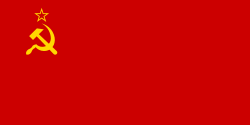
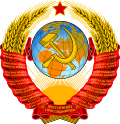
Russia, Ukraine, Belarus, and Transcaucasia federated into the Union of Soviet Socialist Republics, the world's first constitutionally socialist state, which would become the leading force of international communism.
Image source: Soviet Union
Jan 21, 1924
% complete
Lenin's death triggered a power struggle within the Communist Party. Joseph Stalin gradually outmaneuvered rivals like Leon Trotsky, consolidating personal dictatorship by the late 1920s.
Image source: Death and state funeral of Vladimir Lenin
Oct 1, 1928 - Dec 31, 1932
% complete
Stalin initiated rapid industrialization and forced collectivization of agriculture. While industry expanded dramatically, collectivization caused famine, mass deportations, and millions of deaths, especially in Ukraine during the Holodomor.
Image source: First five-year plan
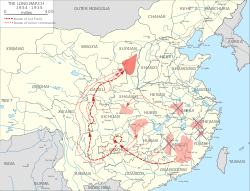
Oct 1934 - Oct 1935
% complete
The Chinese Red Army undertook a grueling retreat of thousands of miles to escape Nationalist encirclement. Mao emerged as the undisputed leader of Chinese communism, setting the stage for the party's eventual victory.
Image source: Long March
1936 - 1938
% complete
Stalin's campaign of political repression eliminated real and imagined opponents through show trials, executions, and gulag imprisonment. Hundreds of thousands were killed, including much of the Red Army officer corps.
Image source: Great Purge
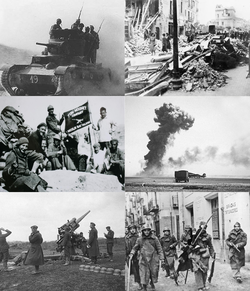
Jul 17, 1936 - Apr 1, 1939
% complete
Communist and socialist forces played a major role defending the Spanish Republic against Franco's nationalist rebellion. Soviet aid and International Brigades made Spain a key battleground of interwar ideological conflict.
Image source: Spanish Civil War
Aug 23, 1939
% complete
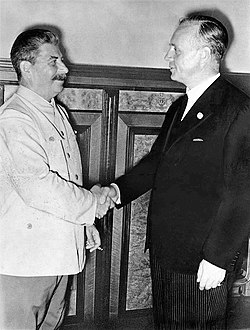
The USSR and Nazi Germany signed a non-aggression pact with secret protocols dividing Eastern Europe into spheres of influence. The pact enabled the Soviet annexation of the Baltic states and eastern Poland.
Image source: Molotov–Ribbentrop Pact
Jun 22, 1941
% complete
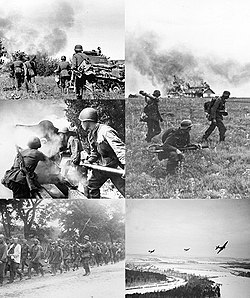
Hitler launched Operation Barbarossa, the largest invasion in history, against the USSR. The Soviet Union joined the Allies, and its eventual victory over Nazi Germany greatly enhanced communism's global prestige.
Image source: Operation Barbarossa
Jun 24, 1948 - May 12, 1949
% complete
The Soviet Union blockaded West Berlin in response to Western currency reforms. The Western Allies supplied the city by air for nearly a year, marking one of the first major crises of the Cold War.
Image source: Berlin Blockade
Oct 1, 1949
% complete
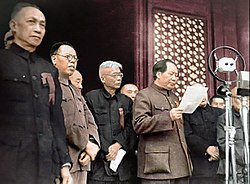
After winning the Chinese Civil War, Mao Zedong declared the founding of the People's Republic of China in Beijing. The victory brought communism to a quarter of the world's population and transformed the Cold War balance.
Image source: Proclamation of the People's Republic of China
Jun 25, 1950 - Jul 27, 1953
% complete
Communist North Korea invaded South Korea, drawing in UN and Chinese forces. The war ended in stalemate at the 38th parallel, cementing the division between communist North and capitalist South Korea.
Image source: Korean War
Feb 25, 1956
% complete
Nikita Khrushchev delivered a secret speech to the 20th Party Congress denouncing Stalin's crimes. De-Stalinization shook the communist world, contributing to unrest in Poland and the Hungarian Revolution later that year.
Image source: On the Cult of Personality and Its Consequences
Oct 23, 1956 - Nov 10, 1956
% complete
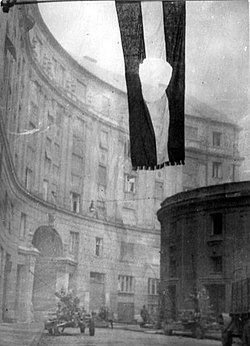
Hungarians rose against their Stalinist government, briefly establishing a reformist regime under Imre Nagy. Soviet tanks crushed the uprising, killing thousands and prompting hundreds of thousands to flee.
Image source: Hungarian Revolution of 1956
1958 - 1962
% complete
Mao's campaign to rapidly industrialize and collectivize China led to massive economic disruption and famine. Estimates of deaths range from 15 to 45 million, making it one of the deadliest man-made catastrophes in history.
Image source: Great Leap Forward
Jan 1, 1959
% complete
Fidel Castro's guerrilla movement overthrew the Batista dictatorship in Cuba. Cuba soon aligned with the Soviet Union, becoming the first communist state in the Western Hemisphere and a Cold War flashpoint.
Image source: Cuban Revolution
Aug 13, 1961
% complete
East Germany built the Berlin Wall to stop mass emigration to the West. The wall became the starkest symbol of the Iron Curtain and the division of Europe until its fall in 1989.
Image source: Berlin Wall
Oct 16, 1962 - Oct 28, 1962
% complete
A thirteen-day confrontation erupted after U.S. discovery of Soviet nuclear missiles in Cuba. The standoff brought the superpowers to the brink of nuclear war before Khrushchev agreed to withdraw the missiles.
Image source: Cuban Missile Crisis
May 16, 1966 - 1976
% complete
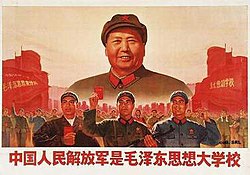
Mao mobilized youth Red Guards to purge 'bourgeois' elements and reassert his dominance. The decade of chaos persecuted millions, destroyed cultural heritage, and devastated China's education system.
Image source: Cultural Revolution
Jan 5, 1968 - Aug 21, 1968
% complete
Alexander Dubček's reforms toward 'socialism with a human face' in Czechoslovakia alarmed Moscow. Warsaw Pact tanks invaded in August, crushing the liberalization movement and enshrining the Brezhnev Doctrine.
Image source: Prague Spring
May 26, 1972
% complete
Richard Nixon and Leonid Brezhnev signed the first Strategic Arms Limitation Treaty, easing Cold War tensions temporarily. Détente included increased trade and cultural exchanges between East and West.
Image source: Strategic Arms Limitation Talks
Apr 17, 1975 - Jan 7, 1979
% complete
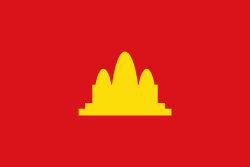
Pol Pot's Khmer Rouge established Democratic Kampuchea, forcing urban populations into rural labor camps. Their radical agrarian communism killed an estimated 1.5 to 2 million people before Vietnamese intervention ended the regime.
Image source: Khmer Rouge
Apr 30, 1975
% complete
North Vietnamese forces captured Saigon, ending the Vietnam War and unifying the country under communist rule. The defeat marked a major setback for U.S. containment policy in Southeast Asia.
Image source: Fall of Saigon
Aug 31, 1980
% complete
Lech Wałęsa's independent trade union Solidarity grew from Gdańsk shipyard strikes into a mass anti-communist movement. Despite martial law suppression, it survived underground and helped undermine Polish communist rule.
1985 - 1991
% complete
Mikhail Gorbachev launched reforms to restructure the Soviet economy (perestroika) and open political discourse (glasnost). The reforms unintentionally unleashed forces that accelerated the USSR's collapse.
Image source: Perestroika
Apr 26, 1986
% complete
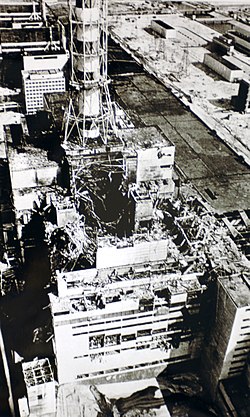
The catastrophic nuclear accident in Ukraine revealed systemic secrecy and incompetence in the Soviet system. Gorbachev later described it as a turning point that accelerated glasnost and undermined regime legitimacy.
Image source: Chernobyl disaster
1989 - 1990
% complete
Peaceful mass movements toppled communist governments across Poland, Hungary, East Germany, Czechoslovakia, Bulgaria, and Romania. The Velvet Revolution in Czechoslovakia and Romania's violent overthrow of Ceaușescu marked the end of the Eastern Bloc.
Nov 9, 1989
% complete
East Germany opened its borders amid mounting protests, and jubilant crowds dismantled the Berlin Wall. The event symbolized the collapse of communist authority in Eastern Europe and hastened German reunification.
Image source: Fall of the Berlin Wall
Dec 26, 1991
% complete
Following failed coup attempts and declarations of independence by the republics, the Soviet Union formally dissolved. The end of the USSR marked the definitive close of the Cold War and a major retreat for world communism.
Image source: Dissolution of the Soviet Union
1992
% complete
Following Deng Xiaoping's Southern Tour, China accelerated market-oriented reforms while maintaining Communist Party rule. The hybrid model produced decades of rapid growth, reshaping debates about communism's future.
Image source: Chinese economic reform
Or browse the full history timeline directory, with more than 2,000 topics.
This Communism timeline was generated with the help of AI, using information found on the internet.
We work hard to keep these timelines accurate, but mistakes do get through. If you spot one, email us at [email protected] and we'll fix it for future visitors.
Generate yours with AI or build it from scratch, for free.
Export your timeline, add your own events, edit or remove AI-generated events, and much more
No credit card required.
Cancel anytime.
Cancel anytime.
You can create an unlimited number of timelines with up to 10 events on each one, customize how they look, export them to PDF, PNG, PowerPoint, CSV, and Excel, and share them with a link. Paid plans raise the event limit and add features like spreadsheet imports and collaborators.
Yes. You can cancel your subscription from your account page at any time, and you will not be charged again. Your subscription stays active for the rest of the period you already paid for.
Yes. We will email you a reminder before the annual renewal, and we will also email you a receipt.
Yes. You can email us within 15 days of any payment, and we will issue you a full refund.
Check out our pricing docs or send us an email anytime: [email protected].