-
Use Cases
-
Resources
-
Pricing
Colonialism refers to the practice by which powerful nations established and maintained control over foreign territories, exploiting their resources, peoples, and economies. Beginning with European overseas expansion in the late 15th century, colonialism reshaped the political, cultural, and economic map of the world, leading to the rise and eventual fall of vast empires and a long process of decolonization that continues to influence global affairs today. More Less
800
% complete
From the 9th century Vikings (Norsemen) such as Leif Erikson established colonies in Britain, Ireland, Iceland, Greenland, North America, present-day Russia and Ukraine, France (Normandy) and Sicily.
Image source: Vikings
800
% complete
In the 9th century a new wave of Mediterranean colonisation began, with competitors such as the Venetians, Genovese and Amalfians infiltrating the wealthy previously Byzantine or Eastern Roman islands and lands.
Image source: Maritime republics
1097 - 1291
% complete
European Crusaders set up colonial regimes in Outremer (in the Levant, 1097–1291) and in the Baltic littoral from the 12th century onwards.
Image source: Crusader states
1204
% complete
Venice began to dominate Dalmatia and reached its greatest nominal colonial extent at the conclusion of the Fourth Crusade in 1204, with the declaration of the acquisition of three octaves of the Byzantine Empire.
Image source: Fourth Crusade
1402 - 1496
% complete
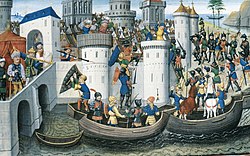
Modern colonialism is generally considered to have begun with the Spanish conquest of the Canary Islands, when 'the relationships involved in domination became recognisably colonial.' Following the fall of Constantinople to the Ottoman Empire in 1453, sea routes discovered by Portuguese Prince Henry the Navigator became central to trade and helped fuel the Age of Discovery.
Image source: Conquest of the Canary Islands
1492
% complete
The Crown of Castile encountered the Americas in 1492 through sea travel and built trading posts or conquered large extents of land.
Image source: Columbian exchange
1494
% complete
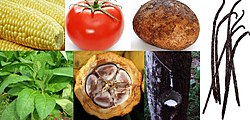
The Treaty of Tordesillas divided the areas of these 'new' lands between the Spanish Empire and the Portuguese Empire in 1494.
Image source: Treaty of Tordesillas
1500
% complete
Spain and Portugal had brought African slaves to work in African colonies such as Cape Verde and São Tomé and Príncipe, and then in Latin America, by the 16th century. The British, French, and Dutch joined in the slave trade in subsequent centuries.
Image source: Atlantic slave trade
1600 - 1699
% complete
The 17th century saw the birth of the Dutch Empire and French colonial empire, as well as the English overseas possessions, which later became the British Empire.
Image source: Dutch colonial empire
1607 - 1699
% complete
In the 17th century, nearly two-thirds of English settlers came to North America as indentured servants.
Image source: Indentured servitude in British America
1869
% complete
The Japanese colonial empire began in the mid-19th century with the settler colonization of Hokkaido and the destruction of the island's indigenous Ainu people before moving onto the Ryukyu Islands, whose indigenous Ryukyuan people survived colonization more intact.
Image source: Empire of Japan
1881 - 1914
% complete
In the late 19th century, many European powers became involved in the Scramble for Africa. Colonial empires spread globally, spanning 35% of Earth's land by 1800 and peaking at 84% by the beginning of World War I.
Image source: Scramble for Africa
1898
% complete
The United States gained overseas territories after the 1898 Spanish–American War, hence, the coining of the term 'American imperialism'.
Image source: Spanish–American War
1917
% complete
Zionist settler colonization of Palestine continued expansion, now with the backing of the British empire after issuing the Balfour Declaration in 1917 and establishing the British Mandate for Palestine at the League of Nations.
Image source: Balfour Declaration
1929 - 1934
% complete
Italy perpetrated the Libyan genocide between 1929 and 1934 during and after the Second Italo-Senussi War.
Image source: Libyan genocide
1930
% complete
The Soviet Union, despite branding itself as anti-imperialist and providing real material assistance to anticolonial resistance, returned to its previous colonial 'Russification' policies after 1930.
Image source: Russification
1935
% complete
Italy also invaded and occupied Ethiopia in 1935 where it enacted a system of segregation between Italian colonists and indigenous Ethiopians.
Image source: Second Italo-Ethiopian War
1939 - 1945
% complete
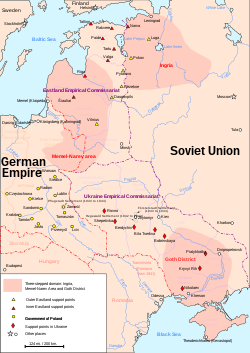
Adam Tooze posits that Operation Barbarossa is 'far better understood as the last great land-grab in the long and bloody history of European colonialism.' Generalplan Ost called for the mass murder and deportation of at least 30 million Slavs from Poland and the western Soviet Union in preparation for millions of German settlers.
Image source: Generalplan Ost
1518
% complete
In 1518, half the native population of Hispaniola was killed by smallpox. Over the centuries, Europeans had developed high degrees of immunity to these diseases, while indigenous peoples had no time to build such immunity.
Image source: Native American disease and epidemics
1600 - 1699
% complete
Measles killed a further two million Mexican natives in the 17th century, contributing to drastic depopulation of indigenous communities under colonial rule.
1618 - 1619
% complete
In 1618–1619, smallpox wiped out 90% of the Massachusetts Bay Native Americans, one of many devastating epidemics that accompanied European colonization of the Americas.
1780 - 1838
% complete
Smallpox epidemics in 1780–1782 and 1837–1838 brought devastation and drastic depopulation among the Plains Indians.
Image source: Plains Indians
1803
% complete
As early as 1803, the Spanish Crown organised a mission (the Balmis expedition) to transport the smallpox vaccine to the Spanish colonies, and establish mass vaccination programs there.
Image source: Balmis Expedition
1817 - 1824
% complete
The first cholera pandemic began in Bengal, then spread across India by 1820. Between 1736 and 1834 only some 10% of East India Company's officers survived to take the final voyage home.
Image source: 1817–1824 cholera pandemic
1832
% complete
By 1832, the federal government of the United States established a smallpox vaccination program for Native Americans.
Image source: Indian Vaccination Act of 1832
1542 - 1552
% complete
Bartolomé de Las Casas wrote A Short Account of the Destruction of the Indies in 1542, published in 1552, documenting atrocities committed against indigenous peoples in the Spanish colonies.
Image source: A Short Account of the Destruction of the Indies
1775 - 1783
% complete
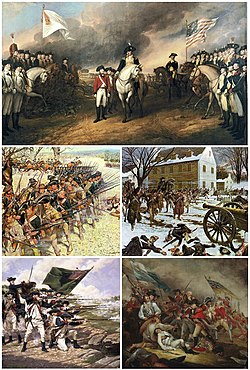
A first wave of separatism started with the American Revolutionary War (1775–1783), initiating the Rise of the 'Second' British Empire (1783–1815).
Image source: American Revolutionary War
1808 - 1833
% complete
The Spanish Empire largely collapsed in the Americas with the Spanish American wars of independence (1808–1833).
Image source: Spanish American wars of independence
1857
% complete
Rebellions broke out in the later decades of the imperial era, such as India's Sepoy Rebellion of 1857 against British East India Company rule.
Image source: Indian Rebellion of 1857
1917 - 1918
% complete
The empires of Russia and Austria collapsed in 1917–1918, and the Soviet empire emerged. Non-Russian Marxists like Sultan Galiev and Vasyl Shakhrai considered the Soviet regime a renewed version of Russian imperialism and colonialism.
Image source: Aftermath of World War I
1919
% complete
The first Pan-African Congress would take place in Paris in 1919, part of the growing international anti-colonial movement.
Image source: Pan-African Congress
1943
% complete
Italy lost control of Libya in 1943 to the British during the North African campaign of World War II.
Image source: North African campaign
1945
% complete
In addition, the United Nations shows support for decolonisation in its 1945 charter. Decolonization had started in the 18th century, gradually leading to the independence of colonies in waves, with a particularly large wave between 1945 and 1975.
Image source: Charter of the United Nations
Aug 1947
% complete
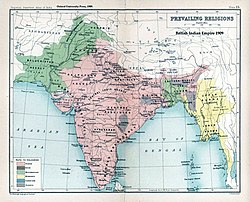
The Partition of British India in August 1947 led to the Independence of India and the creation of Pakistan.
Image source: Partition of India
1955
% complete
Defining colonialism became necessary for the international anti-colonial movement, and it was discussed in the 1955 Bandung Conference and the contexts it applied to were disputed.
Image source: Bandung Conference
1956
% complete
The word 'neocolonialism' originated from Jean-Paul Sartre in 1956, to refer to a variety of contexts since the decolonisation that took place after World War II. The term became popular in ex-colonies in the late 20th century.
Image source: Neocolonialism
1960
% complete
In 1960, the UN issued the Declaration on the Granting of Independence to Colonial Countries and Peoples, which affirmed its stance on decolonisation, though notably colonial empires such as France, Spain, the United Kingdom, and the United States abstained.
1962
% complete
900,000 French colonists (known as the Pied-Noirs) resettled in France following Algeria's independence in 1962.
Image source: Pieds-noirs
1974 - 1979
% complete
800,000 people of Portuguese origin migrated to Portugal after the independence of former colonies in Africa between 1974 and 1979; 300,000 settlers of Dutch origin migrated to the Netherlands from the Dutch West Indies after Dutch military control ended.
Image source: Portuguese Colonial War
1978
% complete
Many practitioners take Edward Saïd's book Orientalism (1978) as postcolonial theory's founding work, although French theorists such as Aimé Césaire and Frantz Fanon made similar claims decades before Saïd. The concept of colonialism entered the forefront of academia in the late 20th century, followed by the development of postcolonialism.
Image source: Orientalism (book)
1988
% complete
Gayatri Chakravorty Spivak's Can the Subaltern Speak? gave its name to Subaltern Studies. In A Critique of Postcolonial Reason (1999), Spivak argued that major works of European metaphysics actively prevent non-Europeans from occupying positions as fully human subjects.
Image source: Subaltern (postcolonialism)
Or browse the full history timeline directory, with more than 2,000 topics.
This Colonialism timeline was generated with the help of AI, using information found on the internet.
We work hard to keep these timelines accurate, but mistakes do get through. If you spot one, email us at [email protected] and we'll fix it for future visitors.
Generate yours with AI or build it from scratch, for free.
Export your timeline, add your own events, edit or remove AI-generated events, and much more
No credit card required.
Cancel anytime.
Cancel anytime.
You can create an unlimited number of timelines with up to 10 events on each one, customize how they look, export them to PDF, PNG, PowerPoint, CSV, and Excel, and share them with a link. Paid plans raise the event limit and add features like spreadsheet imports and collaborators.
Yes. You can cancel your subscription from your account page at any time, and you will not be charged again. Your subscription stays active for the rest of the period you already paid for.
Yes. We will email you a reminder before the annual renewal, and we will also email you a receipt.
Yes. You can email us within 15 days of any payment, and we will issue you a full refund.
Check out our pricing docs or send us an email anytime: [email protected].