-
Use Cases
-
Resources
-
Pricing
The Dutch Empire was the collection of overseas territories and trading posts controlled by the Netherlands from the late 16th century until the mid-20th century. Driven by powerful chartered companies like the Dutch East India Company (VOC) and the Dutch West India Company (WIC), the empire spanned Indonesia, Suriname, the Caribbean, South Africa, and parts of South America and Asia. It made the Netherlands a leading global commercial power during its 17th-century 'Golden Age' before gradually declining through wars and decolonization. More Less
Jan 23, 1579
% complete
Seven northern provinces of the Low Countries signed the Union of Utrecht, laying the foundation for the Dutch Republic. This alliance against Spanish Habsburg rule marked the political birth of the state that would later build a global maritime empire.
Jul 26, 1581
% complete
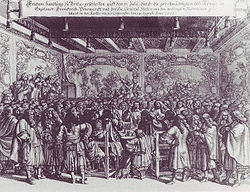
The Dutch provinces formally declared their independence from Philip II of Spain through the Act of Abjuration, an early assertion of the right to depose unjust rulers that inspired later declarations of independence.
Image source: Act of Abjuration
1652 - 1654
% complete
Naval conflict between England and the Dutch Republic over maritime trade supremacy, fought largely in the English Channel and North Sea, ending with the Treaty of Westminster and the Navigation Acts dispute unresolved.
Image source: First Anglo-Dutch War
1665 - Jul 31, 1667
% complete
The Dutch achieved a stunning victory when Admiral Michiel de Ruyter raided the Medway, burning English ships and capturing the flagship Royal Charles, leading to favorable terms in the Treaty of Breda.
Image source: Raid on the Medway
1672 - 1674
% complete
England allied with France against the Dutch Republic during the catastrophic Rampjaar of 1672. Michiel de Ruyter's naval victories helped preserve the Republic, and the war ended with the Treaty of Westminster restoring the status quo.
Image source: Third Anglo-Dutch War
1688
% complete
Stadtholder William III of Orange invaded England and became co-monarch with Mary II, uniting Dutch and English interests against France and reshaping European power politics.
Image source: Glorious Revolution
1594
% complete
Amsterdam merchants founded the Compagnie van Verre to fund voyages to the East Indies, beginning Dutch participation in the lucrative spice trade dominated at the time by the Portuguese.
Image source: Compagnie van Verre
Apr 2, 1595 - Aug 14, 1597
% complete
The first Dutch expedition to reach Indonesia reached Banten in Java. Though commercially disappointing and losing most of its crew, it proved the route to the East Indies was viable and sparked a wave of Dutch overseas ventures.
Image source: Cornelis de Houtman
Mar 20, 1602 - Dec 31, 1799
% complete
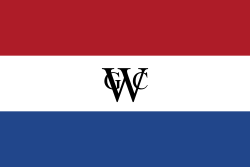
The States-General granted the VOC a monopoly on Dutch trade east of the Cape of Good Hope. Often considered the world's first multinational corporation with shares traded publicly, it became the engine of Dutch imperial expansion in Asia for nearly two centuries.
Image source: Dutch East India Company
Feb 25, 1603
% complete
Jacob van Heemskerck seized the richly laden Portuguese carrack Santa Catarina off Singapore. The enormous profit from selling its cargo energized Dutch investment in Asian trade.
1619
% complete
Jan Pieterszoon Coen founded Batavia (modern Jakarta) on Java as the VOC's administrative center in Asia, which served as the capital of the Dutch East Indies until 1949.
Image source: Batavia, Dutch East Indies
1621
% complete
Under Jan Pieterszoon Coen, the VOC violently subjugated the Banda Islands, killing or deporting much of the population to monopolize nutmeg and mace production, one of the darkest episodes of Dutch colonialism.
Image source: Banda Islands
1642 - 1643
% complete
Sailing for the VOC, Abel Tasman became the first European to reach Tasmania and New Zealand, charting parts of the western Pacific and extending Dutch geographical knowledge.
Image source: Abel Tasman
1614 - 1617
% complete
Fur traders built Fort Nassau on the Hudson River, the first Dutch settlement in North America and the beginning of New Netherland.
Image source: Fort Nassau (North River)
Jun 3, 1621
% complete
Modeled on the VOC, the WIC received a monopoly on Dutch trade and colonization in the Americas and West Africa, launching campaigns against Spanish and Portuguese possessions and expanding the Atlantic slave trade.
Image source: Dutch West India Company
May 8, 1624 - May 1, 1625
% complete
A Dutch fleet briefly seized Salvador da Bahia, capital of Portuguese Brazil, before a joint Spanish-Portuguese fleet recaptured it. The episode foreshadowed the larger Dutch invasion of Brazil.
Image source: Capture of Bahia
1626
% complete
Peter Minuit famously purchased Manhattan from local Lenape people for goods valued around 60 guilders, establishing New Amsterdam, which would later become New York City.
Image source: Peter Minuit
Jun 7, 1629
% complete
The Dutch West India Company issued a charter granting large estates to patroons who settled colonists in New Netherland, encouraging agricultural development along the Hudson River.
Image source: Patroon
1630 - 1654
% complete
The WIC captured Recife and Pernambuco, establishing Dutch Brazil under Governor Johan Maurits van Nassau-Siegen, who fostered religious tolerance and the arts before the Portuguese reconquered the territory.
Image source: Dutch Brazil
Aug 29, 1637
% complete
The WIC captured Elmina on the Gold Coast, giving the Dutch control of a key slave-trading fortress in West Africa and strengthening their Atlantic commercial network.
Image source: Elmina Castle
Apr 6, 1652
% complete
Jan van Riebeeck established a refreshment station for VOC ships at Table Bay, which grew into the Cape Colony, the origin of Afrikaner society and a key waypoint on the route to Asia.
Image source: Cape Colony
1659 - 1677
% complete
Series of conflicts between Dutch settlers and indigenous Khoikhoi peoples over land and livestock at the Cape, resulting in Khoikhoi dispossession and the expansion of settler agriculture.
Image source: Khoikhoi–Dutch Wars
Jul 31, 1667
% complete
In exchange for keeping Suriname, which had been captured in 1667, the Dutch formally ceded New Netherland, including New Amsterdam, to England, ending their colonial presence in North America.
Image source: Treaty of Breda (1667)
1675 - 1795
% complete
From forts on the Gold Coast and Slave Coast such as Elmina and Fort Vredenburgh, the Dutch transported hundreds of thousands of enslaved Africans to plantations in Suriname and the Caribbean Antilles.
Image source: Dutch Slave Coast
1780 - 1784
% complete
Britain attacked the weakened Dutch Republic, seizing Dutch Caribbean and Asian outposts and exposing the decline of Dutch naval and commercial supremacy after the Fourth Anglo-Dutch War ended disastrously.
Image source: Fourth Anglo-Dutch War
1781 - 1787
% complete
Inspired by Enlightenment ideas and the American Revolution, Patriots challenged Orange stadtholder authority; Prussian intervention restored William V, but instability paved the way for French influence.
Image source: Patriottentijd
Jan 19, 1795 - 1806
% complete
Revolutionary France invaded the Dutch Republic, transforming it into the Batavian Republic, a client state that abolished the stadtholderate and began centralizing colonial administration.
Image source: Batavian Republic
Dec 31, 1799
% complete
Bankrupt and corrupted by mismanagement, the VOC was nationalized, and its territories and debts passed to the Dutch state, marking the end of company rule in Asia.
Jun 5, 1806 - 1810
% complete
Napoleon made his brother Louis Bonaparte king of a reorganized Netherlands, further integrating Dutch resources into the French imperial system before direct annexation in 1810.
Image source: Kingdom of Holland
Aug 1811 - Sep 1816
% complete
During the Napoleonic Wars, British forces under Thomas Stamford Raffles seized Java from the French-aligned Dutch administration, administering reforms until returning the island after the Congress of Vienna.
Image source: Java
Mar 16, 1815
% complete
The Congress of Vienna united the former Dutch Republic and Austrian Netherlands under King William I, restoring Dutch sovereignty and returning most colonies seized during the Napoleonic Wars.
Image source: United Kingdom of the Netherlands
1825 - 1830
% complete
Prince Diponegoro led a massive Javanese uprising against Dutch taxation and interference, costing tens of thousands of lives before his capture ended the revolt and consolidated Dutch control over Java.
Image source: Java War
1830 - 1870
% complete
The Dutch government forced Javanese peasants to grow export crops like coffee and sugar for fixed prices, generating enormous revenues for the Netherlands while causing widespread famine and hardship.
Image source: Cultivation System
1873 - 1904
% complete
A prolonged and brutal campaign to conquer the Sultanate of Aceh, one of the last independent Indonesian states, completed Dutch domination of the Indonesian archipelago.
Image source: Aceh War
1901
% complete
Queen Wilhelmina's government proclaimed an 'ethical' obligation to improve welfare and education in the Indies, inadvertently fostering the nationalist movements that would end colonial rule.
Image source: Dutch Ethical Policy
Mar 9, 1942 - Aug 15, 1945
% complete
Japan conquered the Dutch East Indies in World War II, shattering the myth of European invincibility and empowering Indonesian nationalists who declared independence two days after Japan's surrender.
Image source: Japanese occupation of the Dutch East Indies
Aug 17, 1945 - Dec 27, 1949
% complete
Indonesia declared independence under Sukarno; after four years of diplomacy and armed conflict, including international pressure over the 1948 police actions, the Netherlands formally transferred sovereignty on December 27, 1949.
Image source: Indonesian National Revolution
Nov 25, 1975
% complete
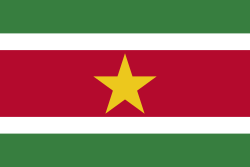
Suriname peacefully became an independent republic, marking the effective end of the Dutch colonial empire, though the Netherlands retained ties with Aruba and the other Caribbean constituent countries.
Image source: Suriname
Or browse the full history timeline directory, with more than 2,000 topics.
This Dutch Empire timeline was generated with the help of AI, using information found on the internet.
We work hard to keep these timelines accurate, but mistakes do get through. If you spot one, email us at [email protected] and we'll fix it for future visitors.
Generate yours with AI or build it from scratch, for free.
Export your timeline, add your own events, edit or remove AI-generated events, and much more
No credit card required.
Cancel anytime.
Cancel anytime.
You can create an unlimited number of timelines with up to 10 events on each one, customize how they look, export them to PDF, PNG, PowerPoint, CSV, and Excel, and share them with a link. Paid plans raise the event limit and add features like spreadsheet imports and collaborators.
Yes. You can cancel your subscription from your account page at any time, and you will not be charged again. Your subscription stays active for the rest of the period you already paid for.
Yes. We will email you a reminder before the annual renewal, and we will also email you a receipt.
Yes. You can email us within 15 days of any payment, and we will issue you a full refund.
Check out our pricing docs or send us an email anytime: [email protected].