-
Use Cases
-
Resources
-
Pricing
The Dutch Golden Age was a period of unprecedented economic prosperity, artistic achievement, and scientific innovation in the Dutch Republic. Fueled by maritime trade and colonial expansion through the Dutch East and West India Companies, this era produced master painters like Rembrandt and Vermeer, pioneered modern capitalism with the first stock exchange in Amsterdam, and established the Netherlands as a leading European power. More Less
1568
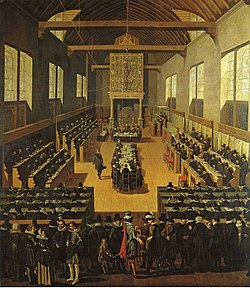
In 1568, the Seven Provinces that later signed the Union of Utrecht started a rebellion against Philip II of Spain that led to the Eighty Years' War, the conflict from which the Dutch Republic would eventually emerge.
Image source: Eighty Years' War

1585 - 1604
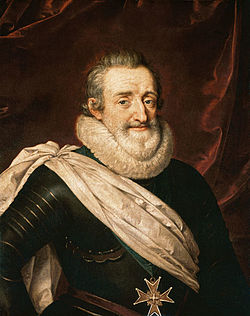
Before the Low Countries could be completely reconquered by Spain, a war between England and Spain, the Anglo-Spanish War of 1585–1604, broke out, diverting Spanish resources and aiding the Dutch cause.
Image source: Anglo-Spanish War (1585–1604)

Aug 17, 1585
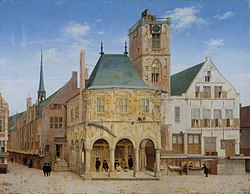
Antwerp fell on 17 August 1585 after a siege, and the division between the Northern and Southern Netherlands (the latter mostly modern Belgium) was established. Under the terms of the surrender, Protestants unwilling to reconvert were given four years to settle their affairs before leaving Habsburg territory.
Image source: Fall of Antwerp

1588
The Dutch Golden Age roughly lasted from 1588, when the Dutch Republic was established, to 1672, when the Rampjaar occurred. The new republic became an important economic centre in the seventeenth century.
Image source: Dutch Republic

1648
The Peace of Westphalia in 1648 ended the Eighty Years' War between the Dutch Republic and Spain, as well as the Thirty Years' War between other European powers, bringing the Dutch Republic formal recognition and independence from the Spanish crown.
Image source: Peace of Westphalia

1672
1672, known as the Rampjaar (disaster year), marked the traditional end of the Dutch Golden Age. By the end of the 17th century, conflicts with neighbouring powers as well as declining economic influence led to the end of this period.
Image source: Rampjaar

1575
The University of Leiden was established in 1575 by Dutch stadtholder Willem van Oranje as a token of gratitude for Leiden's fierce resistance against Spain during the Eighty Years' War. It became a gathering place for intellectuals.
Image source: Leiden University

1628
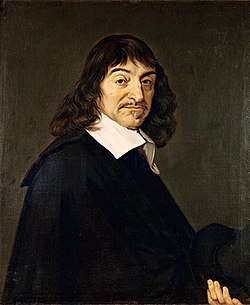
French philosopher and mathematician René Descartes lived in Holland from 1628 until 1649. As Bertrand Russell noted, it is impossible to exaggerate the importance of Holland in the 17th century as the one country where there was freedom of speculation.
Image source: René Descartes
1629
Christiaan Huygens (1629–1695) was a famous Dutch astronomer, physicist, and mathematician whose work exemplified the scientific achievements of the Golden Age.
Image source: Christiaan Huygens

1632
Baruch Spinoza (1632–1677) was born in Amsterdam. Despite the Dutch climate of tolerance, some figures such as the philosopher Spinoza experienced social stigma.
Image source: Baruch Spinoza

This Dutch Golden Age timeline was generated with the help of AI, using information found on the internet.
We work hard to keep these timelines accurate, but mistakes do get through. If you spot one, email us at [email protected] and we'll fix it for future visitors.
Generate yours with AI or build it from scratch, for free.