
-
Use Cases
-
Resources
-
Pricing
The Golden Age of Television refers to a period in American television, roughly from the late 1940s to the early 1960s, when live dramatic anthology series flourished. Shows like Playhouse 90 and Kraft Television Theatre featured original works by writers such as Paddy Chayefsky, Rod Serling, and Reginald Rose, elevating television into a serious artistic medium with high-quality writing and socially relevant storytelling. More Less
1925
% complete
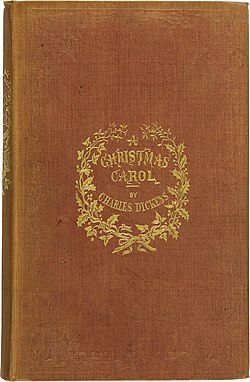
In 1925, an early broadcast of Charles Dickens' A Christmas Carol was produced, one of the pioneering efforts at adapting literature for the new medium of television.
Image source: A Christmas Carol
1936
% complete
British television began developing in the 1930s, with the BBC Television Service beginning regular broadcasts in 1936. From this point until the 1980s, interior scenes for drama and comedy were shot with electronic cameras while exterior scenes were shot with film cameras.
Image source: BBC One
1939
% complete
In 1939, the BBC adapted the romantic novel The Prisoner of Zenda for radio broadcast as part of its programming during the pre-war period.
Image source: The Prisoner of Zenda
1939 - 1946
% complete
BBC television broadcasts ceased in 1939, as did the production of television receivers, resuming in 1946 after World War II.
1945 - 1952
% complete
Actor Lorne Greene, then a news anchor for the CBC, operated a prestigious training academy across from the CBC studios from 1945 to 1952, which developed much of Canada's early homegrown television talent.
Image source: Lorne Greene
1952
% complete
CBC Television, Canada's official national broadcast organization, launched in 1952. Most Golden Age shows were imported from the United States until Canadian content requirements took effect around 1970.
Image source: CBC Television
1956
% complete
The 1956 CBC teleplay Flight into Danger launched the career of author Arthur Hailey, who would later write the bestselling novel Airport.
Image source: Flight into Danger
Oct 1959
% complete
The Western Nigeria Television Service (WNTV), Nigeria's and Africa's first television station, began operation in the then Western Region in October 1959, followed by stations in the country's other regions.
Image source: Nigerian Television Authority
1960
% complete
Following WNTV, the Eastern Region established the Eastern Nigeria Television Service (ENTV) in Enugu in 1960, expanding Nigerian television coverage.
1962
% complete
CTV Television Network, the oldest commercial network in Canada, followed CBC Television in 1962, though most Golden Age shows remained imports from the United States until Can-Con requirements took effect around 1970.
Image source: CTV Television Network
Mar 1962
% complete
The Radio Television Kaduna (RKTV) was established in Kaduna in March 1962, and also in 1962 the Federal Government established the Nigerian Television Service in Lagos, completing the spread of television across Nigeria's regions.
1975
% complete
South Africa was one of the last nations in the world to have television; the apartheid government resisted television broadcasting until the mid-1970s, with experimental broadcasts only beginning in 1975 and nationwide service starting in January 1976.
Image source: Television in South Africa
1931 - 1933
% complete
One of the first series made specifically for television to have a sustained run was CBS's 1931–1933 murder-mystery series The Television Ghost, which ran for all 19 months that its flagship television station, then W2XAB, was on the air.
Image source: The Television Ghost
1942
% complete
In 1942, most television service was suspended because of World War II, halting the medium's growth in the United States until after the war ended.
Image source: Golden Age of Television
1951 - 1962
% complete
During the 7:30 pm to 11 pm prime viewership period, use of filmed rather than live programming grew from 20% in 1951, to 58% by 1956, reaching roughly 90% by 1961-62, signaling the shift away from live broadcasting.
1957
% complete
The first practical videotape system, Ampex's Quadruplex, only became available in 1957. After its adoption, many live dramas were shot 'live to tape', preserving programs while retaining a live look and feel.
Image source: Quadruplex videotape
May 7, 1947
% complete
Kraft Television Theatre debuted on May 7, 1947. Its first episode is generally recognized as the beginning of the Golden Age of Television, launching the era of live anthology drama.
Image source: Kraft Television Theatre
Dec 4, 1947
% complete
Television Playhouse debuted on December 4, 1947, joining a wave of live anthology drama series that defined early Golden Age programming.
Sep 27, 1948
% complete
The Chevrolet Tele-Theatre debuted on September 27, 1948, as part of the flourishing roster of live dramatic anthologies in early American television.
Oct 3, 1948
% complete
The Philco Television Playhouse debuted on October 3, 1948, becoming another cornerstone of the live anthology drama tradition of the Golden Age.
Nov 7, 1948
% complete
Westinghouse Studio One debuted on November 7, 1948, presenting live teleplays that became hallmarks of highbrow Golden Age television.
Image source: Studio One (American TV series)
Jan 21, 1949
% complete
Your Show Time debuted on January 21, 1949, adding to the growing lineup of dramatic anthology series during television's Golden Age.
Jun 24, 1949
% complete
On June 24, 1949, the Hopalong Cassidy show premiered, at first edited from the 66 films made by William Boyd, marking an important step toward filmed rather than live programming.
Image source: Hopalong Cassidy (TV series)
1954
% complete
The first screen adaptation of a James Bond story was a teleplay, 'Casino Royale', that aired in 1954 as part of the anthology series Climax!, predating the famous film franchise by nearly a decade.
Image source: Casino Royale (Climax!)
Oct 1956 - May 1960
% complete
Playhouse 90 debuted in October 1956 and became one of the last great live anthology dramas. Its final episode aired in May 1960, widely regarded as marking the end of the Golden Age of Television.
Image source: Playhouse 90
Nov 11, 1947
% complete
Milton Berle's first television appearance took place on November 11, 1947, an event that was named among the top 100 televised acts of the 20th century by Entertainment Weekly.
Image source: Milton Berle
1950
% complete
The late-night talk show began in 1950 with short-lived efforts from Jerry Lester (Broadway Open House) and Faye Emerson; Tonight would later prove more enduring under hosts Steve Allen, Ernie Kovacs, and Jack Paar.
1951
% complete
Edward R. Murrow's 1951 See It Now and Person to Person showcased important events, places and people in the news, elevating television journalism during the Golden Age.
Image source: I Can See Clearly Now
Nov 9, 1952 - Apr 16, 1961
% complete
As a new medium, television introduced innovative programming concepts such as Omnibus, which debuted on November 9, 1952, and won 65 awards during its run until April 16, 1961 with its diverse cultural programs.
Image source: Omnibus (American TV program)
1953
% complete
In 1953, CBS anchor Walter Cronkite hosted the historical news show You Are There, which highlighted events like the signing of the Declaration of Independence and featured 'live' interviews with famous historical participants played by actors.
Image source: You Are There (series)
1957 - 1962
% complete
Tonight proved more enduring under successive hosts including Steve Allen (1954–57), Ernie Kovacs (1956–57), and Jack Paar (1957–62), establishing the late-night talk show as a television staple.
1956
% complete
Sylvester 'Pat' Weaver was fired in 1956 after his strategy of programming highbrow 'spectacular' productions once a month on NBC proved to be a ratings failure against more conventional fare on CBS.
Image source: Pat Weaver
1956 - 1979
% complete
The last survivor of the Golden Age's highbrow programming was Camera Three, CBS's Sunday morning arts anthology that began nationwide distribution in 1956 and was carried on CBS until 1979, when CBS News Sunday Morning took over the time slot.
1958
% complete
A general decline in quality had been noticed as early as 1958, when the Peabody Award committee, in issuing an award to The Steve Allen Show, lamented that television was conspicuously lacking in quality.
Image source: Peabody Awards
1958
% complete
The quiz show scandals of 1958 shattered public trust in television and are regarded, along with other factors, as having helped bring the Golden Age of Television to an end.
Image source: 1950s quiz show scandals
1960 - 1965
% complete
James Aubrey, president of CBS Network from 1960 to 1965, introduced shows such as Mister Ed, The Dick Van Dyke Show, and The Beverly Hillbillies alongside established hits like I Love Lucy, Gunsmoke, and Perry Mason.
Image source: James T. Aubrey
Mar 1960
% complete
A writer's strike in March 1960 disrupted television production and is regarded as one of the key events that brought the Golden Age of Television to an end.
May 1960
% complete
The final show of Playhouse 90 aired in May 1960. Together with the quiz show scandals, the writer's strike, and the departure of director John Frankenheimer, it is regarded as having brought the Golden Age to an end.
Nov 1960
% complete
In November 1960, Sylvester 'Pat' Weaver commented on the end of the Golden Age of Television in The Denver Post, saying: 'Television has gone from about a dozen forms to just two – news shows and the Hollywood stories.'
May 9, 1961
% complete
The 1960–61 television season was noted by Time magazine as being the worst season in television up to that point, a sentiment echoed by FCC chairman Newton Minow, who lambasted networks for creating a 'vast wasteland' of inferior programming in his speech 'Television and the Public Interest'.
Or browse the full history timeline directory, with more than 2,000 topics.
This Golden Age of Television timeline was generated with the help of AI, using information found on the internet.
We work hard to keep these timelines accurate, but mistakes do get through. If you spot one, email us at [email protected] and we'll fix it for future visitors.
Generate yours with AI or build it from scratch, for free.
Export your timeline, add your own events, edit or remove AI-generated events, and much more
No credit card required.
Cancel anytime.
Cancel anytime.
You can create an unlimited number of timelines with up to 10 events on each one, customize how they look, export them to PDF, PNG, PowerPoint, CSV, and Excel, and share them with a link. Paid plans raise the event limit and add features like spreadsheet imports and collaborators.
Yes. You can cancel your subscription from your account page at any time, and you will not be charged again. Your subscription stays active for the rest of the period you already paid for.
Yes. We will email you a reminder before the annual renewal, and we will also email you a receipt.
Yes. You can email us within 15 days of any payment, and we will issue you a full refund.
Check out our pricing docs or send us an email anytime: [email protected].