-
Use Cases
-
Resources
-
Pricing
The Golden Age of Piracy was a period roughly spanning from the 1650s to the 1730s when maritime piracy flourished in the Caribbean Sea, Atlantic Ocean, and Indian Ocean. It saw notorious pirates such as Blackbeard, Anne Bonny, Calico Jack Rackham, Bartholomew Roberts, and William Kidd prey upon merchant shipping routes connecting Europe with colonial territories. More Less
1625
% complete
French buccaneers established themselves on northern Hispaniola as early as 1625, living at first mostly as hunters of pigs and cattle rather than robbers. Their gradual transition to full-time piracy was motivated in part by Spanish efforts to wipe out both the buccaneers and the prey animals on which they depended.
Image source: Golden Age of Piracy
1650
% complete
Historians such as John Fiske mark the beginning of the Golden Age of Piracy at around 1650, when the end of the Wars of Religion allowed European countries to resume the development of their colonial empires, opening new opportunities for seafaring raiders in the Caribbean and beyond.
1650 - 1680
% complete
The buccaneering period (approximately 1650 to 1680) was characterized by Anglo-French seamen based in Jamaica, Martinique, and Tortuga attacking Spanish colonies and shipping in the Caribbean and eastern Pacific. These conditions brought Caribbean buccaneering to its zenith.
Image source: Piracy in the Caribbean
1655
% complete
The growth of buccaneering on Tortuga was augmented by the English capture of Jamaica from Spain in 1655. The island became a base for Anglo-French privateers and pirates attacking Spanish colonies and shipping throughout the Caribbean and eastern Pacific.
1667 - 1678
% complete
Much of the Spanish Main had simply been exhausted by decades of raids: Maracaibo alone had been sacked thrice between 1667 and 1678, while Río de la Hacha had been raided five times and Tolú eight times, diminishing the region's appeal to plunderers.
1670 - 1671
% complete
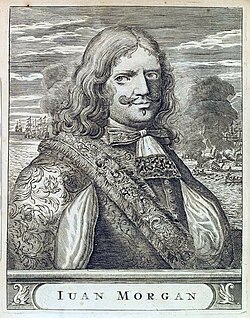
Caribbean buccaneering culminated in Henry Morgan's Panama expedition of 1670, which saw Panama City plundered, sacked, and burned the following year, marking the high point of the buccaneer era.
Image source: Henry Morgan
1671
% complete
Following the devastation of Spanish holdings like Panama City, there emerged the guarda costa, private coast guards commissioned by Spain who would become especially relevant the following century in combating piracy.
Image source: Guarda costa
1688
% complete
Henry Morgan, the famed buccaneer leader who led the sack of Panama, died a natural death in 1688, closing out an era dominated by his exploits.
1692
% complete
The devastation of Port Royal by an earthquake in 1692 further reduced the Caribbean's attractions for pirates by destroying their chief market for fenced plunder, contributing to the decline of Caribbean buccaneering.
Image source: 1692 Jamaica earthquake
1695
% complete
Henry Every became famous for capturing the fabulously wealthy Mogul ship Ganj-i-Sawai in 1695, one of the richest prizes ever taken by pirates and a spark for the Indian Ocean pirate round.
Image source: Henry Every
1713 - 1714
% complete
In 1713 and 1714, a series of peace treaties ended the War of the Spanish Succession, leaving thousands of English sailors and privateers unemployed and setting the stage for the great surge of piracy that followed.
Image source: War of the Spanish Succession
1715 - 1730
% complete
The post-Spanish Succession period (1715 to 1730) began when English sailors and privateers left unemployed by the end of the War of the Spanish Succession turned en masse to piracy in the Caribbean, the Indian Ocean, the North American eastern seaboard, and the West African coast.
1715
% complete
In 1715, pirates launched a major raid on Spanish divers trying to recover gold from the sunken treasure galleon Urca de Lima near Florida, with Henry Jennings leading his legendary attack on the salvage camp.
Image source: Urca de Lima
1718
% complete
Nassau was home for the pirates and their many recruits until the arrival of Governor Woodes Rogers in 1718, which signalled the end of the Republic of Pirates. The events of the latter half of 1718 represented a turning point in the history of piracy in the Western Hemisphere.
Image source: Woodes Rogers
1719 - 1730
% complete
The loss of Nassau and harsher policing of Caribbean waters forced many pirates who were veterans of the Wars of Spanish Succession to travel back to Africa and re-establish the pirate round between the years 1719 and 1730, preying on transatlantic shipping.
1719
% complete
By early 1719, the remaining pirates were on the run after the loss of Nassau and harsher policing of Caribbean waters made their old havens untenable.
1721
% complete
Taylor and Levasseur reaped the greatest prize in the history of the Golden Age of Piracy, the plunder of the Portuguese East Indiaman Nossa Senhora Do Cabo at Réunion in 1721, stealing diamonds and other treasures worth a total of £800,000.
Image source: Olivier Levasseur
1721
% complete
He was marooned on Comoros by Taylor and Levasseur in 1721, and died not long afterward, a grim fate illustrating the brutal internal politics of pirate crews.
Image source: Edward England
1701
% complete
William 'Captain' Kidd was executed for piracy at Execution Dock, London, in 1701, and remains famous for the 'buried treasure' he supposedly left behind, a legend that has captivated imaginations for centuries.
Image source: William Kidd
1716 - 1718
% complete
Edward 'Blackbeard' Teach (Thatch), active from 1716 to 1718, is perhaps the most notorious pirate among English-speaking nations, striking fear into sailors across the Atlantic with his fearsome appearance and bold attacks.
Image source: Blackbeard
1717
% complete
Samuel Bellamy, captain of the Whydah Gally, was lost in a storm off Cape Cod in 1717, going down with his ship and much of her crew along with their plunder.
Image source: Samuel Bellamy
1717 - 1718
% complete
Stede Bonnet captained a 10-gun sloop named the Revenge and raided ships off the Virginian coast in 1717. He was caught and hanged in 1718.
Image source: Stede Bonnet
1718
% complete
Blackbeard was killed by one of Lieutenant Robert Maynard's crewmen in 1718, ending the reign of the most infamous pirate of the Golden Age.
1720
% complete
John Rackham, famous for his partnership with female pirates Anne Bonny and Mary Read, was captured, then hanged and gibbeted outside Port Royal, Jamaica, in 1720.
Image source: John Rackham
Oct 22, 1720
% complete
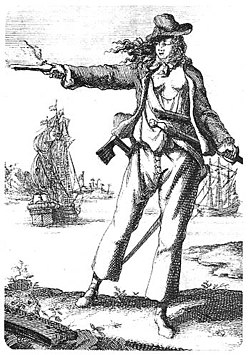
Anne Bonny and Mary Read were finally captured on October 22, 1720, but their death sentences were stalled by claiming to be pregnant. In December 1733, the burial of a woman in Jamaica named Ann Bonny was noted.
Image source: Anne Bonny
1721 - 1724
% complete
Edward Low, born in Westminster, was active from 1721 to 1724, was never captured, and was notorious for torturing his victims before killing them; he cut off ears, lips, and noses.
Image source: Edward Low
1722
% complete
The death of Bartholomew Roberts in 1722, one of the most successful pirates of the era, is considered by historians to mark the end of the Golden Age in the Caribbean.
Image source: Bartholomew Roberts
1726
% complete
William Fly's execution in 1726 is used by historian Marcus Rediker to mark the end of the Golden Age of Pirates. His death, along with those of Bartholomew Roberts and Olivier Levasseur, is considered by historians to mark the end of the era.
Image source: William Fly
1729
% complete
Mary Critchett, a former prisoner-turned-pirate, was hanged in 1729, one of several examples of female pirates active during the era alongside Anne Bonny and Mary Read.
Image source: Mary Critchett
Jul 7, 1730
% complete
Olivier Levasseur himself, unlike his contemporaries, was captured and hanged on July 7, 1730, before he could retire with his riches, closing out the Golden Age of Piracy in the Indian Ocean.
1724
% complete
A General History of the Pirates (1724) by Captain Charles Johnson is the source of many biographies of well-known pirates, providing an extensive account of the period although its accuracy has been called into question.
Image source: A General History of the Pyrates
1894
% complete
The oldest known literary mention of a 'Golden Age' of piracy came in 1894, when the English journalist George Powell wrote about 'What appears to have been the golden age of piracy up to the last decade of the 17th century,' while reviewing Charles Leslie's A New and Exact History of Jamaica.
1897
% complete
In 1897, historian John Fiske introduced a more systematic use of the phrase 'Golden Age of Piracy,' writing, 'At no other time in the world's history has the business of piracy thriven so greatly as in the seventeenth century and the first part of the eighteenth.'
1924
% complete
As early as 1924, Philip Gosse described piracy as being at its height 'from 1680 until 1730,' helping establish the boundaries later historians would debate for the Golden Age.
Image source: Philip Henry Gosse
1951
% complete
Patrick Pringle wrote in 1951 that the most flourishing era in the history of piracy began in the reign of Queen Elizabeth I and ended in the second decade of the eighteenth century, starkly contradicting Fiske, who denied that Elizabethan figures such as Francis Drake were pirates.
1994
% complete
David Cordingly, in his influential 1994 work Under the Black Flag, defined the 'great age of piracy' as lasting from the 1650s to around 1725, very close to Fiske's definition of the Golden Age.
1998
% complete
Angus Konstam in 1998 reckoned the Golden Age of Piracy as lasting from 1700 until 1730, reflecting the trend among historians toward narrowing the period.
Image source: Angus Konstam
2004
% complete
Rediker described the most complex definition of the Golden Age to date, proposing a 'golden age of piracy, which spanned the period from roughly 1650 to 1730,' subdivided into three distinct 'generations': the buccaneers of 1650–1680, the Indian Ocean pirates of the 1690s, and the pirates of the years 1716–1726.
Image source: Marcus Rediker
Or browse the full history timeline directory, with more than 2,000 topics.
This Golden Age of Piracy timeline was generated with the help of AI, using information found on the internet.
We work hard to keep these timelines accurate, but mistakes do get through. If you spot one, email us at [email protected] and we'll fix it for future visitors.
Generate yours with AI or build it from scratch, for free.
Export your timeline, add your own events, edit or remove AI-generated events, and much more
No credit card required.
Cancel anytime.
Cancel anytime.
You can create an unlimited number of timelines with up to 10 events on each one, customize how they look, export them to PDF, PNG, PowerPoint, CSV, and Excel, and share them with a link. Paid plans raise the event limit and add features like spreadsheet imports and collaborators.
Yes. You can cancel your subscription from your account page at any time, and you will not be charged again. Your subscription stays active for the rest of the period you already paid for.
Yes. We will email you a reminder before the annual renewal, and we will also email you a receipt.
Yes. You can email us within 15 days of any payment, and we will issue you a full refund.
Check out our pricing docs or send us an email anytime: [email protected].