-
Use Cases
-
Resources
-
Pricing
The Golden Age of Hollywood was a period in American film history when the major movie studios dominated production, distribution, and exhibition. Spanning roughly from the late 1920s with the arrival of sound to the early 1960s with the collapse of the studio system and rise of television, it produced legendary films, directors, and stars that continue to define classic cinema. More Less
1900
% complete
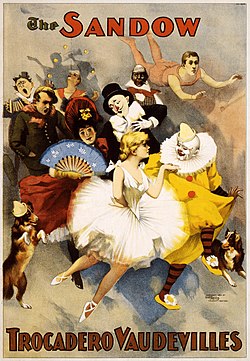
Most early film actors had roots in vaudeville, bringing stage-trained performance skills to the new medium and shaping acting styles during the formative years of American cinema.
Image source: Vaudeville
1900
% complete
Most of the era's pioneering filmmakers started as directors on the late 19th-century stage, translating theatrical narrative techniques into the language of motion pictures.
Image source: Classical Hollywood cinema
1902
% complete
The pioneering 1902 French film A Trip to the Moon demonstrated elementary filmmaking guidelines such as the 180-degree and 30-degree rules more than a decade before the official start of the classical era, laying visual foundations that classical Hollywood cinema would later adopt.
Image source: A Trip to the Moon
1913
% complete
1913 was a particularly fruitful year for cinema, as pioneering directors from several countries produced landmark films such as D. W. Griffith's The Mothering Heart, advancing the medium's storytelling capabilities globally.
Image source: 1913 in film
1915
% complete
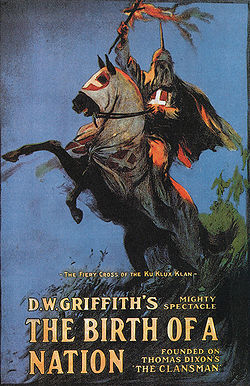
D. W. Griffith's 1915 epic The Birth of a Nation, also starring Lillian Gish, was ground-breaking for film as a means of storytelling — a masterpiece of literary narrative featuring numerous innovative visual techniques, though it remains deeply controversial for its racist content.
Image source: The Birth of a Nation
1917
% complete
Though 1913 was a global landmark for filmmaking, 1917 was primarily a United States one; the era of classical Hollywood cinema is distinguished by a narrative and visual style which began to dominate the American film medium by 1917.
1920
% complete
By mid-1920, most prominent American directors and actors who had worked independently since the early 1910s had to become part of the new studio system in order to continue working, consolidating Hollywood's production model.
1920
% complete
The Big Five major studios consisted of MGM, Warner Bros., 20th Century Fox, RKO, and Paramount, which together controlled production, distribution, and exhibition throughout the Golden Age.
Image source: Major film studios
1930
% complete
Director Henry King's films were mostly made for 20th Century Fox, illustrating the tight director-studio bonds characteristic of the contract-based studio system.
Image source: Henry King (director)
1930
% complete
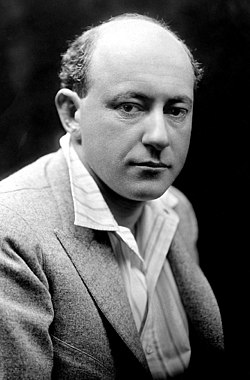
Director Cecil B. DeMille's films were almost all made at Paramount Pictures, where he became famous for lavish epics and spectacles that defined the studio's prestige output.
Image source: Cecil B. DeMille
1930
% complete
Composer Alfred Newman worked at 20th Century Fox for twenty years, shaping the musical identity of the studio's productions throughout the Golden Age.
Image source: Alfred Newman
1930
% complete
Cedric Gibbons, MGM's supervising art director, and composer Herbert Stothart always worked on MGM films, exemplifying how studios maintained consistent house styles through long-term contracts with key creatives.
Image source: Cedric Gibbons
1930
% complete
Studios kept stable rosters of creative personnel: Cedric Gibbons and Herbert Stothart always worked on MGM films; Alfred Newman worked at 20th Century Fox for twenty years; Cecil B. DeMille's films were almost all made at Paramount Pictures; and director Henry King's films were mostly made for 20th Century Fox.
1927
% complete
F. W. Murnau's Sunrise: A Song of Two Humans, released in 1927 alongside the arrival of synchronized sound, is cited by some as marking the beginning of the Golden Age of Hollywood.
Image source: Sunrise: A Song of Two Humans
1927
% complete
With the advent of sound film in 1927, a distinctive style became characteristic of United States cinema during the Golden Age of Hollywood, lasting until the 1960s and the arrival of New Hollywood productions.
Image source: Sound film
Oct 6, 1927
% complete
To many historians, the Golden Age of Hollywood began with The Jazz Singer in 1927, when synchronized sound was introduced to feature films and box-office profits increased dramatically.
Image source: The Jazz Singer
1929
% complete
For others, the Golden Age began in 1929, when the silent age had definitively ended and sound had fully transformed Hollywood's production practices.
Image source: Silent film
1939
% complete
The apogee of the studio system may have been the year 1939, which saw an extraordinary concentration of classic releases from the major studios.
1939
% complete
The Hunchback of Notre Dame, starring Charles Laughton, was among the remarkable slate of classics released in 1939, showcasing RKO's production prowess during the studio system's peak.
Image source: The Hunchback of Notre Dame (1939 film)
1939
% complete
John Ford's Stagecoach, released in 1939, revitalized the Western genre and helped make John Wayne a star, standing among the landmark films of the studio system's apogee.
Image source: Stagecoach (1939 film)
Aug 25, 1939
% complete
The Wizard of Oz, released in 1939 at the peak of the studio system, became one of Hollywood's most beloved classics, celebrated for its Technicolor fantasy sequences and enduring songs.
Image source: The Wizard of Oz
Oct 19, 1939
% complete
Frank Capra's Mr. Smith Goes to Washington premiered in October 1939, adding to 1939's legendary roster of releases with its stirring story of political idealism.
Image source: Mr. Smith Goes to Washington
Dec 15, 1939
% complete
Gone with the Wind premiered in December 1939, becoming one of the most successful films ever made and a towering achievement of the studio system's golden year.
Image source: Gone with the Wind (film)
May 1, 1941
% complete
Citizen Kane (1941), directed by Orson Welles, was a rare case of creative independence within the studio system and is regarded as one of the greatest films of all time, renowned for its innovative narrative structure and cinematography.
Image source: Citizen Kane
1960 - 1969
% complete
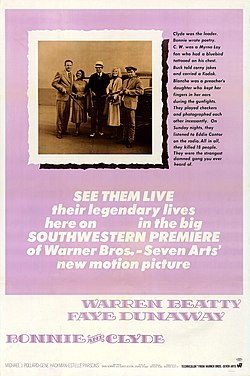
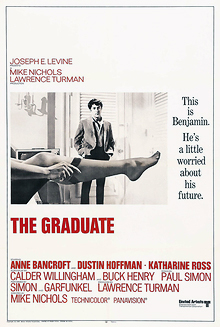
The Golden Age of Hollywood, characteristic of United States cinema from the advent of sound in 1927, lasted until the 1960s and the arrival of New Hollywood productions such as Bonnie and Clyde and The Graduate, which transformed the industry's style and structure.
Image source: New Hollywood
1967
% complete
Bonnie and Clyde arrived in the late 1960s as a defining New Hollywood production whose arrival marked the end of the Golden Age of Hollywood's classical era.
Image source: Bonnie and Clyde (film)
Dec 21, 1967
% complete
The Graduate, released in December 1967, stood alongside Bonnie and Clyde as New Hollywood productions whose success signaled the close of the classical Golden Age of Hollywood.
Image source: The Graduate
1999
% complete
In 1999, the American Film Institute released a list ranking the top 25 male and 25 female greatest screen legends of American cinema, cementing the Golden Age's stars in popular memory.
Image source: AFI's 100 Years...100 Stars
1999
% complete
The only eligible film stars for the AFI list were actors who had begun their film career in or before 1950, or those who had begun after 1950 but had died before the list was created.
Jul 2026
% complete
As of July 2026, Sophia Loren is the only living star recognized on the American Film Institute's 1999 list of greatest screen legends, marking the passing of an entire generation of Golden Age icons.
Image source: Sophia Loren
Or browse the full history timeline directory, with more than 2,000 topics.
This Golden Age of Hollywood timeline was generated with the help of AI, using information found on the internet.
We work hard to keep these timelines accurate, but mistakes do get through. If you spot one, email us at [email protected] and we'll fix it for future visitors.
Generate yours with AI or build it from scratch, for free.
Export your timeline, add your own events, edit or remove AI-generated events, and much more
No credit card required.
Cancel anytime.
Cancel anytime.
You can create an unlimited number of timelines with up to 10 events on each one, customize how they look, export them to PDF, PNG, PowerPoint, CSV, and Excel, and share them with a link. Paid plans raise the event limit and add features like spreadsheet imports and collaborators.
Yes. You can cancel your subscription from your account page at any time, and you will not be charged again. Your subscription stays active for the rest of the period you already paid for.
Yes. We will email you a reminder before the annual renewal, and we will also email you a receipt.
Yes. You can email us within 15 days of any payment, and we will issue you a full refund.
Check out our pricing docs or send us an email anytime: [email protected].