-
Resources
-
Pricing
The Sasanian Empire was the last great Persian empire before the rise of Islam, ruling much of Iran and neighboring regions from 224 to 651 CE. It became a major rival of Rome and Byzantium and developed influential traditions in administration, religion, art, science, and architecture. More Less
Build a timeline like this one in minutes, for free. Start Yours →
Part of our collection of ancient history timelines.
200 - 299
Several Assyrian territories had become almost fully Christianized during the third century, although they did not become independent nations.
Image source: Assyrian Church of the East
224 - 651
From the beginning of Sasanian rule, an orthodox, Pars-oriented Zoroastrian tradition influenced the state and helped legitimize it until the empire's collapse in the mid-seventh century.
Image source: Zoroastrianism

300 - 599
Major Jewish academies were established at Sura and Pumbedita in Sasanian Persia, becoming cornerstones of Jewish scholarship.
Image source: Sura Academy
300 - 599
The Babylonian Talmud was composed between the third and sixth centuries in Sasanian Persia.
Image source: Talmud

500 - 699
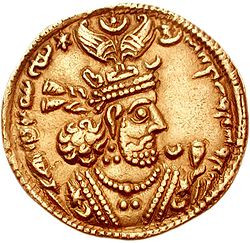
Coins appearing from the sixth century onward depict the moon and sun, suggesting that the king stood at the center of the world and that the celestial bodies revolved around him.
Image source: Sasanian coinage
500 - 699
The imagery on Sasanian coins expressed the king as the ruler of the four corners of the world, an older Mesopotamian political idea.
500 - 599
A significant religious or ideological change described in the source probably took place during the reign of Kavad I in the early sixth century.
Image source: Kavad I
531 - 579
Under Khosrow I, the Academy of Gundishapur, founded in the fifth century, became the greatest intellectual center of its time and attracted students and teachers from across the known world.
Image source: Academy of Gondishapur
224 - 651
The Sasanian dynasty ruled ancient Iran for more than four centuries, making its reign the second longest in Iranian imperial history after the Arsacid dynasty of Parthia.
Image source: Sasanian Empire
224
Ardashir was crowned at Ctesiphon as the sole ruler of Persia and took the title shahanshah, or King of Kings.
Image source: Ardashir I
224
Ardashir's accession brought the approximately four-hundred-year-old Parthian Empire to an end and initiated four centuries of Sasanian rule.
224
The foundation of Ardashir's government began the Sasanian imperial order, which replaced Arsacid authority across Persia.
224
Sasanian inscriptions mention Adhur-Anahid as banbishnan banbishn, or Queen of Queens. Her precise relationship with Ardashir remains uncertain.
224 - 651
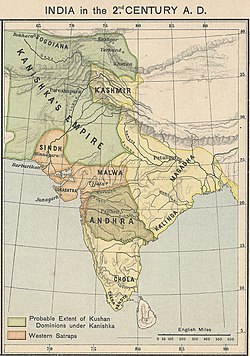
To the east, the Sasanians faced the Kushan Empire and nomadic peoples such as the White Huns.
224 - 651
In the west, Sasanian territory generally abutted the large and stable Roman state.
283
During the reign of the Sasanian ruler described in the source, Ctesiphon was sacked by the Romans under Emperor Carus.
Image source: Ctesiphon
283
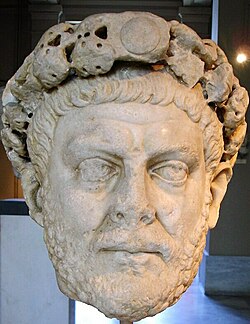
After roughly half a century of Persian rule, most of Armenia was ceded to the Roman emperor Diocletian.
Image source: Diocletian
300 - 399
Despite the Kushan decline, the Sasanians remained relevant in India's northwest during this period.
300 - 399
The Kushan Empire declined at the end of the third century and was replaced by the Indian Gupta Empire in the fourth century.
Image source: Kushan Empire
400 - 499
At the beginning of the fifth century, the Hephthalites, or White Huns, and other nomadic groups attacked Iran.
427
In 427, the Sasanian ruler crushed an invasion in the east by the nomadic Hephthalites.
Image source: Hephthalites
427
The victory over the Hephthalites extended Sasanian influence into Central Asia.
483
The Huns returned at the end of the fifth century and defeated Peroz I, who reigned from 457 to 484.
Image source: Peroz I
600 - 699
Over the following centuries, half of the Byzantine Empire and the entire Sasanian Empire came under Muslim rule.
Image source: Muslim conquest of Persia
602
Khosrow II dissolved the Kingdom of Al-Hirah in 602, a decision that contributed greatly to decisive Sasanian defeats against Bedouin Arabs later in the century.
Image source: Khosrow II
427
The ruler's portrait continued to appear for centuries on the coinage of Bukhara, in modern Uzbekistan.
Image source: Bukhara
500 - 699
The magnificent Sasanian structure known as Taq Kasra fascinated architects in later centuries and became one of the most important examples of Persian architecture.
Image source: Taq Kasra
665 - 1598
The Paduspanids of Mazandaran, who lasted from 665 to 1598, claimed descent from Jamasp.
Image source: Baduspanids
800 - 1099
The Mikalids, active from the ninth to the eleventh century, descended from the Sogdian ruler Divashtich, who was in turn described as a descendant of Bahram V.
Image source: Mikalids
800 - 999
The Kamkarian family was a ninth- to tenth-century dehqan family that claimed descent from Yazdegerd III.
Image source: Yazdegerd III
800 - 999
The Banu Munajjim, a ninth- to tenth-century family, traced their ancestry to Mihr Gushnasp, a Sasanian prince.
900 - 956
The tenth-century Muslim historian al-Masudi praised the excellent administration of the Sasanian kings, their orderly policies, concern for subjects, and prosperous domains.
Image source: Al-Masudi
1030
Miskawayh, who died in 1030, recorded that Sukhra was Kavad's maternal uncle.
Image source: Miskawayh
1100 - 1382
The shahs of Shirwan, dated in the source from 1100 to 1382, were associated with the line of Hormizd IV.
Image source: Shirvanshahs
Build a timeline like this one in minutes, for free. Start Yours →
Or browse the full history timeline directory, with more than 2,500 topics.
This Sasanian Empire timeline was generated with the help of AI, using information found on the internet.
We work hard to keep these timelines accurate, but mistakes do get through. If you spot one, email us at [email protected] and we'll fix it for future visitors.
Generate yours with AI or build it from scratch, for free.
Export your timeline, add your own events, edit or remove AI-generated events, and much more
No credit card required.
15-day money-back guarantee.
You can create an unlimited number of timelines with up to 10 events on each one, customize how they look, export them to PDF, PNG, PowerPoint, CSV, and Excel, and share them with a link. Timelines made with Timeline Maker AI keep every event the generator created, and you can add up to 5 events of your own. Paid plans remove the event limit, add spreadsheet imports and hide Preceden's branding, and the higher-priced plan also adds collaborators, a custom logo and a custom domain.
Yes. You can cancel your subscription from your account page at any time, and you will not be charged again. Your subscription stays active for the rest of the period you already paid for.
Yes. We email you a reminder 15 days before your annual renewal, and we email you a receipt after every payment.
Yes. You can email us within 15 days of any payment, and we will issue you a full refund.
Check out our pricing docs or send us an email anytime: [email protected].