-
Resources
-
Pricing
The Maratha Empire was a major Indian power that rose under Shivaji and later dominated much of the Indian subcontinent before falling to British rule. More Less
Build a timeline like this one in minutes, for free. Start Yours →
Part of our collection of Indian history timelines.
1645
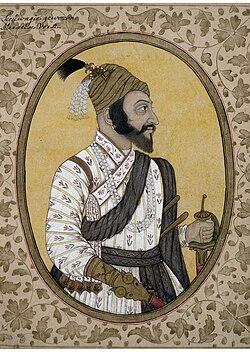
Shivaji, a Maratha aristocrat of the Bhonsle clan, began resisting the Sultanate of Bijapur and established a state based on Hindavi Swarajya, or self-rule of Hindu people.
Image source: Shivaji
1645
Shivaji won Torna fort, followed by the capture of additional forts, placing substantial territory in the western Deccan under his control.
Image source: Torna Fort
1674
Shivaji was crowned Chhatrapati, or sovereign, of the new Maratha Kingdom, formalizing the independent monarchy he had built.
1674 - 1700
During Shivaji's reign, the Marathas built sea forts and battleships, creating a naval system to defend the western coast and challenge maritime rivals.
Image source: Maratha Navy
1681
After Shivaji's death, Sambhaji succeeded to the crown and continued his father's expansionist policies.
Image source: Sambhaji
1681
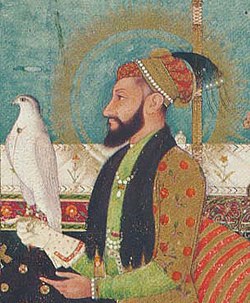
Mughal emperor Aurangzeb moved south to nullify the alliance between his rebel son Akbar and the Marathas, beginning an intensified phase of Mughal-Maratha warfare.
Image source: Aurangzeb
Feb 1, 1689
Sambhaji was ambushed and captured by Mughal troops at Sangameshwar while preparing for a strategic campaign against Mughal forces.
Mar 21, 1689
Sambhaji and his adviser Kavi Kalash were taken to Bahadurgad and executed by the Mughal imperial army.
1697
Rajaram offered a truce during the continuing Mughal-Maratha conflict, but Aurangzeb rejected the proposal.
Image source: Rajaram I
1700
Rajaram died at Sinhagad in 1700, during the prolonged struggle against Mughal attempts to destroy Maratha power.
1707
After Aurangzeb's death, the new Mughal emperor Bahadur Shah I released Shahu, the son of Sambhaji and grandson of Shivaji.
Image source: Shahu I
1707
Shahu and Tarabai established rival seats of government at Satara and Kolhapur, dividing the Maratha polity.
Image source: Maratha Empire
1713
Shahu appointed Balaji Vishwanath as Peshwa, beginning the rise of the Bhat family as hereditary ministers and effective rulers of the Maratha state.
Image source: Balaji Vishwanath
1714
Balaji Vishwanath concluded the Treaty of Lonavala with Kanhoji Angre, the most powerful naval chief on the western coast, who subsequently accepted Shahu as Chhatrapati.
1719
The new Mughal emperor granted Shahu the right to collect Chauth and Sardeshmukhi from six Deccan provinces and confirmed Maratha possession of Shivaji's former territories.
1719
Maratha forces marched to Delhi with Sayyid Hussain Ali and helped depose Mughal emperor Farrukhsiyar.
Apr 1720
After Balaji Vishwanath's death, Shahu appointed his son Baji Rao I as Peshwa, ushering in a period of rapid Maratha expansion.
Image source: Bajirao I
Feb 28, 1728
Baji Rao I defeated Qamar-ud-din Khan, Asaf Jah I of Hyderabad, at Palkhed near Nashik in a major land campaign.
Image source: Vaijapur
1740
Maratha forces under Raghoji Bhonsle defeated Nawab Dost Ali of Arcot in the pass of Damalcherry.
Image source: Raghuji I
Dec 1740
Raghuji Bhonsle invaded Trichinopoly, extending Maratha military operations into the south.
Mar 14, 1741
Unable to resist Raghuji's forces, Chanda Sahib surrendered the fort of Trichinopoly to the Marathas.
Image source: Chanda Sahib
1749
After Shahu died, the Peshwas became the effective rulers of the Maratha Empire, while the Bhat family consolidated hereditary control of the office.
1767
Madhavrao I crossed the Krishna River and defeated Hyder Ali in the battles of Sira and Madgiri.
Image source: Madhavrao I
1772
Madhavrao I died at the age of 27, ending the career of the Peshwa who had helped rebuild Maratha power after Panipat.
Mar 1786 - Mar 1787
Maratha forces under Tukoji Rao Holkar fought Tipu Sultan and defeated him in the Battle of Gajendragad.
Image source: Gajendragad
Apr 1787
The Treaty of Gajendragad ended the conflict with Mysore. Tipu Sultan agreed to pay war costs and annual tribute and return territory captured by Hyder Ali.
Image source: Maratha–Mysore wars
1795
The major Maratha powers jointly fought and defeated the forces of the Nizam at Kharda, one of the confederacy's final collective victories.
Image source: Battle of Kharda
1737
Maratha forces under Baji Rao I raided the suburbs of Delhi in a rapid campaign that demonstrated their ability to strike the Mughal capital.
Image source: Bajirao I
1737
The Battle of Bhopal helped establish the confederacy's stable northern reach, extending from Maharashtra toward Gwalior and the eastern territories.
1741 - 1748
Raghuji Bhonsle undertook six expeditions into Bengal, while repeated Maratha raids contributed to the decline of the prosperous Nawab's state.
Image source: Maratha invasions of Bengal
1751
Raghuji Bhonsle permanently annexed Odisha after exploiting political disorder in Bengal; a 1751 settlement ceded Cuttack to the Marathas and arranged tribute.
1752
Responding to Safdarjung's request, Maratha forces defeated the Afghan Rohillas and captured Rohilkhand.
Image source: Afghan–Maratha War
1752
Through an agreement with the Mughal emperor and his wazir Safdarjung, the Marathas received Chauth of the Doab and the Subahdari of Ajmer and Agra.
Aug 1757
Raghunath Rao's Maratha army defeated the Afghan garrison and captured Delhi after the Afghan withdrawal.
Image source: Battle of Delhi (1757)
1758
The Marathas began a northwestern conquest and extended their boundary toward Afghanistan.
May 8, 1758
After the Battle of Attock, Maratha forces defeated Afghan troops at Peshawar and captured the city.
1760
After defeating the Nizam in the Deccan, Maratha power reached its greatest extent, covering more than 2.5 million square kilometres.
Aug 1760
A large Maratha army under Sadashivrao Bhau recaptured Delhi from an Afghan garrison as the Marathas mobilized against the returning Durrani forces.
Jan 14, 1761
A huge Maratha army commanded by Sadashivrao Bhau clashed with Ahmad Shah Durrani's forces at Panipat. The defeat halted Maratha expansion in North India.
Image source: Third Battle of Panipat
1771
Ten years after Panipat, Mahadaji Shinde recaptured Delhi and installed Shah Alam II as a Mughal ruler under Maratha influence.
1772
Maratha forces defeated Mughal troops in Delhi, captured Najibabad, and restored Maratha authority in North India under the restricted Mughal monarch Shah Alam II.
1783
Mahadaji Shinde besieged and conquered the fort of Gwalior, strengthening Maratha control in North India.
1785
A Maratha-Sikh treaty made the small Cis-Sutlej states an autonomous protectorate of the Scindia branch of the Maratha Confederacy.
Image source: Mahadaji Shinde
1787
A Maratha expedition against the Raja of Jaipur ended in withdrawal after the inconclusive Battle of Lalsot.
1788
Mahadaji Shinde's armies defeated Ismail Beg, a Mughal noble who resisted Maratha authority.
1775 - 1782
The British East India Company intervened from Bombay in the succession struggle of Raghunathrao, who sought to become Peshwa.
Image source: First Anglo-Maratha War
1782
The war ended with restoration of the pre-war status quo and the East India Company's abandonment of Raghunathrao's cause.
1791 - 1792
Large areas of the Maratha Confederacy suffered massive population loss during the Doji bara famine.
Image source: Doji bara famine
1799
Yashwantrao Holkar was crowned king of the Holkars and captured Ujjain.
Image source: Yashwantrao Holkar
May 1802
Yashwantrao Holkar marched on Pune, the seat of the Peshwa, and defeated the forces supporting the existing regime.
Jul 26, 1802
The British intervened in Baroda to support a claimant to the throne and recognized the new Maharaja's independence from the Maratha Confederacy in exchange for British paramountcy.
Image source: Gaekwad dynasty
Dec 31, 1802
After his defeat by Holkar, Peshwa Baji Rao II sought British protection and signed a treaty that enabled the East India Company to intervene directly in Maratha politics.
Image source: Treaty of Bassein (1802)
1803 - 1805
The Second Anglo-Maratha War followed the Peshwa's treaty with the British and resulted in major Maratha territorial and political losses.
Image source: Second Anglo-Maratha War
1803
The Maratha defeat at Delhi in 1803 ended their influence over the Mughal capital and transferred control to the British East India Company.
Image source: Battle of Delhi (1803)
Dec 30, 1803
Daulat Rao Scindia ceded Haryana to the British East India Company under the Treaty of Surji-Anjangaon, further advancing Company rule.
1817 - 1818
The Third Anglo-Maratha War resulted in the defeat of the remaining Maratha powers and the loss of Maratha independence.
Image source: Third Anglo-Maratha War
Nov 5, 1817
The British subdued Shinde and the Pashtun leader Amir Khan through diplomacy and pressure, formalizing the Treaty of Gwalior.
Image source: Gwalior State
1818
Holkars, Bhonsles, and the Peshwa gave up arms by 1818, ending organized Maratha resistance and bringing the empire into the British imperial system.
1818
The British East India Company's victory formally ended Maratha independence and incorporated the former imperial sphere into the expanding British Empire in India.
Build a timeline like this one in minutes, for free. Start Yours →
Or browse the full history timeline directory, with more than 2,500 topics.
This Maratha Empire timeline was generated with the help of AI, using information found on the internet.
We work hard to keep these timelines accurate, but mistakes do get through. If you spot one, email us at [email protected] and we'll fix it for future visitors.
Generate yours with AI or build it from scratch, for free.
Export your timeline, add your own events, edit or remove AI-generated events, and much more
No credit card required.
15-day money-back guarantee.
You can create an unlimited number of timelines with up to 10 events on each one, customize how they look, export them to PDF, PNG, PowerPoint, CSV, and Excel, and share them with a link. Timelines made with Timeline Maker AI keep every event the generator created, and you can add up to 5 events of your own. Paid plans remove the event limit, add spreadsheet imports and hide Preceden's branding, and the higher-priced plan also adds collaborators, a custom logo and a custom domain.
Yes. You can cancel your subscription from your account page at any time, and you will not be charged again. Your subscription stays active for the rest of the period you already paid for.
Yes. We email you a reminder 15 days before your annual renewal, and we email you a receipt after every payment.
Yes. You can email us within 15 days of any payment, and we will issue you a full refund.
Check out our pricing docs or send us an email anytime: [email protected].