-
Use Cases
-
Resources
-
Pricing
1585 - 1590
England established the Roanoke Colony on Roanoke Island in present-day North Carolina. The settlement failed, but it demonstrated English interest in permanent colonization and became associated with the mystery of the so-called Lost Colony.
Image source: Roanoke Colony
May 14, 1607
The Virginia Company founded Jamestown on the James River in Virginia. It became the first permanent English settlement in North America and the starting point of the Colony of Virginia.
Image source: Jamestown, Virginia
Jul 30, 1619
Virginia's House of Burgesses met at Jamestown, creating the first elected representative legislative body in English North America. Its tradition of self-government later influenced colonial political culture.
Image source: House of Burgesses
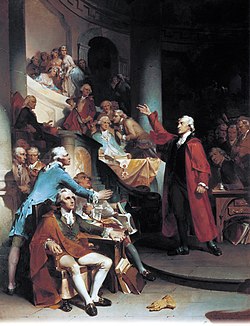
Nov 11, 1620
Pilgrims aboard the Mayflower signed the Mayflower Compact before settling at Plymouth. The agreement established a framework of self-government based on collective consent.
Image source: Mayflower Compact
Dec 21, 1620
The Pilgrims established Plymouth Colony in present-day Massachusetts. The settlement became an important example of New England colonization, religious community, and local self-government.
Image source: Plymouth Colony
1623 - 1679
English settlements at Dover and Portsmouth formed the basis of New Hampshire. The territory was repeatedly connected administratively with Massachusetts before receiving a separate royal government in 1679.
Image source: Province of New Hampshire
1624
The Crown revoked the Virginia Company's charter after years of financial difficulty and political conflict. Virginia became a royal colony while retaining the House of Burgesses.
Mar 4, 1629
King Charles I granted the Massachusetts Bay Company a charter. A large Puritan migration followed, and Boston became the center of the expanding Massachusetts Bay Colony.
Image source: Massachusetts Bay Colony
Mar 25, 1634
English settlers led by Leonard Calvert established Maryland for the Calvert family. The colony was intended partly as a refuge for English Catholics while also pursuing commercial development.
1636 - 1644
Roger Williams founded Providence in 1636, followed by Anne Hutchinson's settlement at Portsmouth and other communities. Rhode Island became known for religious liberty and separation between civil government and religious authority.
Image source: Colony of Rhode Island and Providence Plantations
1636
English settlers led by Thomas Hooker established communities along the Connecticut River. Connecticut developed an influential tradition of local government and adopted the Fundamental Orders in 1639.
1638 - 1665
Puritan settlers founded New Haven Colony in present-day Connecticut. It operated as a separate, religiously governed colony until its merger with Connecticut in 1665.
Image source: New Haven Colony
1664
The Duke of York granted land between the Hudson and Delaware Rivers to Lord Berkeley and Sir George Carteret. The territory developed as the proprietary Province of New Jersey.
Sep 8, 1664
English forces captured New Amsterdam from the Dutch during the Second Anglo-Dutch War. The settlement was renamed New York, transforming the Dutch colony into an English possession.
Image source: New Netherland
Mar 4, 1681
Charles II granted William Penn a vast proprietary colony west of the Delaware River. Penn planned Pennsylvania as a Quaker-influenced refuge emphasizing religious toleration and representative government.
1682
William Penn established Philadelphia as Pennsylvania's principal city. Its planned streets, port, and diverse population helped make it one of British North America's leading urban centers.
Image source: Philadelphia
Feb 12, 1733
James Oglethorpe and other trustees established Georgia at Savannah. The colony served as a buffer against Spanish Florida and a planned refuge for impoverished settlers.
1636 - 1638
English colonists and their Indigenous allies fought the Pequot in southern New England. The war destroyed much of Pequot political power and intensified English expansion in the region.
Image source: Pequot War
Jan 14, 1639
Connecticut River settlements adopted the Fundamental Orders, often described as an early written framework of representative government. It provided for elected magistrates and a general court.
Image source: Fundamental Orders of Connecticut
Apr 21, 1649
Maryland enacted the Act Concerning Religion, granting Trinitarian Christians a degree of religious toleration. It was one of the earliest laws in English North America to protect religious practice.
Image source: Maryland Toleration Act
Jun 20, 1675 - Apr 12, 1678
Metacom, known to the English as King Philip, led a broad Indigenous resistance against New England colonists. The conflict devastated communities and marked a major expansion of English control in the region.
Image source: King Philip's War
1676 - 1677
Nathaniel Bacon led frontier colonists in an armed revolt against Virginia governor William Berkeley. The rebellion exposed tensions involving frontier defense, political authority, and labor, and contributed to Virginia's increasing reliance on enslaved labor.
Image source: Bacon's Rebellion
1688 - 1689
News of the overthrow of James II prompted uprisings against several colonial governments, including the Dominion of New England. The changes restored or expanded local political institutions under the new Williamite monarchy.
Image source: Glorious Revolution
Feb 29, 1692 - May 1693
Massachusetts authorities prosecuted numerous people for alleged witchcraft in Salem and neighboring communities. The trials produced executions and imprisonment before public skepticism and legal intervention ended the crisis.
Image source: Salem witch trials
Apr 11, 1713
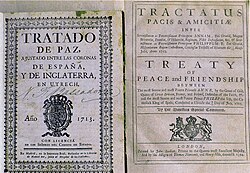
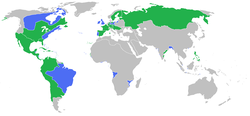
The Treaty of Utrecht ended the War of the Spanish Succession and transferred Acadia, Newfoundland, and Hudson Bay territories from France to Britain. It strengthened Britain's position near the Thirteen Colonies.
Image source: Peace of Utrecht
1734 - 1740
Religious revivals spread through the colonies under preachers including Jonathan Edwards and George Whitefield. The movement challenged established churches and encouraged shared cultural experiences across colonial boundaries.
Image source: First Great Awakening
1754 - 1763
Britain and France fought for control of eastern North America, with many Indigenous nations allied to one side or the other. The British victory removed France from most of its mainland North American possessions but left Britain heavily indebted.
Image source: French and Indian War
Jun 19, 1754 - Jul 11, 1754
Delegates from seven colonies met in Albany to coordinate defense and diplomacy during the French and Indian War. Benjamin Franklin's proposed Albany Plan of Union was rejected by both colonial governments and British authorities.
Image source: Albany Congress
Feb 10, 1763
The Treaty of Paris ended the global Seven Years' War. France ceded Canada and territories east of the Mississippi to Britain, dramatically expanding the empire surrounding the Thirteen Colonies.
Image source: Treaty of Paris (1763)
Oct 7, 1763
Britain prohibited colonial settlement west of the Appalachian Mountains and reserved the region for Indigenous nations. Colonists and land speculators resented the boundary, while Britain sought to reduce frontier warfare.
Image source: Royal Proclamation of 1763
Mar 22, 1765
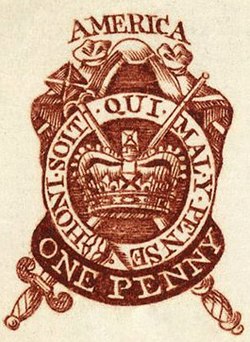
Parliament imposed a direct tax on printed materials in the colonies. Widespread protests, boycotts, and arguments about taxation without representation led to the act's repeal the following year.
Image source: Stamp Act 1765
Oct 7, 1765 - Oct 25, 1765
Delegates from nine colonies met in New York to petition Parliament against the Stamp Act. The gathering represented an important early instance of intercolonial political cooperation.
Image source: Stamp Act Congress
Mar 18, 1766
Parliament repealed the Stamp Act after colonial resistance and pressure from British merchants. At the same time, it passed the Declaratory Act asserting Parliament's authority to legislate for the colonies.
Mar 5, 1770
British soldiers fired into a crowd in Boston, killing five colonists. Patriot leaders publicized the incident as evidence of military oppression, intensifying opposition to British authority.
Image source: Boston Massacre
Dec 16, 1773
Protesters associated with the Sons of Liberty dumped East India Company tea into Boston Harbor. The action challenged the Tea Act and prompted Parliament to impose the Coercive Acts.
Image source: Boston Tea Party
Sep 5, 1774 - Oct 26, 1774
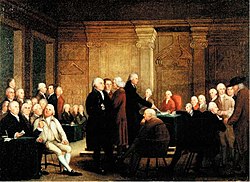
Delegates from twelve colonies met in Philadelphia to coordinate resistance to the Coercive Acts. Congress adopted the Continental Association and petitioned King George III while seeking to defend colonial rights.
Image source: First Continental Congress
Apr 19, 1775
British troops marched from Boston to seize colonial military supplies, encountering militia at Lexington and Concord. The fighting began the armed conflict that became the American Revolutionary War.
Image source: Battles of Lexington and Concord
May 10, 1775
Delegates reconvened in Philadelphia after fighting began. Congress managed the war effort, created a continental army, authorized diplomacy, and eventually acted as the colonies' national government.
Image source: Second Continental Congress
Jul 4, 1776
The Continental Congress adopted the Declaration of Independence, formally announcing that the thirteen colonies were free and independent states. The document justified separation through arguments about natural rights and government by consent.
Image source: United States Declaration of Independence
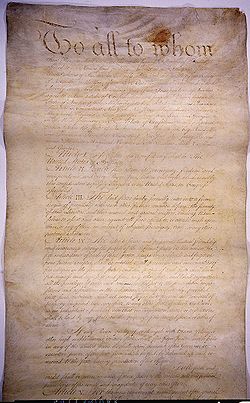
Nov 15, 1777
Congress adopted the Articles of Confederation as the first constitutional framework for the United States. The articles were later ratified by the states and governed the confederation during the final years of the Revolution.
Image source: Articles of Confederation
Sep 3, 1783
The Treaty of Paris ended the American Revolutionary War and recognized the independence of the United States. Britain granted the new nation territory extending west to the Mississippi River.
Image source: Treaty of Paris (1783)
Or browse the full history timeline directory, with more than 2,500 topics.
This Thirteen Colonies timeline was generated with the help of AI, using information found on the internet.
We work hard to keep these timelines accurate, but mistakes do get through. If you spot one, email us at [email protected] and we'll fix it for future visitors.
Generate yours with AI or build it from scratch, for free.
Export your timeline, add your own events, edit or remove AI-generated events, and much more
No credit card required.
Cancel anytime.
Cancel anytime.
You can create an unlimited number of timelines with up to 10 events on each one, customize how they look, export them to PDF, PNG, PowerPoint, CSV, and Excel, and share them with a link. Paid plans raise the event limit and add features like spreadsheet imports and collaborators.
Yes. You can cancel your subscription from your account page at any time, and you will not be charged again. Your subscription stays active for the rest of the period you already paid for.
Yes. We will email you a reminder before the annual renewal, and we will also email you a receipt.
Yes. You can email us within 15 days of any payment, and we will issue you a full refund.
Check out our pricing docs or send us an email anytime: [email protected].