
-
Use Cases
-
Resources
-
Pricing
The Salem Witch Trials were a series of hearings and prosecutions of people accused of witchcraft in colonial Massachusetts between February 1692 and May 1693. Sparked by accusations from young girls in Salem Village, the hysteria led to the execution of 20 people and the imprisonment of many others, becoming one of the most notorious cases of mass hysteria in American history. More Less
1647
% complete
The earliest recorded witchcraft execution in the American colonies was that of Alse Young in Hartford, Connecticut. Her hanging marked the start of the Connecticut Witch Trials, which lasted until 1663 and set a precedent for witchcraft prosecutions in New England.
1653
% complete
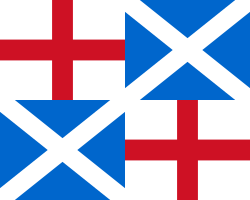
The Puritan-dominated Parliamentarians emerged victorious from the English Civil War, and the Crown was supplanted by the Protectorate of Oliver Cromwell in 1653. This Puritan ascendancy shaped the religious climate that colonists carried to New England.
Image source: The Protectorate
1672
% complete
In 1672, the villagers of Salem Village voted to hire a minister of their own, apart from Salem Town. This decision began a period of ministerial turnover and congregational conflict that would contribute to tensions preceding the witch trials.
Image source: Salem witch trials
1673 - 1679
% complete
James Bayley served as the first minister hired by Salem Village from 1673 to 1679. He departed after the congregation failed to pay his full rate, beginning a pattern of short tenures for the village's ministers.
1680 - 1683
% complete
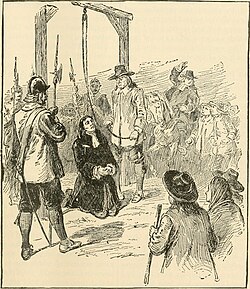
George Burroughs served as Salem Village's second minister from 1680 to 1683, also departing after the congregation failed to pay his full rate. He was later arrested at the height of the witchcraft hysteria and hanged as a witch in August 1692.
Image source: George Burroughs
1684
% complete
The original 1629 Royal Charter of the Massachusetts Bay Colony was vacated in 1684, after which King James II installed Sir Edmund Andros as governor of the Dominion of New England. The loss of self-governance created political instability in the colony.
Image source: Dominion of New England
1684 - 1688
% complete
Deodat Lawson served as Salem Village's third minister from 1684 to 1688. He left after the church in Salem refused to ordain him rather than over issues with the congregation itself.
Image source: Deodat Lawson
1684
% complete
Increase Mather published a book on witchcraft in 1684, contributing to the intellectual and religious climate in which belief in witchcraft was treated as a serious threat requiring prosecution.
Image source: Increase Mather
1689 - 1692
% complete
Between 1689 and 1692, Native Americans continued to attack many English settlements along the Maine coast, leading to the abandonment of some settlements and resulting in a flood of refugees into areas like Essex County, straining resources and fueling fear.
Image source: King William's War
1689
% complete
In Memorable Providences Relating to Witchcrafts and Possessions, Cotton Mather described his oracular observations and how stupendous witchcraft had affected the children of Boston mason John Goodwin. These symptoms fueled the craze of 1692.
1689
% complete
Andros was ousted in 1689 after the Glorious Revolution in England replaced the Catholic James II with the Protestant co-rulers William and Mary. Massachusetts was left without a formal government while awaiting a new charter.
Image source: Glorious Revolution
Jun 18, 1689
% complete
On June 18, 1689, the villagers agreed to hire Samuel Parris for £66 annually, one third in money and two thirds in provisions, along with use of the parsonage. Parris would be the minister during the outbreak of the witchcraft accusations.
Image source: Samuel Parris
Oct 10, 1689
% complete
On October 10, 1689, the village raised Parris' benefits, voting to grant him the deed to the parsonage and two acres of land. This conflicted with a 1681 village resolution forbidding conveyance of ministry lands to any particular person, deepening local divisions.
Oct 1690
% complete
In October 1690, Sir William Phips led an unsuccessful attack on French-held Quebec. The failed campaign heightened fears of French and Native American attacks on English settlements in northern New England.
Image source: William Phips
Oct 16, 1691
% complete
A new charter for the enlarged Province of Massachusetts Bay was given final approval in England on October 16, 1691. News of the charter and the appointment of William Phips as governor reached Boston by late January 1692.
Image source: Province of Massachusetts Bay
Feb 8, 1692
% complete
A copy of the new charter reached Boston on February 8, 1692, allowing the colony to form a new government under Governor William Phips just as the witchcraft crisis was beginning in Salem Village.
Feb 1692
% complete
In Salem Village in February 1692, Betty Parris (age 9) and her cousin Abigail Williams (age 11), daughter and niece of Reverend Samuel Parris, began to have fits described as beyond the power of epileptic fits or natural disease to effect by John Hale, minister of nearby Beverly.
Image source: Salem witch trials
Mar 1, 1692
% complete
Brought before the local magistrates on the complaint of witchcraft, the first accused were interrogated for several days starting March 1, 1692, then sent to jail. Until this point, all proceedings were investigative.
Mar 25, 1692
% complete
Later accounts, such as those by Upham in the 19th century, typically relate that a circle of girls, with Tituba's help, tried their hands at fortune telling. Thomas Hutchinson described her as a Spanish Indian. On March 25, 1692, Parris spoke privately with Sibley about her grand error and accepted her sorrowful confession.
Image source: Tituba
May 10, 1692
% complete
Sarah Osborne, one of the first three persons accused of witchcraft, died in jail on May 10, 1692, before she could be brought to trial.
May 27, 1692
% complete
On May 27, 1692, Governor William Phips ordered the establishment of a Special Court of Oyer and Terminer for Suffolk, Essex and Middlesex counties to prosecute the cases of those thronging the jails. One of the new governor and council's first orders of business was nominating county justices, sheriffs, and this court commission.
Jun 2, 1692 - Jun 10, 1692
% complete
The Court of Oyer and Terminer convened in Salem Town on June 2, 1692, with William Stoughton as Chief Magistrate, Thomas Newton as Crown's Attorney, and Stephen Sewall as clerk. Bridget Bishop, the first person indicted and tried, was executed by hanging eight days later on June 10, 1692.
Image source: Bridget Bishop
Jun 16, 1692
% complete
Suspect Roger Toothaker died in prison on June 16, 1692, one of several accused who perished in custody before trial or execution could take place.
Jul 19, 1692
% complete
On July 19, 1692, five women were executed by hanging: Sarah Good, Rebecca Nurse, Susannah Martin, Elizabeth Howe, and Sarah Wildes.
Aug 19, 1692
% complete
On August 19, 1692, five more people were executed by hanging: Martha Carrier, John Willard, George Burroughs, George Jacobs Sr., and John Proctor. Burroughs was the former Salem Village minister arrested at the height of the hysteria.
Sep 19, 1692
% complete
On September 19, 1692, Giles Corey refused to plead at trial and was killed by peine forte et dure, a form of torture in which the subject is pressed beneath an increasingly heavy load of stones in an attempt to make him enter a plea.
Image source: Giles Corey
Sep 22, 1692
% complete
On September 22, 1692, eight more persons were executed by hanging: Mary Eastey, Martha Corey, Ann Pudeator, Samuel Wardwell, Mary Parker, Alice Parker, Wilmot Redd, and Margaret Scott. This was the final execution date of the trials.
Oct 1692
% complete
The most famous primary source about the trials is Cotton Mather's Wonders of the Invisible World, printed in October 1692. It defended the trials and recounted the evidence against the condemned witches.
Image source: Wonders of the Invisible World
Nov 1692
% complete
Cotton Mather's father, Increase Mather, completed Cases of Conscience Concerning Evil Spirits at the same time as Wonders and published it in November 1692. It included a copy of a letter questioning spectral evidence, helping turn opinion against the trials.
Image source: Blackstone's ratio
Jan 1693
% complete
In January 1693, the new Superior Court of Judicature convened in Salem, again headed by William Stoughton as Chief Justice, with Anthony Checkley as Attorney General and Jonathan Elatson as Clerk. Its first five cases were people indicted but not tried in September, including Sarah Buckley and Margaret Jacobs.
Mar 10, 1693
% complete
Lydia Dustin died in jail on March 10, 1693. Although the last trial was held in May 1693, some accused continued to languish and die in prison.
1695
% complete
The first indication that public calls for justice were not over occurred in 1695 when Thomas Maule, a noted Quaker, publicly criticized the handling of the trials by the Puritan leaders in Chapter 29 of his book Truth Held Forth and Maintained, stating it were better that one hundred witches should live than that one person be put to death for a witch who is not a witch.
Dec 17, 1696 - Jan 14, 1697
% complete
On December 17, 1696, the General Court ruled there would be a fast day on January 14, 1697, referring to the late Tragedy raised among us by Satan and his Instruments. On that day, Samuel Sewall asked forgiveness for his role in the trials.
1697 - 1702
% complete
John Hale, a minister in Beverly present at many of the proceedings, completed his book A Modest Enquiry into the Nature of Witchcraft in 1697. It was not published until 1702, after his death, and perhaps in response to Calef's book.
1700
% complete
Robert Calef could not get his critical account of the trials published in Boston and had to take it to London, where it was published in 1700, further undermining support for the trials and their defenders.
Image source: Robert Calef
1700 - 1703
% complete
Various petitions were filed between 1700 and 1703 with the Massachusetts government demanding that the convictions be formally reversed. In 1703 another petition requested a more equitable settlement for those wrongly accused, but no action was taken until 1709.
Feb 14, 1703
% complete
Rev. Joseph Green and the members of the church voted on February 14, 1703, after nearly two months of consideration, to reverse the excommunication of Martha Corey, who had been hanged as a witch in September 1692.
Image source: Martha Corey
Aug 25, 1706
% complete
On August 25, 1706, Ann Putnam Jr., one of the most active accusers, joined the Salem Village church and publicly asked forgiveness, admitting her role in the accusations. Several accusers, mostly teenage girls, admitted they had fabricated their charges.
May 1709
% complete
In May 1709, 22 people who had been convicted of witchcraft, or whose relatives had been convicted, presented the government with a petition demanding both a reversal of attainder and compensation for financial losses.
Oct 17, 1711
% complete
On October 17, 1711, the General Court passed a bill reversing the judgment against the twenty-two people listed in the 1709 petition. Seven additional people had been convicted but had not signed the petition, and no reversal of attainder was issued for them.
Dec 17, 1711 - 1718
% complete
Two months after the reversal bill, on December 17, 1711, Governor Joseph Dudley authorized monetary compensation of £578 12s to be divided among the survivors and relatives of those accused. Most accounts were settled within a year, but Phillip English's extensive claims were not settled until 1718.
Image source: Joseph Dudley
1957
% complete
In 1957, descendants of six people wrongly convicted and executed but not included in the 1711 reversal demanded the General Court formally clear their names. An act passed by the Massachusetts legislature absolved the six people.
Oct 31, 2001
% complete
In November 2001, the Massachusetts legislature passed an act exonerating all who had been convicted and naming each of the innocent, except Elizabeth Johnson. When signed on October 31, 2001, by Governor Jane Swift, more than 300 years after the trials, all were finally proclaimed innocent.
2004
% complete
As of 2004, there was still talk about exonerating or pardoning all of the victims of the trials, since some individuals remained without formal exoneration despite earlier legislative acts.
May 26, 2022
% complete
Elizabeth Johnson Jr., the last convicted Salem witch, was officially exonerated when the Massachusetts Senate cleared her name on May 26, 2022, 329 years after she had been found guilty, after pressure from schoolchildren who discovered the anomaly.
1828
% complete
The story of the witchcraft accusations, trials and executions captured the imagination of writers and artists for centuries. Their earliest impactful use as the basis for popular fiction is the 1828 novel Rachel Dyer by John Neal.
Image source: Rachel Dyer
1885
% complete
Rebecca Nurse's descendants erected an obelisk-shaped granite memorial in her memory in 1885 on the grounds of the Nurse Homestead in Danvers, with an inscription from poet John Greenleaf Whittier.
Image source: Rebecca Nurse
1892
% complete
In 1892, an additional monument was erected at the Nurse Homestead in honor of forty neighbors who had signed a petition in support of Rebecca Nurse during the trials.
1936
% complete
Land in the area was purchased by the city of Salem in 1936 and renamed Witch Memorial Land, but no memorial was constructed on the site, and the popular misconception persisted that the executions had occurred at the top of Gallows Hill.
1992
% complete
The 300th anniversary of the trials was marked in 1992 in Salem and Danvers by a variety of events. A memorial park was dedicated in Salem with stone slab benches inserted in the stone wall for each of those executed in 1692, and a memorial was dedicated in Danvers. The Danvers Tercentennial Committee also persuaded the Massachusetts House of Representatives to issue a resolution honoring those who had died.
Jan 2016
% complete
In January 2016, the University of Virginia announced its Gallows Hill Project team had determined the execution site in Salem where the nineteen witches had been hanged, ending centuries of uncertainty about the location.
2017
% complete
The city of Salem, which owns the property at the confirmed execution site, dedicated the Proctor's Ledge Memorial to the victims there in 2017.
Or browse the full history timeline directory, with more than 2,000 topics.
This Salem Witch Trials timeline was generated with the help of AI, using information found on the internet.
We work hard to keep these timelines accurate, but mistakes do get through. If you spot one, email us at [email protected] and we'll fix it for future visitors.
Generate yours with AI or build it from scratch, for free.
Export your timeline, add your own events, edit or remove AI-generated events, and much more
No credit card required.
Cancel anytime.
Cancel anytime.
You can create an unlimited number of timelines with up to 10 events on each one, customize how they look, export them to PDF, PNG, PowerPoint, CSV, and Excel, and share them with a link. Paid plans raise the event limit and add features like spreadsheet imports and collaborators.
Yes. You can cancel your subscription from your account page at any time, and you will not be charged again. Your subscription stays active for the rest of the period you already paid for.
Yes. We will email you a reminder before the annual renewal, and we will also email you a receipt.
Yes. You can email us within 15 days of any payment, and we will issue you a full refund.
Check out our pricing docs or send us an email anytime: [email protected].