-
Use Cases
-
Resources
-
Pricing
Decolonization refers to the process by which colonies gained independence from European and other imperial powers, primarily following World War II. Driven by nationalist movements, international pressure, and the weakening of colonial powers, decolonization reshaped the global political map, giving rise to dozens of new nations across Asia, Africa, and the Caribbean, while leaving lasting legacies of conflict, economic challenge, and cultural transformation. More Less
Aug 22, 1791 - Jan 1, 1804
% complete
Enslaved people in the French colony of Saint-Domingue rose in revolt in 1791, ultimately defeating French, Spanish, and British forces. Haiti declared independence on January 1, 1804, becoming the first state founded by former slaves and the earliest successful decolonization movement in the Americas, though France later imposed a crippling indemnity.
Image source: Haitian Revolution
Sep 16, 1810 - Dec 9, 1824
% complete
Beginning with Mexico's Grito de Dolores in 1810 and ending with the Battle of Ayacucho in 1824, Spanish American colonies won independence across the continent. Leaders such as Simón Bolívar and José de San Martín dismantled Spain's American empire, establishing republics from Mexico to Argentina.
Image source: Spanish American wars of independence
Sep 7, 1822
% complete
Prince Pedro of Portugal declared Brazil's independence on September 7, 1822, establishing the Empire of Brazil. Unlike the violent Spanish American wars, Brazil's separation was relatively peaceful, preserving territorial unity and creating a unique monarchy in the Americas.
Image source: Independence of Brazil
Feb 6, 1840
% complete
The Treaty of Waitangi, signed in 1840 between the British Crown and Maori chiefs, promised Maori rights while ceding governance. Subsequent breaches fueled generations of Maori activism, culminating in the Waitangi Tribunal established in 1975 to address colonial grievances and reshape New Zealand's relationship with its indigenous people.
Image source: Treaty of Waitangi
Jan 1, 1901
% complete
Six Australian colonies federated on January 1, 1901, forming the Commonwealth of Australia. While initially a dominion within the British Empire, federation began Australia's gradual path to full legislative and constitutional autonomy, completed with the Statute of Westminster adoption in 1942 and the Australia Act in 1986.
Image source: Federation of Australia
Dec 11, 1931
% complete
The Statute of Westminster gave legal recognition to the legislative independence of dominions including Canada, Australia, New Zealand, South Africa, and Ireland, removing British parliamentary supremacy over them. It formalized the evolution of the empire into a voluntary Commonwealth of equal nations.
Image source: Statute of Westminster 1931
Aug 6, 1962
% complete
Jamaica became independent from Britain on August 6, 1962, after opting out of the short-lived West Indies Federation. Its independence, followed by Trinidad and Tobago weeks later, launched a wave of decolonization across the Anglophone Caribbean throughout the 1960s and 1970s.
Image source: Independence Day (Jamaica)
Sep 16, 1975
% complete
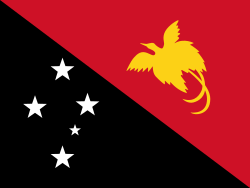
Papua New Guinea became independent from Australian administration on September 16, 1975, after UN-supervised trusteeship. As one of the most culturally diverse nations on earth, its peaceful transition marked a significant milestone in Pacific decolonization.
Image source: Papua New Guinea
Jul 30, 1980
% complete
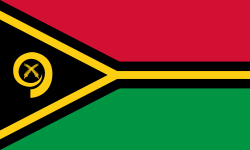
Vanuatu, formerly the Anglo-French condominium of the New Hebrides, became independent on July 30, 1980, uniquely decolonizing from two colonial powers simultaneously. Father Walter Lini led the new nation, which adopted Melanesian socialism and joined the Non-Aligned Movement.
Image source: Vanuatu
Apr 2, 1982 - Jun 14, 1982
% complete
Argentina invaded the Falkland Islands, a British overseas territory it claimed as the Malvinas, prompting a ten-week war in which Britain recaptured the islands. The conflict underscored unresolved questions about the remnants of empire and the right of small territories to self-determination.
Image source: Falklands War
Aug 17, 1945 - Dec 27, 1949
% complete
Indonesia declared independence from the Netherlands on August 17, 1945, led by Sukarno and Mohammad Hatta. After four years of armed struggle and international pressure, the Netherlands formally recognized Indonesian sovereignty in December 1949, making Indonesia one of the first colonies to win independence through revolution after World War II.
Image source: Indonesian National Revolution
Jul 4, 1946
% complete
The Philippines gained full independence from the United States on July 4, 1946, becoming one of the first Asian colonies to decolonize after World War II. The transition followed decades of American colonial rule and a promise of independence made in the Tydings-McDuffie Act of 1935, marking the beginning of a broader wave of Asian decolonization.
Image source: History of the Philippines (1946–1965)
Dec 19, 1946 - Aug 1, 1954
% complete
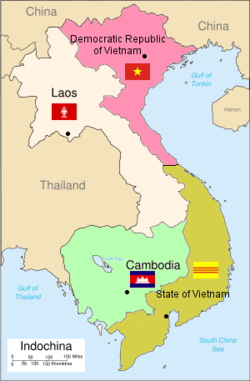
The First Indochina War pitted Vietnamese nationalist and communist forces under Ho Chi Minh against French colonial authorities seeking to reassert control over Indochina. The war ended with the French defeat at Dien Bien Phu in 1954, leading to the Geneva Accords and the end of French colonial rule in Vietnam, Laos, and Cambodia.
Image source: First Indochina War
Aug 15, 1947
% complete
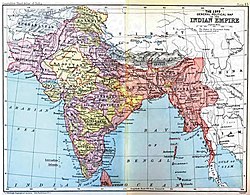
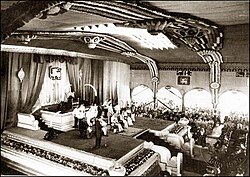
India gained independence from British rule on August 15, 1947, ending nearly two centuries of colonial control. The subcontinent was simultaneously partitioned into India and Pakistan, triggering massive population transfers and communal violence that killed hundreds of thousands. Indian independence became an inspiration for anti-colonial movements worldwide.
Image source: Indian independence movement
Jan 4, 1948
% complete
Burma (Myanmar) achieved independence from the United Kingdom on January 4, 1948, after negotiations led by nationalist leader Aung San, who had been assassinated the previous year. Unlike most former British colonies, Burma chose to leave the Commonwealth and establish itself as a sovereign republic.
Image source: Union of Burma
Feb 4, 1948
% complete
Ceylon (now Sri Lanka) became independent from British rule on February 4, 1948, through largely peaceful constitutional negotiation. It remained a dominion within the Commonwealth until becoming a republic in 1972, when it adopted the name Sri Lanka.
Image source: Sri Lankan independence movement
Apr 26, 1954 - Jul 21, 1954
% complete
The Geneva Accords of 1954 ended the First Indochina War and dissolved French Indochina. Vietnam was temporarily divided at the 17th parallel, while Laos and Cambodia became independent states. The agreement marked the collapse of the French colonial empire in Southeast Asia.
Image source: 1954 Geneva Conference
Apr 18, 1955 - Apr 24, 1955
% complete
Twenty-nine newly independent African and Asian nations met in Bandung, Indonesia, to promote economic and cultural cooperation and oppose colonialism and neocolonialism. The conference, hosted by Sukarno, laid the groundwork for the Non-Aligned Movement and symbolized the rising political power of the decolonized world.
Image source: Bandung Conference
Aug 31, 1957
% complete
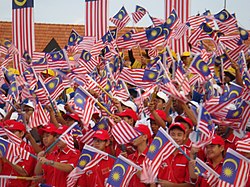
The Federation of Malaya gained independence from Britain on August 31, 1957, following negotiations between British officials and Malay leaders including Tunku Abdul Rahman. In 1963, Malaya merged with Singapore, Sabah, and Sarawak to form Malaysia, though Singapore separated in 1965.
Image source: Independence Day (Malaysia)
Aug 9, 1965
% complete
Singapore was expelled from Malaysia on August 9, 1965, becoming a fully sovereign republic. Having earlier attained self-governance from Britain in 1959, Singapore's separation marked its final step toward complete independence, after which it developed into one of Asia's most prosperous states under Lee Kuan Yew.
Image source: History of Singapore
Jan 1, 1984
% complete
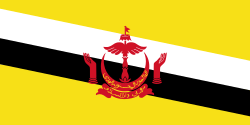
Brunei, a British protectorate since 1888, achieved full independence on January 1, 1984. The small oil-rich sultanate opted out of joining Malaysia in 1963 and negotiated a gradual transfer of power, retaining its monarchy as one of the world's few absolute sultanates.
Image source: Brunei
Jul 1, 1997
% complete
Britain transferred sovereignty of Hong Kong to China on July 1, 1997, ending more than 150 years of colonial rule. Under the Sino-British Joint Declaration, Hong Kong became a Special Administrative Region governed under the 'one country, two systems' framework, representing one of the final acts of European decolonization in Asia.
Image source: Handover of Hong Kong
Dec 20, 1999
% complete
Portugal transferred Macau to Chinese sovereignty on December 20, 1999, ending over four centuries of Portuguese presence in East Asia. Like Hong Kong, Macau became a Special Administrative Region under the 'one country, two systems' principle, closing the era of European colonial enclaves in China.
Image source: Transfer of sovereignty over Macau
Apr 17, 1946
% complete
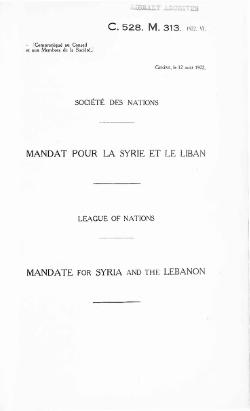
France withdrew its last troops from Syria and Lebanon in April 1946, formally ending the League of Nations mandates established after World War I. Both countries had declared independence earlier, but the final evacuation of French forces marked their full sovereignty and the decline of European mandates in the Levant.
Image source: Mandate for Syria and the Lebanon
May 14, 1948
% complete
On May 14, 1948, David Ben-Gurion proclaimed the establishment of the State of Israel as the British Mandate for Palestine expired. The declaration followed the 1947 UN partition plan and immediately sparked war with neighboring Arab states, reshaping the Middle East and leaving lasting regional consequences.
Image source: Israeli Declaration of Independence
Jul 14, 1958
% complete
The 14 July Revolution, led by Brigadier Abd al-Karim Qasim, overthrew the Hashemite monarchy installed under British influence, ending the Anglo-Iraqi treaty system. Iraq became a republic, reflecting the broader wave of anti-imperial nationalism sweeping the Middle East in the 1950s.
Image source: 14 July Revolution
Jun 19, 1961
% complete
Kuwait terminated its 1899 protection treaty with Britain and became fully independent on June 19, 1961. Iraqi claims to Kuwait prompted the deployment of Arab League forces to defend the new state, which soon joined the United Nations and prospered from its oil wealth.
Image source: Kuwait
Oct 14, 1963 - Nov 30, 1967
% complete
Nationalist insurgents fought British forces in the Aden Protectorate from 1963 until Britain's withdrawal in November 1967. The People's Republic of Southern Yemen emerged as the Arab world's only Marxist state, marking the end of British colonial presence in Arabia.
Image source: Aden Emergency
Dec 2, 1971
% complete
As Britain announced its withdrawal from 'East of Suez,' seven emirates of the Trucial States federated to form the United Arab Emirates on December 2, 1971. The new federation combined oil wealth with strategic location, becoming a major Gulf state.
Image source: United Arab Emirates
Dec 24, 1951
% complete
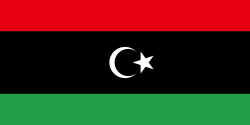
Libya became the first African country to gain independence through the United Nations process, emerging from Italian colonization and postwar British and French administration. On December 24, 1951, Libya was proclaimed an independent kingdom under King Idris I, uniting the provinces of Tripolitania, Cyrenaica, and Fezzan.
Image source: Kingdom of Libya
Jul 23, 1952
% complete
The Free Officers movement led by Gamal Abdel Nasser overthrew King Farouk in July 1952, ending the British-backed monarchy. Although Egypt had been nominally independent since 1922, the revolution forced the final withdrawal of British troops and asserted full Egyptian sovereignty, inspiring nationalist movements across the Arab world.
Image source: Egyptian revolution of 1952
Nov 1, 1954 - Mar 19, 1962
% complete
The Algerian War began with attacks by the National Liberation Front (FLN) against French forces on November 1, 1954. Eight years of brutal conflict, marked by guerrilla warfare, torture, and urban terrorism, ended with the Évian Accords in March 1962, granting Algeria independence and precipitating the fall of the French Fourth Republic.
Image source: Algerian War
Jan 1, 1956
% complete
Sudan became independent on January 1, 1956, ending Anglo-Egyptian condominium rule that had lasted since 1899. Sudan was the largest country in Africa at independence and faced immediate challenges, including civil war in the southern regions, foreshadowing decades of internal conflict.
Image source: History of Sudan
Mar 2, 1956 - Mar 20, 1956
% complete
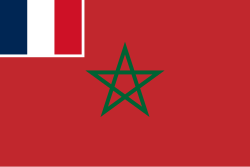
France granted independence to Morocco on March 2, 1956, restoring Sultan Mohammed V to the throne, and to Tunisia on March 20, 1956, where Habib Bourguiba became the leading figure. These negotiated transitions ended French protectorates established in 1912 and 1881 respectively and accelerated French retreat from North Africa.
Image source: French protectorate in Morocco
Mar 6, 1957
% complete
Ghana, formerly the Gold Coast, became independent under Kwame Nkrumah on March 6, 1957, the first sub-Saharan African colony to do so. Nkrumah's triumph inspired independence movements across the continent, and Ghana became a symbol of Pan-Africanism and African self-determination.
Image source: Ghana
Jan 1, 1960 - Dec 31, 1960
% complete
In 1960, known as the 'Year of Africa,' seventeen African countries gained independence, mostly from France but also from Belgium and Britain. Nations included Cameroon, Senegal, Mali, Madagascar, Congo (Leopoldville), Somalia, Benin, Niger, Burkina Faso, Côte d'Ivoire, Chad, Central African Republic, Congo-Brazzaville, Gabon, Mauritania, Nigeria, and Togo, transforming the map of the continent.
Image source: 1960 in Africa
Jun 30, 1960 - Nov 25, 1965
% complete
Belgium abruptly granted independence to the Congo on June 30, 1960, without preparing institutions for self-rule. The resulting crisis included the secession of Katanga, the assassination of Prime Minister Patrice Lumumba, UN intervention, and eventually Mobutu Sese Seko's seizure of power, illustrating the turmoil that could follow hasty decolonization.
Image source: Congo Crisis
Dec 12, 1963
% complete
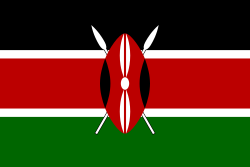
Kenya gained independence from Britain on December 12, 1963, after years of insurgency by the Mau Mau rebellion against colonial land policies. Jomo Kenyatta, imprisoned during the uprising, became the nation's first prime minister and later president, guiding Kenya through its early postcolonial years.
Image source: Kenya
Jan 12, 1964 - Apr 26, 1964
% complete
Months after gaining independence from Britain, Zanzibar's Arab-dominated government was overthrown in a violent revolution by African majority forces in January 1964. In April 1964, Zanzibar united with Tanganyika to form Tanzania under Julius Nyerere, creating a unified postcolonial state.
Image source: Zanzibar Revolution
Nov 11, 1965
% complete
Ian Smith's white-minority government in Southern Rhodesia unilaterally declared independence from Britain to preserve minority rule, defying British demands for majority governance. The illegal declaration triggered international sanctions and a prolonged guerrilla war that culminated in majority-ruled Zimbabwe in 1980.
Image source: Rhodesia's Unilateral Declaration of Independence
Jun 25, 1975 - Nov 11, 1975
% complete
Following the Carnation Revolution that toppled Portugal's authoritarian regime in 1974, Portugal rapidly decolonized. Mozambique became independent on June 25, 1975, under FRELIMO, and Angola on November 11, 1975, under the MPLA, ending five centuries of Portuguese colonial presence in Africa and igniting new civil wars in both nations.
Image source: Portuguese Colonial War
Apr 18, 1980
% complete
After the Lancaster House Agreement ended the Rhodesian Bush War, Zimbabwe gained internationally recognized independence on April 18, 1980, with Robert Mugabe as prime minister. The transition ended white minority rule and fulfilled the promise of majority self-determination delayed since Rhodesia's 1965 unilateral declaration.
Image source: Zimbabwe Rhodesia
Mar 21, 1990
% complete
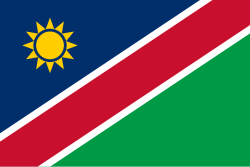
Namibia became independent on March 21, 1990, after a long liberation struggle by SWAPO against South African occupation of the former German colony of South West Africa. Sam Nujoma became the country's first president, and Namibia's independence marked the end of colonial rule on the African continent apart from remaining enclaves.
Image source: Namibia
Apr 27, 1994
% complete
South Africa held its first universal democratic elections on April 27, 1994, ending apartheid and white minority rule. Nelson Mandela became president, completing the transformation of the continent's last institutionalized settler-colonial regime into a multiracial democracy.
Image source: Negotiations to end apartheid in South Africa
Or browse the full history timeline directory, with more than 2,000 topics.
This Decolonization timeline was generated with the help of AI, using information found on the internet.
We work hard to keep these timelines accurate, but mistakes do get through. If you spot one, email us at [email protected] and we'll fix it for future visitors.
Generate yours with AI or build it from scratch, for free.
Export your timeline, add your own events, edit or remove AI-generated events, and much more
No credit card required.
Cancel anytime.
Cancel anytime.
You can create an unlimited number of timelines with up to 10 events on each one, customize how they look, export them to PDF, PNG, PowerPoint, CSV, and Excel, and share them with a link. Paid plans raise the event limit and add features like spreadsheet imports and collaborators.
Yes. You can cancel your subscription from your account page at any time, and you will not be charged again. Your subscription stays active for the rest of the period you already paid for.
Yes. We will email you a reminder before the annual renewal, and we will also email you a receipt.
Yes. You can email us within 15 days of any payment, and we will issue you a full refund.
Check out our pricing docs or send us an email anytime: [email protected].