-
Use Cases
-
Resources
-
Pricing
The Counter-Reformation, also known as the Catholic Reformation, was the period of Catholic resurgence initiated in response to the Protestant Reformation. It involved spiritual renewal, doctrinal clarification, church reforms, and the founding of new religious orders such as the Jesuits, alongside efforts like the Roman Inquisition and the Index of Forbidden Books to combat Protestantism. More Less
1073
% complete
The Gregorian reforms of the late 11th century flowed out from Rome, intending to reduce kingly and dynastic control of religious life and use of assets, and to prevent parishes from becoming 'family businesses'.
1111
% complete
The Gregorian reforms reached Ireland around 35 years after Rome with the Synod of Ráth Breasail (1111), which established the episcopal system over the aristocracy-dominated monasteries, leading to the eventual dissolution of many monasteries such as the Abbey of Kells.
Image source: Synod of Ráth Breasail
1122
% complete
The reform movement reached Germany in 1122 with the Concordat of Worms, which addressed the relationship between church and imperial authority.
Image source: Concordat of Worms
1300
% complete
The regular orders made their first attempts at reform in the 14th century, responding to calls for renewal within monastic and religious life.
Image source: Catholic Church
1336
% complete
In 1336 a papal bull known as the 'Benedictine Bull' reformed the Benedictine and Cistercian orders.
Image source: Benedictines
1400
% complete
The 14th through 16th centuries saw a spiritual revival incubated by preaching friars, the standardization of the Paris Bible, lay movements like the devotio moderna, nascent saints, printing, Christian humanism, and an urbanized laity.
Image source: Devotio Moderna
1513
% complete
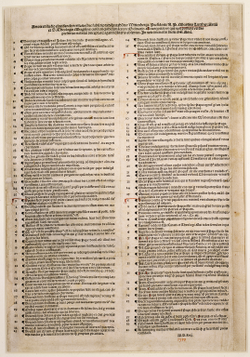
Pope Leo X's campaign to raise funds for Saint Peter's Basilica by supporting the use of indulgences served as a key impetus for Martin Luther's 95 Theses, intensifying criticism of the worldly excesses epitomized by Alexander VI's era.
Image source: Ninety-five Theses
1435
% complete
In 1435, Francis of Paola founded the Poor Hermits of Saint Francis of Assisi, who became the Minim Friars.
Image source: Order of Minims
1514
% complete
Starting in 1514, the Oratory of Divine Love in Rome attracted an aristocratic membership of priests and laymen to perform anonymous acts of charity and discuss reform; its members became key players in the church's handling of the Reformation.
1523
% complete
In 1523, the Camaldolese Hermits of Monte Corona were recognized as a separate congregation of monks.
Image source: Camaldolese
1524
% complete
In Italy, the first congregation of regular clergy was the Theatines, founded in 1524 by Gaetano and Cardinal Gian Caraffa.
Image source: Theatines
1526
% complete
In 1526, Matteo de Bascio suggested reforming the Franciscan rule of life to its original purity, giving birth to the Capuchins, who were recognized by the pope in 1619.
Image source: Order of Friars Minor Capuchin
1528
% complete
The Somaschi Fathers, a congregation of regular clergy, were founded in 1528 as part of the wave of new religious orders.
Image source: Somaschi Fathers
1530
% complete
The Barnabites, another congregation of regular clergy, were founded in 1530 as part of the Catholic reform movement.
Image source: Barnabites
1535
% complete
The Ursulines, an order dedicated to the education of girls, were founded in 1535.
Image source: Ursulines
1540
% complete
The Society of Jesus (Jesuits) was canonically recognized in 1540, becoming one of the most influential orders of the Counter-Reformation.
Image source: Jesuits
1548
% complete
In 1548, then-layman Philip Neri founded a Confraternity of the Most Holy Trinity of Pilgrims and Convalescents, which developed into the Oratorians, given constitutions in 1564 and recognized as a religious order in 1575.
1512 - 1517
% complete
The Fifth Council of the Lateran proposed a reform of the calendar, which Copernicus later mentioned in the dedication to De revolutionibus orbium coelestium (1543).
1530
% complete
The 1530 Confutatio Augustana was the Catholic response to the Lutheran Augsburg Confession.
Image source: Confutatio Augustana
1534 - 1549
% complete
Pope Paul III is considered the first pope of the Counter-Reformation, and he initiated the Council of Trent, tasked with institutional reform and addressing corrupt bishops and priests, the sale of indulgences, and other financial abuses.
Image source: Pope Paul III
Dec 13, 1545 - Dec 4, 1563
% complete
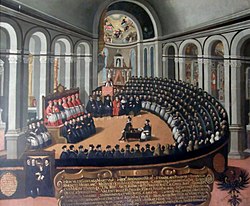
The Council of Trent met sporadically from December 13, 1545, to December 4, 1563, to reform many parts of the Catholic Church. It is frequently dated as the beginning of the Counter-Reformation as a political-historical period.
Image source: Council of Trent
1559 - 1967
% complete
The Index Librorum Prohibitorum was a directory of prohibited books, updated twenty times over four centuries by the Sacred Congregation of the Index. It was finally suspended on March 29, 1967.
Image source: Index Librorum Prohibitorum
1566
% complete
The 1566 Roman Catechism, commissioned by the Council of Trent, provided material in Latin to help the clergy catechize in the vernacular, serving as authoritative Church teaching until the Catechism of the Catholic Church (1992).
Image source: Roman Catechism
1570
% complete
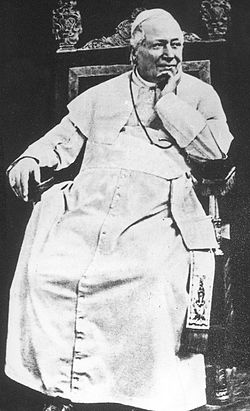
The Council of Trent recommended that the form of Mass be standardized; this took place in 1570 when Pope Pius V made the Tridentine Mass obligatory. The same Missal mostly prohibited the numerous sequences.
Image source: Tridentine Mass
1575
% complete
The 1575 Nova ordinantia ecclesiastica was an addendum to the Liturgia Svecanae Ecclesiae catholicae & orthodoxae conformia, also called the 'Red Book'.
1578
% complete
The 1578 Defensio Tridentinae fidei was the Catholic response to the Examination of the Council of Trent.
Image source: Counter-Reformation
1582
% complete
An actual new calendar had to wait until the Gregorian calendar in 1582, correcting the Julian calendar that had drifted almost ten days out of step with the seasons.
Image source: Gregorian calendar
Feb 7, 1596
% complete
Pope Clement VIII received the Ruthenian bishops into full communion on February 7, 1596.
Image source: Union of Brest
1713
% complete
The 1713 papal bull Unigenitus condemned 101 propositions of the French Jansenist theologian Pasquier Quesnel (1634–1719).
Image source: Unigenitus
1571
% complete
The victory at the Battle of Lepanto in 1571 was accredited to the Virgin Mary and signified the beginning of a strong resurgence of Marian devotions.
Image source: Battle of Lepanto
1576
% complete
In the Habsburg hereditary lands, predominantly Protestant except for Tyrol, the Counter-Reformation began with Emperor Rudolf II, who began suppressing Protestant activity in 1576. This conflict escalated into the Bohemian Revolt of 1620.
Image source: Rudolf II, Holy Roman Emperor
1578 - 1592
% complete
The king sent Alexander Farnese as Governor-General of the Spanish Netherlands from 1578 to 1592. He led a successful campaign against the Dutch Revolt, capturing the main cities in the south (the future Belgium) and returning them to Catholic Spain.
Image source: Alexander Farnese, Duke of Parma
1579
% complete
By the treaty of Arras in 1579, Farnese secured the support of the 'Malcontents', as the Catholic nobles of the southern Netherlands were styled.
Image source: Union of Arras
1583 - 1589
% complete
The Cologne War (1583–1589) was a conflict between Protestant and Catholic factions that devastated the Electorate of Cologne.
Image source: Cologne War
1585
% complete
Antwerp surrendered in 1585 as 60,000 citizens (60 per cent of the pre-siege population) fled north.
Image source: Fall of Antwerp
1598
% complete
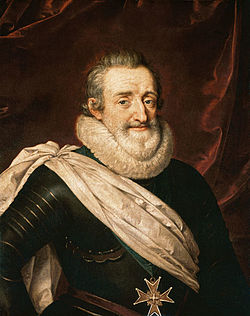
From 1562 Catholics and Huguenots fought a series of wars in France resulting in millions of deaths, until the Edict of Nantes brought religious peace in 1598.
Image source: Edict of Nantes
1629
% complete
The Huguenots' privileges would be lost at the Peace of Alès of 1629, though religious toleration lasted until Louis XIV resumed persecution.
1648
% complete
As a political-historical period, the Counter-Reformation is frequently dated to have ended with the political conclusion of the European wars of religion in 1648, though this dating is controversial.
Image source: Peace of Westphalia
1731
% complete
The Salzburg Protestants were exiled in the 18th century, especially to Prussia.
Image source: Salzburg Protestants
1777
% complete
As heir to the throne, Joseph II spoke vehemently to his mother Maria Theresa in 1777 against the expulsion of Protestants from Moravia, calling her choices 'unjust, impious, impossible, harmful and ridiculous.'
Image source: Joseph II, Holy Roman Emperor
1781
% complete
Joseph II's 1781 Patent of Toleration can be regarded as the end of the political Counter-Reformation, although smaller expulsions against Protestants still occurred, such as the Zillertal expulsion.
Image source: Patent of Toleration
1580
% complete
Marian piety experienced unforeseen growth during and after the Catholic Reformation, with over 500 pages of mariological writings in the 17th century alone—one of the drivers of the Baroque style that emerged across Europe in the late sixteenth century.
Image source: Baroque
1633
% complete
During the Galileo affair, Galileo Galilei was placed under house arrest, served in Rome, Siena, Arcetri, and Florence, for publishing writings said to be 'vehemently suspected of being heretical.' His opponents condemned heliocentric theory and temporarily banned its teaching in 1633.
Image source: Galileo affair
1780
% complete
The term was coined in the late eighteenth century by German historians as a negative concept to describe Catholic repressions, and was popularised through the mid-nineteenth century by historians like Leopold von Ranke.
Image source: Counter-Reformation
1850
% complete
In nineteenth-century Germany, the term became part of the Kulturkampf: 'Counter-Reformation' was used by Protestant historians as a negative, one-dimensional concept stressing reaction and resistance to Protestantism while neglecting reform within Catholicism.
Image source: Kulturkampf
1880
% complete
Even when the Protestant historian Wilhelm Maurenbrecher introduced the term 'Catholic Reformation' in 1880, German historiography remained confessionally divided on the subject.
Image source: Wilhelm Maurenbrecher
1966
% complete
In 1966, Archbishop Andreas Rohracher expressed regret about the expulsions of Protestants carried out during the Counter-Reformation.
Image source: Cuius regio, eius religio
Or browse the full history timeline directory, with more than 2,000 topics.
This Counter-Reformation timeline was generated with the help of AI, using information found on the internet.
We work hard to keep these timelines accurate, but mistakes do get through. If you spot one, email us at [email protected] and we'll fix it for future visitors.
Generate yours with AI or build it from scratch, for free.
Export your timeline, add your own events, edit or remove AI-generated events, and much more
No credit card required.
Cancel anytime.
Cancel anytime.
You can create an unlimited number of timelines with up to 10 events on each one, customize how they look, export them to PDF, PNG, PowerPoint, CSV, and Excel, and share them with a link. Paid plans raise the event limit and add features like spreadsheet imports and collaborators.
Yes. You can cancel your subscription from your account page at any time, and you will not be charged again. Your subscription stays active for the rest of the period you already paid for.
Yes. We will email you a reminder before the annual renewal, and we will also email you a receipt.
Yes. You can email us within 15 days of any payment, and we will issue you a full refund.
Check out our pricing docs or send us an email anytime: [email protected].