-
Use Cases
-
Resources
-
Pricing
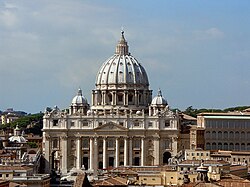
Catholicism is the largest branch of Christianity, centered on the Pope in Rome and characterized by its sacramental theology, apostolic tradition, and global institutional structure. This timeline traces its evolution from the early Christian communities of the Roman Empire through pivotal moments such as the Council of Nicaea, the Great Schism of 1054, the Protestant Reformation, the Second Vatican Council, and its role in the contemporary world. More Less
May 20, 325 - Jul 25, 325
% complete
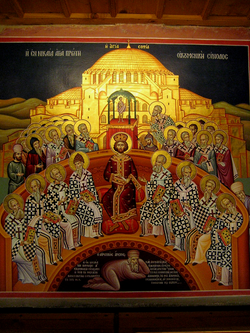
Convened by Emperor Constantine, the First Council of Nicaea addressed the Arian controversy by affirming that Christ is fully divine, producing the original Nicene Creed. It also standardized the date of Easter, shaping Catholic liturgical practice.
Image source: First Council of Nicaea
Feb 27, 380
% complete
Emperor Theodosius I issued the Edict of Thessalonica, making Nicene Christianity the official state religion of the Roman Empire. This dramatically elevated the status and influence of the Catholic Church in public life.
405
% complete
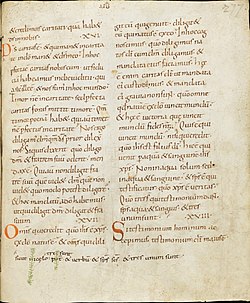
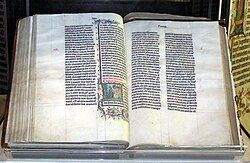
St. Jerome completed his Latin translation of the Bible, known as the Vulgate. It became the standard scriptural text of the Catholic Church for over a thousand years and remains an authoritative version in Latin Christianity.
Image source: Vulgate
452
% complete
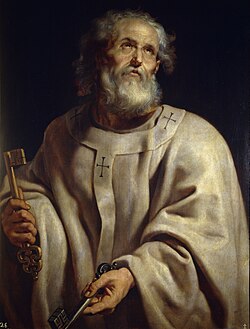
Pope Leo I famously met Attila the Hun near Mantua and persuaded him to withdraw from Italy without sacking Rome. The episode demonstrated the growing temporal authority and prestige of the papacy.
Image source: Pope Leo I
Dec 25, 496
% complete
Clovis I, king of the Franks, converted to Catholic Christianity and was baptized by Bishop Remigius of Reims. His conversion made the Franks the first major Germanic kingdom to embrace Catholicism rather than Arianism, forging a lasting alliance between Frankish kings and the papacy.
Image source: Clovis I
Apr 3, 33
% complete
The crucifixion of Jesus under Pontius Pilate is regarded by Catholics as the foundational event of their faith, with his death understood as an atoning sacrifice for humanity's sins. His resurrection three days later, celebrated at Easter, became the central mystery of Christian belief.
Image source: Crucifixion of Jesus
May 24, 33
% complete
Fifty days after the resurrection, the Holy Spirit descended upon the apostles in Jerusalem, empowering them to preach the Gospel. This event, commemorated as Pentecost, is traditionally considered the birthday of the Catholic Church.
Image source: Pentecost
67
% complete
Apostles Peter and Paul were martyred in Rome during the persecution under Emperor Nero. Peter, regarded as the first pope, was crucified upside down on Vatican Hill, establishing Rome as the center of the emerging Church.
Image source: Saint Peter
Jul 16, 1054
% complete
Mutual excommunications between Cardinal Humbert and Patriarch Michael Cerularius formalized the split between the Roman Catholic Church in the West and the Eastern Orthodox Church. The schism divided Christendom along theological, linguistic, and political lines.
Image source: East–West Schism
Nov 27, 1095
% complete
At the Council of Clermont, Pope Urban II called for a crusade to aid Byzantium and recover Jerusalem for Christendom. The resulting First Crusade captured Jerusalem in 1099 and established Crusader states, beginning two centuries of crusading activity.
Image source: First Crusade
1209
% complete
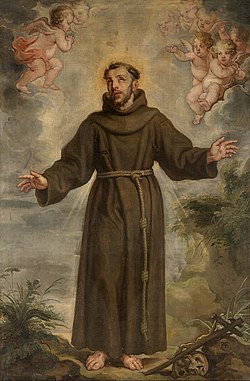
St. Francis of Assisi received approval from Pope Innocent III for his order of friars dedicated to poverty, preaching, and service to the poor. The Franciscans revitalized medieval spirituality and became one of the Church's most influential religious orders.
Image source: Francis of Assisi
Nov 11, 1215
% complete
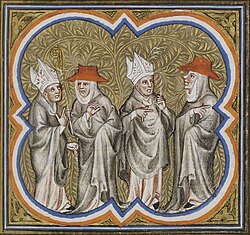
Pope Innocent III convened the Fourth Lateran Council, which defined transubstantiation as the doctrine of the Eucharist, mandated annual confession and communion for the faithful, and reformed clerical discipline across Western Christendom.
Image source: Fourth Council of the Lateran
1216
% complete
Pope Honorius III approved the Order of Preachers founded by St. Dominic, dedicated to combating heresy through preaching and teaching. Dominicans such as Thomas Aquinas profoundly shaped Catholic theology and scholastic philosophy.
Image source: Dominican Order
1265 - 1274
% complete
St. Thomas Aquinas composed his monumental Summa Theologiae, synthesizing Aristotelian philosophy with Christian theology. His work became a cornerstone of Catholic doctrinal education and earned him recognition as the Angelic Doctor.
Image source: Summa Theologica
1309 - 1377
% complete
Under pressure from the French crown, Pope Clement V moved the papal court to Avignon, where seven successive popes resided until Gregory XI returned to Rome. The period damaged papal prestige and fueled criticism of Church wealth and corruption.
Image source: Avignon Papacy
1378 - 1417
% complete
Following Gregory XI's death, rival claimants to the papacy were elected in Rome and Avignon, dividing Catholic Europe into competing allegiances. The crisis was resolved at the Council of Constance, which elected Pope Martin V.
Image source: Western Schism
1455
% complete
Johannes Gutenberg printed the Gutenberg Bible using movable type, revolutionizing the spread of texts. Though initially a Latin Vulgate, printing technology later enabled mass distribution of vernacular Bibles and reformist writings that challenged the Church.
Image source: Gutenberg Bible
Oct 31, 1517
% complete
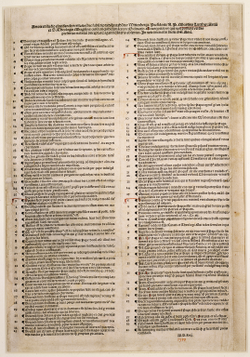
Martin Luther published his Ninety-five Theses criticizing indulgences, sparking the Protestant Reformation. The movement fractured Western Christendom and forced the Catholic Church into profound internal reform and renewal.
Image source: Ninety-five Theses
May 6, 1527 - Jun 6, 1527
% complete
Mutinous soldiers of Holy Roman Emperor Charles V sacked Rome, forcing Pope Clement VII to take refuge in Castel Sant'Angelo while the Swiss Guard died defending him. The sack symbolized the vulnerability of the Renaissance papacy amid religious upheaval.
Image source: Sack of Rome (1527)
Sep 27, 1540
% complete
Pope Paul III approved the Society of Jesus, founded by St. Ignatius of Loyola. The Jesuits became leading educators, missionaries, and defenders of the faith during the Counter-Reformation, spreading Catholicism across Asia, Africa, and the Americas.
Image source: Jesuits
Dec 13, 1545 - Dec 4, 1563
% complete
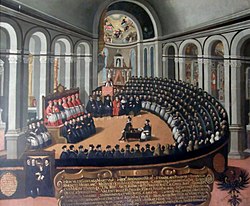
The Council of Trent defined Catholic doctrine on sacraments, scripture, and justification in response to Protestantism, and initiated sweeping disciplinary reforms. It launched the Counter-Reformation and shaped Catholicism for the next four centuries.
Image source: Council of Trent
Oct 15, 1582
% complete
Pope Gregory XIII reformed the Julian calendar, correcting the drift in the date of Easter. The Gregorian calendar was gradually adopted worldwide and remains the international civil calendar today.
Image source: Gregorian calendar
Apr 13, 1598
% complete
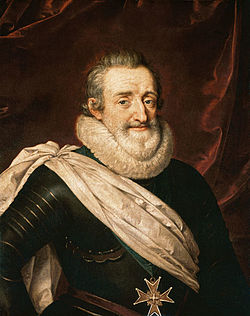
King Henry IV of France issued the Edict of Nantes, granting substantial rights to French Protestants after decades of religious wars. It marked a temporary settlement in Catholic-Protestant conflict, though it was revoked in 1685 under Louis XIV.
Image source: Edict of Nantes
Oct 24, 1648
% complete
The Peace of Westphalia ended the Thirty Years' War, which had devastated Europe in conflicts entangling Catholic and Protestant powers. The settlement entrenched religious pluralism in the Holy Roman Empire and diminished papal influence over European politics.
Image source: Peace of Westphalia
1773 - 1814
% complete
Pressure from Bourbon monarchs led Pope Clement XIV to suppress the Society of Jesus worldwide. The order was restored by Pope Pius VII in 1814 and went on to become one of the largest religious orders in the Church.
Image source: Suppression of the Society of Jesus
Dec 8, 1869 - Jul 18, 1870
% complete
The First Vatican Council defined the dogma of papal infallibility when the pope speaks ex cathedra on matters of faith and morals. Its proceedings were cut short by the outbreak of the Franco-Prussian War and the capture of Rome.
Image source: First Vatican Council
May 15, 1891
% complete
Pope Leo XIII issued Rerum Novarum, addressing the rights of workers and the responsibilities of capital in the industrial age. The encyclical founded modern Catholic social teaching on labor, justice, and human dignity.
Image source: Rerum novarum
Feb 11, 1929
% complete
The Lateran Treaty between Pope Pius XI and Mussolini's Italy resolved the Roman Question, creating the independent Vatican City State. The agreement secured the pope's sovereignty and normalized Church-state relations in Italy.
Image source: Lateran Treaty
Oct 11, 1962 - Dec 8, 1965
% complete
Pope John XXIII convened the Second Vatican Council, which modernized the Church's liturgy, promoted ecumenical dialogue, and affirmed religious liberty. Its reforms, including Mass in vernacular languages, transformed Catholic life worldwide.
Image source: Second Vatican Council
1992
% complete
Promulgated under Pope John Paul II, the Catechism of the Catholic Church provided a comprehensive, authoritative summary of Catholic doctrine for the first time since the Roman Catechism of Trent. It has been translated into dozens of languages for global catechesis.
Image source: Catechism of the Catholic Church
Or browse the full history timeline directory, with more than 2,000 topics.
This Catholicism timeline was generated with the help of AI, using information found on the internet.
We work hard to keep these timelines accurate, but mistakes do get through. If you spot one, email us at [email protected] and we'll fix it for future visitors.
Generate yours with AI or build it from scratch, for free.
Export your timeline, add your own events, edit or remove AI-generated events, and much more
No credit card required.
Cancel anytime.
Cancel anytime.
You can create an unlimited number of timelines with up to 10 events on each one, customize how they look, export them to PDF, PNG, PowerPoint, CSV, and Excel, and share them with a link. Paid plans raise the event limit and add features like spreadsheet imports and collaborators.
Yes. You can cancel your subscription from your account page at any time, and you will not be charged again. Your subscription stays active for the rest of the period you already paid for.
Yes. We will email you a reminder before the annual renewal, and we will also email you a receipt.
Yes. You can email us within 15 days of any payment, and we will issue you a full refund.
Check out our pricing docs or send us an email anytime: [email protected].