
-
Use Cases
-
Resources
-
Pricing
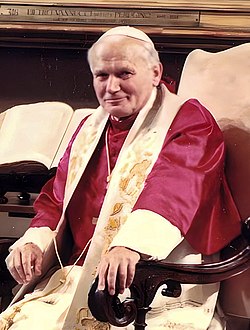
Pope John Paul II, born Karol Józef Wojtyła in Wadowice, Poland, served as head of the Catholic Church and sovereign of the Vatican City State from October 1978 until his death in April 2005. He was the first non-Italian pope in over 450 years and became one of the most influential world leaders of the 20th century, playing a significant role in the fall of communism in Eastern Europe. His papacy was marked by extensive global travel, efforts to improve interfaith relations, and the publication of numerous influential encyclicals. He was canonized as a saint in 2014. More Less
May 18, 1920
% complete
Karol Józef Wojtyła was born in Wadowice, Poland, the youngest of three children of Karol Wojtyła Sr., a retired army officer, and Emilia Kaczorowska. His upbringing in a devout Catholic household shaped his deep faith from an early age.
Image source: Pope John Paul II
Apr 13, 1929
% complete
Wojtyła's mother died of heart and kidney problems when he was only eight years old, a profound loss that marked his childhood. He later also lost his brother Edmund in 1932 and his father in 1941, leaving him orphaned by age 20.
Sep 1, 1939
% complete
The German invasion of Poland upended young Wojtyła's life. The Nazis closed Jagiellonian University, where he was studying, forcing him to work as a laborer in a limestone quarry and later a chemical plant to avoid deportation.
Image source: Invasion of Poland
Oct 1942
% complete
After discerning a priestly vocation, Wojtyła secretly joined the clandestine seminary run by Cardinal Adam Sapieha of Kraków while continuing to work in the Solvay chemical plant, studying for the priesthood at great personal risk.
Nov 1, 1946
% complete
Karol Wojtyła was ordained a priest by Archbishop Adam Sapieha on All Saints' Day 1946. He then traveled to Rome to study at the Pontifical Athenaeum Angelicum, earning doctorates in theology before returning to pastoral ministry in Poland.
Sep 28, 1958
% complete
At age 38, Wojtyła was named auxiliary bishop of Kraków by Pope Pius XII, beginning his rise through the Church hierarchy. He became known for engaging with intellectuals, students, and workers alike.
Jan 13, 1964
% complete
Pope Paul VI appointed Wojtyła Archbishop of Kraków, succeeding the late Eugeniusz Baziak's duties formally. He led the archdiocese during difficult times under communist rule and famously defended the construction of the Nowa Huta church.
Image source: Archdiocese of Kraków
Jun 26, 1967
% complete
Pope Paul VI created Wojtyła a cardinal-priest of San Cesareo in Palatio, making him one of the youngest members of the Sacred College and positioning him as a prominent figure in the global Church.
Image source: Cardinal (Catholic Church)
Oct 11, 1962 - Dec 8, 1965
% complete
As bishop of Kraków, Wojtyła took an active role in all four sessions of the Second Vatican Council, contributing especially to Gaudium et Spes, the pastoral constitution on the Church in the modern world, emphasizing human dignity and freedom.
Image source: Second Vatican Council
Oct 16, 1978
% complete
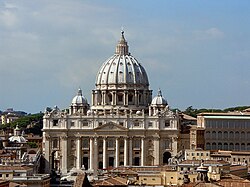
Following the sudden death of Pope John Paul I after just 33 days, the conclave elected Cardinal Wojtyła on the eighth ballot. He took the name John Paul II, honoring both of his immediate predecessors, and became the first non-Italian pope in 455 years.
Image source: October 1978 conclave
Oct 22, 1978
% complete
John Paul II celebrated his inaugural Mass in St. Peter's Square, telling the crowd 'Be not afraid!' — words that came to define his pontificate and his encouragement to resist oppression behind the Iron Curtain.
Image source: Inauguration of Pope John Paul II
Mar 4, 1979
% complete
His first encyclical set out the theological vision of his entire pontificate, centered on Christ the Redeemer and the dignity of the human person, addressing freedom, justice, and the threats posed by materialism and totalitarianism.
May 13, 1981
% complete
Turkish gunman Mehmet Ali Ağca shot and severely wounded the pope as he rode through St. Peter's Square on the feast of Our Lady of Fátima. John Paul II survived after extensive surgery and later forgave his attacker, visiting him in prison in 1983.
Image source: Attempted assassination of Pope John Paul II
Sep 14, 1981
% complete
Issued on the 90th anniversary of Rerum Novarum, this encyclical on human work emphasized the priority of labor over capital and defended workers' rights, reflecting his experiences as a laborer and his solidarity with Polish workers.
Image source: Laborem exercens
Apr 11, 1985
% complete
Inspired by the huge crowds of young people who gathered in Rome for Holy Year 1984, John Paul II instituted World Youth Day, a global celebration of faith held annually or every few years that became one of the signature initiatives of his pontificate.
Image source: World Youth Day
Mar 25, 1987
% complete
On the feast of the Annunciation, the pope issued this Marian encyclical reflecting his profound devotion to the Virgin Mary, whose motto Totus Tuus ('Totally yours') expressed his total consecration to Mary.
Image source: Redemptoris Mater
May 1, 1991
% complete
Marking the centenary of Rerum Novarum, this landmark social encyclical assessed the collapse of communism in Eastern Europe, critiqued both socialism and unregulated capitalism, and affirmed democracy, human rights, and a free economy within moral limits.
Aug 6, 1993
% complete
This major encyclical on fundamental questions of moral theology reaffirmed objective moral truth and the existence of intrinsically evil acts, responding to dissenting trends in Catholic moral theology following Vatican II.
Mar 25, 1995
% complete
In this encyclical on the value and inviolability of human life, John Paul II condemned abortion, euthanasia, and capital punishment, calling for a 'culture of life' to counter what he termed the 'culture of death.'
Mar 12, 2000
% complete
During the Great Jubilee of 2000, the pope presided over an unprecedented liturgy of repentance in St. Peter's Basilica, asking forgiveness for sins committed by Catholics, including violence against Jews, heretics, and others over the centuries.
Oct 16, 2002
% complete
On the 24th anniversary of his election, the pope proclaimed the Year of the Rosary and added five new Luminous Mysteries to the Rosary, encouraging renewed contemplative prayer among Catholics worldwide.
Image source: Rosarium Virginis Mariae
Feb 2005
% complete
Suffering from Parkinson's disease and severe respiratory complications, the elderly pope was hospitalized twice in early 2005. His frail public appearances drew worldwide attention, and he chose to remain at the Vatican rather than resign.
Jun 2, 1979 - Jun 10, 1979
% complete
The pope returned to his homeland for a nine-day pilgrimage that drew millions. His words, 'Let your Spirit descend and renew the face of the earth — of this land,' are widely credited with galvanizing Polish national spirit and inspiring the Solidarity movement.
Image source: Pope John Paul II
Jan 15, 1981
% complete
During his second visit to Poland, the pope met privately with Lech Wałęsa and publicly supported workers' rights. After the communist regime declared martial law later that year, he continued to champion Solidarity, which eventually helped topple the regime.
Nov 9, 1989
% complete
The Berlin Wall fell as communist regimes across Eastern Europe collapsed, a transformation many historians link in part to John Paul II's moral leadership, his support for Solidarity, and his tireless advocacy for religious and political freedom.
Image source: Fall of the Berlin Wall
Aug 11, 1993 - Aug 15, 1993
% complete
The first World Youth Day held in the United States brought hundreds of thousands of young pilgrims to Denver, where the pope challenged youth to reject a 'culture of death' and build a 'civilization of love.'
May 25, 1995
% complete
Committed to Christian unity, this encyclical invited dialogue about the exercise of papal primacy and deepened Catholic engagement with Orthodox, Protestant, and other Christian communities as part of the millennium preparations.
Mar 26, 2000
% complete
During a Jubilee pilgrimage to the Holy Land, John Paul II placed a note asking God's forgiveness for Christian wrongs against Jews into a crack in the Western Wall, a powerful gesture advancing Catholic-Jewish reconciliation.
Image source: Western Wall
Sep 11, 2001
% complete
The pope expressed profound horror at the terrorist attacks on the United States, calling them 'an unspeakable crime against humanity' and urging the international community to root out the causes of terrorism while pursuing peace and justice.
Image source: September 11 attacks
Apr 2, 2005
% complete
John Paul II died at his Vatican apartment at age 84 after a prolonged illness. Hundreds of thousands of mourners filled Rome, and his funeral on April 8 drew four kings, five queens, dozens of heads of state, and crowds chanting 'Santo Subito!'
Image source: Death and funeral of Pope John Paul II
May 1, 2011
% complete
Pope Benedict XVI beatified his predecessor before roughly 1.5 million pilgrims in St. Peter's Square after approval of a healing miracle attributed to his intercession — the cure of Sister Marie Simon-Pierre from Parkinson's disease.
Image source: Beatification of Pope John Paul II
Apr 27, 2014
% complete
Pope Francis canonized John Paul II alongside John XXIII in a double ceremony in St. Peter's Square attended by hundreds of thousands, including emeritus Pope Benedict XVI — making him Saint John Paul II just nine years after his death.
Or browse the full history timeline directory, with more than 2,000 topics.
This Pope John Paul II timeline was generated with the help of AI, using information found on the internet.
We work hard to keep these timelines accurate, but mistakes do get through. If you spot one, email us at [email protected] and we'll fix it for future visitors.
Generate yours with AI or build it from scratch, for free.
Export your timeline, add your own events, edit or remove AI-generated events, and much more
No credit card required.
Cancel anytime.
Cancel anytime.
You can create an unlimited number of timelines with up to 10 events on each one, customize how they look, export them to PDF, PNG, PowerPoint, CSV, and Excel, and share them with a link. Paid plans raise the event limit and add features like spreadsheet imports and collaborators.
Yes. You can cancel your subscription from your account page at any time, and you will not be charged again. Your subscription stays active for the rest of the period you already paid for.
Yes. We will email you a reminder before the annual renewal, and we will also email you a receipt.
Yes. You can email us within 15 days of any payment, and we will issue you a full refund.
Check out our pricing docs or send us an email anytime: [email protected].