-
Use Cases
-
Resources
-
Pricing
John Maynard Keynes (1883–1946) was a British economist whose ideas fundamentally changed the theory and practice of macroeconomics and government policy. His most influential work, The General Theory of Employment, Interest and Money (1936), argued that aggregate demand drives economic output and advocated for government intervention during economic downturns. Keynesian economics became the dominant school of thought in the post-World War II era. More Less
Jun 5, 1883
% complete
John Maynard Keynes was born in Cambridge, England, into an academic family. His father, John Neville Keynes, was an economist and logician at Cambridge University, and his mother Florence Ada Keynes became one of the first female graduates of Cambridge and later the city's mayor.
Image source: John Maynard Keynes
Sep 1897 - 1902
% complete
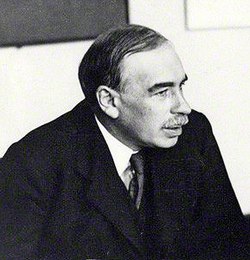
Keynes attended Eton College on a scholarship, excelling in mathematics, classics, and history. He won numerous prizes and developed a reputation as a brilliant student, while also beginning to form lifelong intellectual friendships.
Image source: Eton College
Oct 1902 - Jun 1905
% complete
Keynes studied mathematics at King's College, Cambridge, earning a degree in 1905. At Cambridge he joined the Cambridge Union Society and became deeply involved in the intellectual life of the university.
Image source: King's College, Cambridge
1906
% complete
Keynes became a member of the Bloomsbury Group, a circle of influential English writers, intellectuals, philosophers, and artists that included Virginia Woolf, Lytton Strachey, and Duncan Grant. The group shaped his cultural outlook and personal life.
Image source: Bloomsbury Group
Aug 4, 1925
% complete
Keynes married Lydia Lopokova, a celebrated Russian ballerina with the Ballets Russes. Their unlikely but devoted union bridged his worlds of economics and the arts, and she cared for him devotedly until his death.
Image source: Lydia Lopokova
1906 - 1908
% complete
After failing a mathematics fellowship exam at Cambridge, Keynes took a post as a civil servant at the India Office in London. His experience there sparked his enduring interest in Indian currency and finance, though he found bureaucratic work tedious.
Image source: India Office
Jan 1915 - 1918
% complete
Keynes joined the British Treasury during World War I, where he handled war finance and inter-allied lending. He rose to principal representative of the Treasury at the Paris Peace Conference, gaining deep insight into international financial diplomacy.
Image source: HM Treasury
Apr 28, 1925
% complete
Chancellor Winston Churchill restored Britain to the gold standard at prewar parity despite Keynes's vocal opposition. Keynes argued it would force deflation and unemployment on British industry, and the subsequent economic distress vindicated his warnings.
Image source: Gold standard
Oct 29, 1929
% complete
The Wall Street Crash ushered in the Great Depression, producing mass unemployment worldwide. The crisis challenged classical economics, creating the intellectual opening for Keynes's argument that governments must actively manage aggregate demand.
Image source: Great Depression
Sep 1939 - 1945
% complete
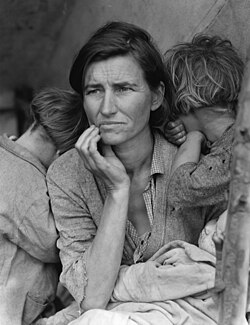
On the outbreak of World War II, Keynes rejoined the Treasury as unpaid advisor, working from his home in Tilton. He shaped wartime finance, including proposals to control inflation through deferred pay and compulsory savings.
Image source: World War II
Feb 1940
% complete
Keynes proposed a plan of forced saving to finance the war effort without runaway inflation. Although modified by the government, the pamphlet demonstrated how his analytical tools could address urgent practical problems.
Image source: How to Pay for the War
Jun 16, 1942
% complete
In recognition of his services, Keynes was elevated to the House of Lords as Baron Keynes of Tilton in Sussex. He took an active part in the Lords, defending his economic policies in parliamentary debate.
Image source: John Maynard Keynes
1943
% complete
Keynes drafted the British proposal for an International Clearing Union with a supranational currency called bancor, designed to prevent trade imbalances. Though not adopted directly, its spirit influenced the eventual International Monetary Fund design.
Jul 1, 1944 - Jul 22, 1944
% complete
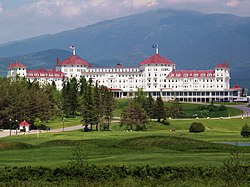
Keynes headed the British delegation to the Bretton Woods conference in New Hampshire, negotiating the postwar international monetary order. Despite illness, he played a commanding role, though the American plan largely displaced his own International Clearing Union proposal.
Image source: Bretton Woods Conference
Dec 1945
% complete
Exhausted and ill, Keynes traveled to Washington to negotiate a vital American loan to Britain. The agreement secured $3.75 billion in aid, though its harsh terms disappointed him; he returned home gravely weakened by the strain.
Image source: Anglo-American loan
Mar 1909
% complete
Keynes returned to Cambridge as a fellow of King's College after his dissertation on probability was accepted. He lectured in economics and became a central figure in the university's economic and intellectual circles.
1911 - 1945
% complete
At age 28, Keynes became editor of the Economic Journal, Britain's leading economics publication. He held the position until near the end of his life, shaping the discipline's scholarly discourse for over three decades.
1920
% complete
Keynes engaged in currency speculation, initially suffering near bankruptcy in 1920 before borrowing to recover spectacularly. He amassed considerable personal wealth through trading, which he used to support King's College endowment investments.
Image source: Speculation
1921
% complete
Keynes published 'A Treatise on Probability', a philosophical and mathematical work largely based on his earlier Cambridge fellowship dissertation. It advanced the logical theory of probability and remains influential in philosophy of science.
Image source: A Treatise on Probability
1927
% complete
During the late 1920s Keynes hosted influential discussions at Cambridge, engaging younger economists such as Richard Kahn, Joan Robinson, and Austin Robinson in debates about monetary theory and unemployment that fed into his revolutionary ideas.
Jun 1931
% complete
Keynes's student Richard Kahn published his formulation of the employment multiplier, a concept Keynes adopted and generalized. The multiplier became a cornerstone of the demand-management economics that Keynes was developing.
Image source: Multiplier (economics)
May 1937
% complete
Keynes suffered a severe heart attack in 1937 that forced him to curtail his activities for an extended period. He gradually resumed work, though his health remained fragile for the rest of his life.
1913
% complete
Keynes's first book examined the Indian monetary system, including the gold exchange standard. The work established him as a serious monetary economist and led to his appointment to the Royal Commission on Indian Finance and Currency.
Image source: Indian rupee
Dec 1919
% complete
Resigning from the Paris Peace Conference in protest over the punitive Treaty of Versailles, Keynes published this scathing critique warning that reparations would ruin Europe's economy. The book made him internationally famous almost overnight.
Image source: The Economic Consequences of the Peace
1923
% complete
In this work Keynes criticized the return to the gold standard and argued for managed currencies and price stability. He famously wrote that in the long run we are all dead, emphasizing the importance of short-run policy action.
Image source: A Tract on Monetary Reform
1926
% complete
In this essay, Keynes argued against both pure laissez-faire doctrine and full socialism, advocating instead for a middle path of state intervention to correct market failures while preserving individual initiative and capitalism.
Oct 1930
% complete
Keynes published his two-volume treatise on monetary economics, exploring the relationship between savings, investment, and prices. Though soon superseded by his General Theory, it marked a crucial stage in his theoretical development.
1933
% complete
Keynes published a pamphlet urging public works spending financed by loan expenditure to combat the Depression. Widely circulated among world leaders, it presented his emerging ideas in accessible form for policymakers.
Image source: Liberalism
Feb 1936
% complete
Keynes's masterpiece revolutionized economics by arguing that aggregate demand determines output and employment, and that economies can settle into prolonged underemployment equilibrium. It founded macroeconomics as a distinct field and launched the Keynesian Revolution.
Image source: The General Theory of Employment, Interest and Money
1946 - 1975
% complete
For three decades after his death, Keynesian economics dominated policymaking in Western democracies. Governments used fiscal and monetary policy to manage demand, sustaining low unemployment and stable growth during the long postwar boom.
Image source: Keynesian economics
Apr 21, 1946
% complete
Keynes died of a heart attack at his farmhouse at Tilton, Firle, aged 62, having strained his frail health through relentless war-related work. His death deprived the world of one of its most brilliant minds just as his ideas were reshaping global policy.
May 15, 1946
% complete
A memorial service for Keynes was held at Westminster Abbey, attended by statesmen, economists, artists, and friends including members of the Bloomsbury Group, honoring the extraordinary breadth of his contributions to thought and public affairs.
Image source: Westminster Abbey
1973
% complete
The combination of high inflation and high unemployment in the 1970s appeared inconsistent with simple Keynesian models, fueling monetarist critiques by Milton Friedman and others and temporarily diminishing Keynes's influence on policy.
Or browse the full history timeline directory, with more than 2,000 topics.
This John Maynard Keynes timeline was generated with the help of AI, using information found on the internet.
We work hard to keep these timelines accurate, but mistakes do get through. If you spot one, email us at [email protected] and we'll fix it for future visitors.
Generate yours with AI or build it from scratch, for free.
Export your timeline, add your own events, edit or remove AI-generated events, and much more
No credit card required.
Cancel anytime.
Cancel anytime.
You can create an unlimited number of timelines with up to 10 events on each one, customize how they look, export them to PDF, PNG, PowerPoint, CSV, and Excel, and share them with a link. Paid plans raise the event limit and add features like spreadsheet imports and collaborators.
Yes. You can cancel your subscription from your account page at any time, and you will not be charged again. Your subscription stays active for the rest of the period you already paid for.
Yes. We will email you a reminder before the annual renewal, and we will also email you a receipt.
Yes. You can email us within 15 days of any payment, and we will issue you a full refund.
Check out our pricing docs or send us an email anytime: [email protected].