-
Use Cases
-
Resources
-
Pricing
John Steinbeck (1902–1968) was an American author celebrated for his compassionate depictions of working-class life during the Great Depression. His most famous works include The Grapes of Wrath, Of Mice and Men, and East of Eden. Steinbeck won the Pulitzer Prize in 1940 and the Nobel Prize in Literature in 1962, and his writing remains central to American literary studies. More Less
Feb 27, 1902
% complete
John Ernst Steinbeck was born in Salinas, California, the third of four children of John Ernst Steinbeck Sr., a county treasurer, and Olive Hamilton Steinbeck, a former schoolteacher. His upbringing in the fertile Salinas Valley would later provide rich material for many of his most famous novels.
Image source: John Steinbeck
1919 - 1925
% complete
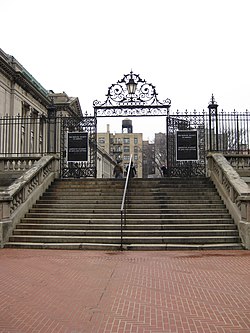
Steinbeck enrolled at Stanford University, taking courses primarily in English and marine biology, but never completed his degree. He attended classes on and off for six years, working odd jobs during breaks, before leaving without graduating to pursue his writing career.
Image source: Stanford University
1925 - 1926
% complete
Steinbeck moved to New York City hoping to establish himself as a freelance writer. He worked briefly as a reporter for the New York American, but struggled and eventually returned to California, where he continued developing his craft while supporting himself through manual labor.
Image source: New York City

Jan 14, 1930
% complete
Steinbeck married Carol Henning, who became an essential partner in his literary life, editing his manuscripts and supporting him financially and emotionally during his early struggles as a writer.
Image source: John Steinbeck
1943
% complete
After years of strain in their marriage, exacerbated by fame and Steinbeck's growing independence, he and Carol divorced. He soon married singer Gwyndolyn Conger, with whom he moved to New York.
Aug 2, 1946 - Jun 12, 1948
% complete
Steinbeck and Gwyn Conger had two sons: Thomas Myles Steinbeck, born in 1946, and John Ernest Steinbeck IV, born in 1948. Steinbeck's relationship with his sons was complicated but they later became writers themselves.
1948
% complete
Following the deaths of Ricketts and his parents and marital turmoil, Steinbeck divorced Gwyn Conger, who gained custody of their two sons. This was one of the darkest periods of his life.
May 11, 1948
% complete
Ed Ricketts died when his car collided with a train near his Monterey laboratory. Steinbeck was devastated by the loss of his closest friend and intellectual companion, which contributed to a period of depression and creative difficulty.
Dec 28, 1950
% complete
Steinbeck married Elaine Anderson Scott, a stage manager and former actress, who remained his devoted wife until his death. Their marriage brought him stability and happiness in his final decades.
Image source: Elaine Anderson Steinbeck
1929
% complete
Steinbeck's first novel, Cup of Gold, was published by McBride & Co. The historical fiction work about the pirate Henry Morgan attracted little attention, but it marked Steinbeck's entry into professional publishing.
Image source: CONCACAF Gold Cup
1932
% complete
This collection of interconnected short stories about a valley near Salinas drew modest critical attention but failed commercially. It showcased Steinbeck's deep connection to the people and landscapes of central California.
Image source: The Pastures of Heaven
1933
% complete
Steinbeck's third novel explored mystical themes through the story of a farmer drawn to California by visions of fertility and sacrifice. Though poorly received at the time, it revealed the mythic underpinnings of his later masterworks.
1935
% complete
The humorous novel about paisano friends living in Monterey won the Commonwealth Club of California's gold medal and became Steinbeck's first bestseller, finally giving him financial security and widespread recognition.
Image source: Tortilla Flat
1936
% complete
This novel depicting a labor strike among apple pickers demonstrated Steinbeck's growing political consciousness and interest in social injustice, themes that would define his greatest works.
Image source: In Dubious Battle
Feb 6, 1937
% complete
The tragic novella about migrant workers George Milton and Lennie Small became an instant bestseller and was adapted into a successful Broadway play that same year, cementing Steinbeck's national reputation.
Image source: Of Mice and Men
Apr 14, 1939
% complete
Steinbeck's epic novel about the Joad family's migration from Oklahoma to California during the Dust Bowl became a cultural landmark, selling hundreds of thousands of copies and provoking both fierce praise and condemnation for its portrayal of exploitation of migrant workers.
Image source: The Grapes of Wrath
Mar 11, 1940 - Apr 20, 1940
% complete
Steinbeck joined his close friend, marine biologist Ed Ricketts, on a specimen-collecting expedition to Baja California. The resulting book blended science, philosophy, and travel narrative, reflecting one of the most important friendships of Steinbeck's life.
Image source: The Log from the Sea of Cortez
1943 - 1944
% complete
Working as a special war correspondent for the New York Herald Tribune, Steinbeck reported from England, North Africa, and Italy. His dispatches were later collected in Once There Was a War.
Jan 1945
% complete
Returning to the beloved characters of Tortilla Flat's world, this affectionate portrait of Monterey's sardine-canning district and its eccentric inhabitants, including Doc based on Ed Ricketts, became another popular success.
Image source: Cannery Row
1951
% complete
Steinbeck reissued the narrative portion of the 1941 Sea of Cortez expedition volume as a standalone book, dedicated to Ricketts, including the famous essay 'About Ed Ricketts' honoring his late friend.
Sep 1952
% complete
This ambitious retelling of the Cain and Abel story set in the Salinas Valley drew heavily on Steinbeck's own family history and is often considered his most autobiographical novel. It became a bestseller despite mixed reviews.
Image source: East of Eden (novel)
1954
% complete
A sequel to Cannery Row following Doc and Suzy, the novel inspired the Rodgers and Hammerstein musical Pipe Dream, which opened on Broadway in 1955.
1962
% complete
Accompanied by his poodle Charley, Steinbeck toured America by camper truck, recording his impressions of the country and its people. The book became a bestseller and offered a poignant look at mid-century American life.
Image source: Travels with Charley
1966 - 1967
% complete
At age sixty-four, Steinbeck traveled to Vietnam to report on the war, accompanying U.S. troops and sending dispatches home that were strongly supportive of the American effort, a stance that disappointed many younger readers.
Image source: East of Eden (novel)
May 6, 1940
% complete
Steinbeck received the Pulitzer Prize for The Grapes of Wrath, confirming his status as one of America's foremost writers and bringing the plight of migrant laborers to national prominence.
Image source: Pulitzer Prize for Fiction
Oct 25, 1962
% complete
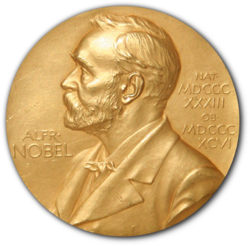
The Swedish Academy awarded Steinbeck the Nobel Prize 'for his realistic as well as imaginative writings, distinguished by a sympathetic humor and a keen social perception.' The honor came amid some critical debate about his recent output.
Image source: Nobel Prize in Literature
1964
% complete
Steinbeck was elected to the National Institute of Arts and Letters, joining the ranks of America's most distinguished artists and writers in recognition of his enduring contributions to literature.
Image source: American Academy of Arts and Letters
Sep 14, 1964
% complete
President Lyndon B. Johnson presented Steinbeck with the United States' highest civilian honor, recognizing his contributions to American letters and his role as an unofficial adviser to Johnson.
Image source: Presidential Medal of Freedom
1947
% complete
Steinbeck's novella The Pearl, published in 1947 and adapted into a Mexican film that year, exemplified how his works continually crossed into film, theater, and education, ensuring generations of readers encountered his explorations of human dignity and injustice.
Image source: The Pearl (novella)
Dec 20, 1968
% complete
Steinbeck died of heart disease and congestive heart failure at age sixty-six in his New York apartment. Per his wishes, his ashes were interred in the Hamilton family plot in Salinas, California, alongside the graves of his parents.
1969 - 1989
% complete
Several works appeared after Steinbeck's death, including the letters written while drafting East of Eden (1969), The Acts of King Arthur and His Noble Knights (1976), and Working Days (1989), extending his literary legacy.
Or browse the full history timeline directory, with more than 2,000 topics.
This John Steinbeck timeline was generated with the help of AI, using information found on the internet.
We work hard to keep these timelines accurate, but mistakes do get through. If you spot one, email us at [email protected] and we'll fix it for future visitors.
Generate yours with AI or build it from scratch, for free.
Export your timeline, add your own events, edit or remove AI-generated events, and much more
No credit card required.
Cancel anytime.
Cancel anytime.
You can create an unlimited number of timelines with up to 10 events on each one, customize how they look, export them to PDF, PNG, PowerPoint, CSV, and Excel, and share them with a link. Paid plans raise the event limit and add features like spreadsheet imports and collaborators.
Yes. You can cancel your subscription from your account page at any time, and you will not be charged again. Your subscription stays active for the rest of the period you already paid for.
Yes. We will email you a reminder before the annual renewal, and we will also email you a receipt.
Yes. You can email us within 15 days of any payment, and we will issue you a full refund.
Check out our pricing docs or send us an email anytime: [email protected].