-
Use Cases
-
Resources
-
Pricing
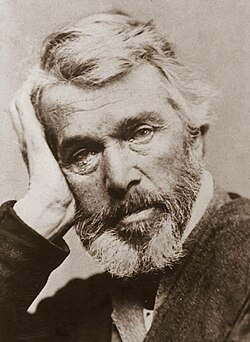
John Stuart Mill was a nineteenth-century British philosopher, political economist, and Member of Parliament. A leading figure in classical liberalism and empiricism, he refined Jeremy Bentham's utilitarianism, championed individual liberty and free speech in his landmark work On Liberty, and became an early advocate for women's rights with The Subjection of Women. More Less
May 20, 1806
% complete
John Stuart Mill was born on 20 May 1806 in London, England. He would go on to become an English philosopher, political economist, and politician, and a paradigmatic philosopher of liberalism.
Image source: John Stuart Mill
1818
% complete
Mill's father's work, The History of British India, was published in 1818. Immediately thereafter, at about the age of twelve, Mill began a thorough study of scholastic logic while reading Aristotle's logical treatises in the original language.
Image source: The History of British India
1821
% complete
Mill's comptes rendus of his daily economy lessons helped his father write Elements of Political Economy in 1821, a textbook promoting the ideas of Ricardian economics; however, the book lacked popular support.
1823
% complete
Mill began his career as a colonial administrator at the East India Company in 1823, when he was 17 years old. He would remain with the company until 1858, arguing for what he called a 'benevolent despotism' in colonial administration.
Image source: East India Company
1833
% complete
In 1833, Mill was among the founding members of the South Australian Association, which was set up to lobby the government to establish colonies in Australia.
Image source: British colonisation of South Australia
1836
% complete
In 1836, Mill was promoted to the company's political department, where he was responsible for correspondence pertaining to the company's relations with the princely states of India.
1856
% complete
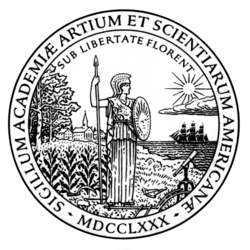
In 1856, Mill was elected a foreign honorary member of the American Academy of Arts and Sciences, recognizing his international scholarly reputation.
Image source: American Academy of Arts and Sciences
1856
% complete
In 1856, Mill was finally promoted to the position of Examiner of Indian Correspondence at the East India Company, one of the highest posts he held during his long career there.
1858
% complete
Mill's career as a colonial administrator ended in 1858 when the company's territories in India were directly annexed by the Crown, establishing direct Crown control over India.
1865 - 1868
% complete
Between 1865 and 1868, Mill served as Lord Rector of the University of St Andrews, delivering his famous inaugural address there.
Image source: University of St Andrews
1867
% complete
In 1867, Mill was elected to membership of the American Philosophical Society, further recognition of his standing as a leading philosopher of the age.
Image source: American Philosophical Society
Feb 1, 1867
% complete
At his inaugural address delivered to the University of St Andrews on 1 February 1867, Mill made the now-famous remark that 'Bad men need nothing more to compass their ends, than that good men should look on and do nothing.'
1825 - 1827
% complete
During John Neal's stay in London circa 1825–1827, he recruited Mill to the cause of gender equality, making Mill one of the earliest male proponents of gender equality.
Image source: John Neal
1850
% complete
In 1850, Mill sent an anonymous letter in rebuttal to Thomas Carlyle's letter to Fraser's Magazine, known as 'The Negro Question', in which Carlyle argued for slavery. Mill defended the equality of Black people against Carlyle's racist arguments.
Image source: Occasional Discourse on the Negro Question
1865 - 1868
% complete
Between 1865 and 1868, Mill served as Member of Parliament for City of Westminster as a member of the Liberal Party, alongside his role as Lord Rector of St Andrews.
1866
% complete
In 1866, Mill became the second person in the history of Parliament, after Henry Hunt in 1832, to call for women to be given the right to vote, vigorously defending this position in subsequent debate.
Apr 1868
% complete
In April 1868, Mill favoured in a Commons debate the retention of capital punishment for such crimes as aggravated murder, terming its abolition 'an effeminacy in the general mind of the country'.
1830
% complete
John Herschel's 1830 publication incorporated inductive reasoning from the known to the unknown, discovering general laws in specific facts and verifying them empirically. This sparked a debate over the scientific method that Mill would later join.
Image source: John Herschel
1837
% complete
William Whewell expanded on Herschel's ideas in his 1837 History of the Inductive Sciences, followed in 1840 by The Philosophy of the Inductive Sciences, presenting induction as the mind superimposing concepts on facts — views Mill would counter in 1843.
Image source: William Whewell
1843
% complete
Mill countered Whewell's philosophy of induction in 1843 with A System of Logic, Ratiocinative and Inductive, Being a Connected View of the Principles of Evidence, and the Methods of Scientific Investigation.
Image source: A System of Logic
1848
% complete
In Principles of Political Economy (1848), Mill praised Edward Gibbon Wakefield for his 'important writings on colonization'. The book became one of the most widely read works on economics in the period and served as Oxford University's standard text until 1919.
Image source: Principles of Political Economy
1859
% complete
On Liberty addresses the nature and limits of the power that can be legitimately exercised by society over the individual. Its contentions remain highly influential: a copy of the work is passed to the president of the Liberal Democrats as a symbol of office.
Image source: On Liberty
1861
% complete
Written in 1861 and published in 1869, The Subjection of Women is one of the earliest written on gender inequality by a male author, co-authored with Harriet Taylor Mill's influence, and argued that gender inequality was both a moral injustice and an economic inefficiency.
Image source: The Subjection of Women
1869
% complete
Published in 1869, The Subjection of Women was an early feminist work co-authored in spirit with Harriet Taylor Mill, whose Unitarian and rationalist views enriched its critique of gender inequality.
1879
% complete
In Socialism (1879), Mill argued that the prevalence of poverty in contemporary industrial capitalist societies was 'pro tanto a failure of the social arrangements', and that attempts to condone this state of affairs were 'an irresistible claim upon every human being for protection against suffering'.
Mar 1835
% complete
While the manuscript of the completed first volume of Carlyle's work was in Mill's possession, Mill's housemaid unwittingly used it as tinder, destroying all except some three or four bits of leaves. Mortified, Mill offered Carlyle £200 as compensation, though Carlyle would only accept £100.
Image source: Thomas Carlyle
Nov 1841
% complete
Mill first contacted Auguste Comte, the founder of positivism and sociology, in November 1841, beginning a long pen-friendship between the two thinkers.
Image source: Auguste Comte
Apr 21, 1851
% complete
On 21 April 1851, Mill married Harriet Taylor after 21 years of intimate friendship. Taylor had been married when they met, and their relationship was close but generally believed to be chaste before her first husband died in 1849.
Image source: Harriet Taylor Mill
1858
% complete
Taylor died in 1858 after developing severe lung congestion, after only seven years of marriage to Mill. Her collaborative work with Mill, including The Enfranchisement of Women (1851), laid groundwork for modern feminist economics.
May 7, 1873
% complete
Mill died on 7 May 1873, at the age of 66, of erysipelas in Avignon, where his body was buried alongside his wife's. He left behind Socialism, published posthumously in 1879, which argued that poverty in industrial capitalist societies was 'pro tanto a failure of the social arrangements'.
Or browse the full history timeline directory, with more than 2,000 topics.
This John Stuart Mill timeline was generated with the help of AI, using information found on the internet.
We work hard to keep these timelines accurate, but mistakes do get through. If you spot one, email us at [email protected] and we'll fix it for future visitors.
Generate yours with AI or build it from scratch, for free.
Export your timeline, add your own events, edit or remove AI-generated events, and much more
No credit card required.
Cancel anytime.
Cancel anytime.
You can create an unlimited number of timelines with up to 10 events on each one, customize how they look, export them to PDF, PNG, PowerPoint, CSV, and Excel, and share them with a link. Paid plans raise the event limit and add features like spreadsheet imports and collaborators.
Yes. You can cancel your subscription from your account page at any time, and you will not be charged again. Your subscription stays active for the rest of the period you already paid for.
Yes. We will email you a reminder before the annual renewal, and we will also email you a receipt.
Yes. You can email us within 15 days of any payment, and we will issue you a full refund.
Check out our pricing docs or send us an email anytime: [email protected].