-
Use Cases
-
Resources
-
Pricing
Jun 21, 1905
% complete
Jean-Paul Charles Aymard Sartre was born on 21 June 1905 in Paris, the only child of Jean-Baptiste Sartre, an officer of the French Navy, and Anne-Marie (Schweitzer). He would go on to become a leading figure in 20th-century French philosophy, Marxism, literature, and political activism.
Image source: Jean-Paul Sartre
1927
% complete
In 1927, Sartre's antimilitarist satirical cartoon in the revue of the École Normale Supérieure, which he co-wrote with Georges Canguilhem, particularly upset the school's director Gustave Lanson.
1928
% complete
At the École Normale Supérieure (ENS), Sartre completed his MA thesis titled 'L'Image dans la vie psychologique: rôle et nature' ('Image in Psychological Life: Role and Nature'), supervised by Henri Delacroix. It was at ENS that he began his lifelong, sometimes fractious, friendship with Raymond Aron.
1928
% complete
Around 1928, Sartre was hired as a private French tutor by the Japanese philosopher Kuki Shūzō, an encounter that connected him with international philosophical circles.
Image source: Shūzō Kuki
1929
% complete
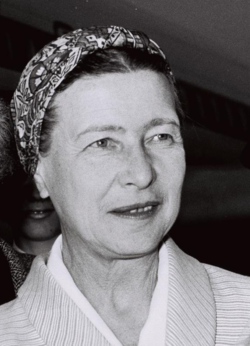
In 1929 at the École normale, Sartre met Simone de Beauvoir, who studied at the Sorbonne and later became a noted philosopher, writer, and feminist. Their lifelong intellectual and personal partnership profoundly shaped both of their careers.
Image source: Simone de Beauvoir
1931 - 1945
% complete
From 1931 until 1945, Sartre taught at various lycées: the Lycée de Le Havre (1931–1936), the Lycée de Laon (1936–37), and finally in Paris at the Lycée Pasteur (1937–1939) and the Lycée Condorcet (1941–1944).
1930
% complete
Raymond Aron advised Sartre in 1930 to read Emmanuel Levinas's 'Théorie de l'intuition dans la phénoménologie de Husserl' (The Theory of Intuition in Husserl's Phenomenology), planting early seeds for Sartre's engagement with phenomenology.
Image source: Emmanuel Levinas
1932
% complete
In 1932, a remark on Husserl's phenomenology by Raymond Aron, fresh from Berlin, overwhelmed Sartre during a discussion with him at the Bec de Gaz cafe in Montparnasse, marking his true engagement with phenomenology.
Image source: Edmund Husserl
1932
% complete
In 1932, Sartre read Louis-Ferdinand Céline's 'Voyage au bout de la nuit', a book that had a remarkable influence on him and his literary development.
Image source: Journey to the End of the Night
1933 - 1934
% complete
In 1933–34, Sartre succeeded Raymond Aron at the Institut français d'Allemagne in Berlin, where he studied Edmund Husserl's phenomenological philosophy in depth, shaping his own philosophical trajectory.
1939
% complete
In 1939, Sartre published an article on Husserl's intentionality in André Gide's literary magazine La Nouvelle Revue française. It served as a manifesto for his 'revolutionary' project of fusing philosophy and literature and won him a following among philosophy teachers.
Image source: Nouvelle Revue Française
Jun 1, 1943
% complete
In June 1943, Sartre first met Albert Camus at the opening of Sartre's play The Flies, beginning an important friendship that would last until their ideological break.
Image source: Albert Camus
Jun 16, 1943
% complete
Sartre's principal philosophical work, Being and Nothingness (L'Être et le Néant), was published in 1943. It embodied the dominant theme of his early work: the conflict between oppressive conformity ('bad faith') and an 'authentic' way of being.
Image source: Being and Nothingness
Oct 29, 1945 - Jan 1, 1946
% complete
Sartre provided an accessible introduction to his philosophy in Existentialism Is a Humanism (L'existentialisme est un humanisme), originally presented as a lecture in October 1945 and published in 1946, defending existentialism against its critics.
Image source: Existentialism Is a Humanism
Jan 1, 1946
% complete
In 1946, Sartre published Anti-Semite and Jew, after having published the first part of the essay, 'Portrait de l'antisémite', the year before in Les Temps modernes. The work analyzed the psychology and social roots of antisemitism.
Jan 1, 1948
% complete
In 1948, the Catholic Church placed Sartre's œuvre on the Index Librorum Prohibitorum (List of Prohibited Books), reflecting the Church's condemnation of his existentialist philosophy.
Image source: Index Librorum Prohibitorum
Jan 1, 1948
% complete
Sartre's 1948 play Les mains sales (Dirty Hands) explored the problem of being a politically 'engaged' intellectual, dramatizing the moral dilemmas of revolutionary politics.
Jan 1, 1960
% complete
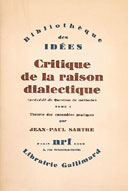
Sartre's major post-Stalin work, the Critique de la raison dialectique (Critique of Dialectical Reason), appeared in 1960, attempting to reconcile existentialism with Marxism; a second volume appeared only posthumously.
Image source: Critique of Dialectical Reason
1939
% complete
In 1939, Sartre was drafted into the French Army, where he served as a meteorologist after the outbreak of World War II.
1940
% complete
Sartre was captured by German troops in 1940 in Padoux and spent nine months as a prisoner of war—in Nancy and finally in Stalag XII-D, Trier—where he wrote his first theatrical piece, Bariona, ou le fils du tonnerre, a drama concerning Christmas.
Image source: German prisoner-of-war camps in World War II
Apr 1, 1941
% complete
Because of poor health—he claimed that his poor eyesight and exotropia affected his balance—Sartre was released from German captivity in April 1941.
Apr 30, 1941
% complete
In spring of 1941, Sartre suggested with 'cheerful ferocity' at a meeting that Socialisme et Liberté assassinate prominent war collaborators like Marcel Déat, but de Beauvoir noted the idea was rejected as none of them felt qualified to make bombs or hurl grenades.
May 1, 1941
% complete
After returning to Paris in May 1941, Sartre participated in founding the underground resistance group Socialisme et Liberté ('Socialism and Liberty'), a continuation of his 1940 group Sous la Botte, with writers including Simone de Beauvoir, Maurice Merleau-Ponty, Jean-Toussaint Desanti, Dominique Desanti, and Jean Kanapa.
Oct 1, 1941
% complete
In October 1941, Sartre was given a position at the Lycée Condorcet in Paris previously held by a Jewish teacher who had been forbidden to teach under Vichy law.
Image source: Lycée Condorcet
Jan 1, 1943 - May 8, 1945
% complete
In 1943, after Socialisme et Liberté disbanded, Sartre joined a writers' Resistance group, in which he remained an active participant until the end of the war.
Image source: French Resistance
Oct 21, 1944 - Dec 31, 1944
% complete
In late October 1944, Sartre met with Jean Bruller and Pierre Seghers and struck a deal that suppressed the collaborationist La Nouvelle Revue française in exchange for preserving its publisher Gallimard. That same month he assumed direction of a new Gallimard editorial project under the banner of 'committed literature', initially called La Condition humaine and renamed in December 1944 to Les Temps modernes.
Jan 1, 1945
% complete
In 1945, Sartre accepted an assignment by Camus's newspaper Combat to travel to America to write a series of articles, broadening his international profile as a journalist and intellectual.
Image source: Combat (newspaper)
Oct 1, 1945
% complete
From his rue Bonaparte apartment, Sartre launched the first issue of the quarterly literary and political review Les Temps modernes as editor-in-chief in October 1945, in part to popularize his own thought. This marked the symbolic initiation of his new phase of public political engagement.
Jan 1, 1947
% complete
In 1947, Sartre published several articles concerning the condition of African Americans in the United States—specifically the racism and discrimination against them—in his second Situations collection.
Jan 1, 1948
% complete
In 1948, for the introduction of Léopold Sédar Senghor's Anthologie de la nouvelle poésie nègre et malgache, Sartre wrote 'Black Orpheus', a critique of colonialism and racism in light of the philosophy he developed in Being and Nothingness.
Image source: Black Orpheus
Jan 1, 1948 - Dec 31, 1949
% complete
In 1948, Sartre helped found the short-lived left-wing party known as the Rassemblement démocratique révolutionnaire (RDR); the party disbanded a year later.
Image source: Jean-Paul Sartre
Jan 1, 1949
% complete
For a time in the late 1940s, Sartre described French nationalism as 'provincial', and in a 1949 essay called for a 'United States of Europe', reflecting his transnational political vision.
Image source: Federal Europe
Jan 1, 1951
% complete
Sartre and de Beauvoir remained friends with Camus until 1951, when Camus published The Rebel, expressing strong disdain for communism, political violence, and authoritarianism, which led to a famous public rupture between the two philosophers.
Image source: The Rebel (book)
1954
% complete
In 1954, just after Stalin's death, Sartre visited the Soviet Union, where he stated he found a 'complete freedom of criticism' while condemning the United States for sinking into 'prefascism'. Frank Gibney classified him as a 'useful idiot' due to such uncritical positions.
Image source: Soviet Union
Jan 1, 1957 - Dec 31, 1958
% complete
Sartre's newspaper Les Temps Modernes devoted special issues in 1957 and 1958 to Poland under Władysław Gomułka, praising him for his reforms—a representative example of Sartre's frequently contradictory and changing political views.
Image source: Władysław Gomułka
Jan 1, 1959
% complete
In 1959, Sartre argued that each French person was responsible for the collective crimes committed during the Algerian War of Independence, taking a strongly anti-colonial stance during the conflict.
Image source: Algerian War
Jun 19, 1961
% complete
In June 1961, a plastic bomb exploded in the entrance of Sartre's apartment building, illustrating how his role as a public intellectual occasionally put him in physical danger amid tensions surrounding the Algerian War.
Jan 1, 1964
% complete
In 1964, Sartre attacked Nikita Khrushchev's 'Secret Speech', which had condemned the Stalinist repressions and purges—an example of the contradictions in his evolving views on communism.
Image source: On the Cult of Personality and Its Consequences
Jan 1, 1967
% complete
In 1967, Sartre opposed U.S. war crimes through his participation in what became known as the Russell Tribunal, an international tribunal investigating American conduct in Vietnam.
Image source: Russell Tribunal
Jan 1, 1967
% complete
Sartre's preface to Frantz Fanon's The Wretched of the Earth proved controversial on the left; it was omitted from some editions printed after 1967, reflecting debates over his endorsement of Fanon's revolutionary rhetoric.
Jun 1, 1968 - Sep 30, 1968
% complete
During the May 1968 strikes in Paris, Sartre actively supported the student and worker movements and was arrested for civil disobedience during the summer of 1968, remaining committed to radical causes despite his household-name status.
Image source: May 68
Jan 1, 1969
% complete
In 1969, Sartre, along with 15 other prominent French writers including Louis Aragon and Michel Butor, signed a letter protesting the expulsion of Aleksandr Solzhenitsyn—'already a victim of Stalinist repression'—from the Union of Soviet Writers.
Image source: Aleksandr Solzhenitsyn
Jan 1, 1970
% complete
When the Maoist party Gauche prolétarienne was banned by the Gaullist state in 1970, promoting its newspaper La Cause du peuple and selling it on the street became a badge of honor for Sartre, demonstrating his solidarity with radical youth movements.
Jan 1, 1973
% complete
In 1973, Sartre controversially argued that 'revolutionary authority always needs to get rid of some people that threaten it, and their death is the only way', exemplifying the provocative extremes of his political thought.
Nov 1, 1974
% complete
During a collective hunger strike in November 1974, Sartre visited Red Army Faction member Andreas Baader in Stammheim Prison and criticized the harsh conditions of imprisonment, continuing his lifelong commitment to political intervention.
Image source: Andreas Baader
Jan 1, 1977
% complete
In 1977, Sartre and his partner Simone de Beauvoir signed petitions calling for reforms to age-of-consent laws in France, including decriminalization of consensual sexual relations between adults and minors—one of the most controversial acts of their careers.
Jan 1, 1945 - Dec 31, 1962
% complete
In 1945, after the war ended, Sartre moved to an apartment on the rue Bonaparte, where he produced most of his subsequent work and lived until 1962.
Jan 1, 1964
% complete
In 1964, Sartre renounced literature in a witty and sardonic account of the first ten years of his life, Les Mots (The Words), reflecting on the illusions of his childhood ambition to become a writer.
Oct 22, 1964
% complete
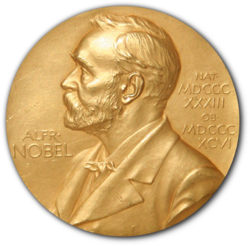
The Nobel Prize in Literature was announced on 22 October 1964. On 14 October, Sartre had written to the Nobel Institute asking to be removed from the nominees and warning he would not accept, but the letter went unread. On 23 October, Le Figaro published his statement explaining his refusal, saying he always declined official honors and that 'a writer should not allow himself to be turned into an institution.' He had earlier refused the Légion d'honneur in 1945.
Image source: Nobel Prize in Literature
Jan 1, 1965
% complete
Arlette Elkaïm, Sartre's former mistress, was legally adopted by him in 1965, formalizing their personal bond within the unconventional arrangements that characterized his relationships.
Jan 1, 1973
% complete
Sartre suffered from hypertension and became almost completely blind in 1973, severely limiting his ability to read and write, though he remained engaged in activism and debate through other means.
Apr 15, 1980
% complete
Despite declining health in his later years, Sartre remained committed to activism and intellectual debate until his death on 15 April 1980 in Paris from pulmonary edema, closing the life of one of the most influential intellectuals of the 20th century.
Jan 1, 1993
% complete
In 1993, French author Bianca Lamblin wrote of her sexual exploitation by Sartre and Beauvoir in her book Mémoires d'une jeune fille dérangée, written in response to the posthumous 1990 publication of Sartre's Letters to Castor, in which she appeared under the pseudonym Louise Védrine.
Or browse the full history timeline directory, with more than 2,000 topics.
This Jean-Paul Sartre timeline was generated with the help of AI, using information found on the internet.
We work hard to keep these timelines accurate, but mistakes do get through. If you spot one, email us at [email protected] and we'll fix it for future visitors.
Generate yours with AI or build it from scratch, for free.
Export your timeline, add your own events, edit or remove AI-generated events, and much more
No credit card required.
Cancel anytime.
Cancel anytime.
You can create an unlimited number of timelines with up to 10 events on each one, customize how they look, export them to PDF, PNG, PowerPoint, CSV, and Excel, and share them with a link. Paid plans raise the event limit and add features like spreadsheet imports and collaborators.
Yes. You can cancel your subscription from your account page at any time, and you will not be charged again. Your subscription stays active for the rest of the period you already paid for.
Yes. We will email you a reminder before the annual renewal, and we will also email you a receipt.
Yes. You can email us within 15 days of any payment, and we will issue you a full refund.
Check out our pricing docs or send us an email anytime: [email protected].