-
Use Cases
-
Resources
-
Pricing
Jean-Jacques Rousseau (1712–1778) was a Genevan philosopher, writer, and composer whose ideas on freedom, equality, and popular sovereignty profoundly shaped the Enlightenment, the French Revolution, and modern political and educational theory. His major works include The Social Contract, Emile, and Confessions. More Less
1695
% complete
In 1695, Rousseau's mother Suzanne had to answer charges that she had attended a street theatre disguised as a peasant woman so she could gaze upon M.
Image source: Jean-Jacques Rousseau
1699
% complete
In 1699, Rousseau's father Isaac ran into political difficulty by entering a quarrel with visiting English officers, who in response drew their swords and threatened him.
1707
% complete
In 1707, democratic reformer Pierre Fatio protested the political situation in Geneva, saying 'A sovereign that never performs an act of sovereignty is an imaginary being'.
Jun 28, 1712
% complete
Rousseau was born on 28 June 1712 in Geneva. He later related: 'I was born almost dying, they had little hope of saving me'.
Jul 4, 1712
% complete
Rousseau was baptized on 4 July 1712, in the great cathedral of Geneva.
Mar 14, 1728
% complete
At 15, Rousseau ran away from Geneva on 14 March 1728 after returning to the city and finding the city gates locked due to the curfew.
1743 - 1744
% complete
From 1743 to 1744, Rousseau held an honorable but ill-paying post as secretary to the Comte de Montaigue, the French ambassador to Venice.
1754
% complete
On returning to Geneva in 1754, Rousseau reconverted to Calvinism and regained his official Genevan citizenship.
1742
% complete
In 1742, Rousseau moved to Paris to present the Académie des Sciences with a new system of numbered musical notation he believed would make his fortune.
1743 - 1745
% complete
In 1743, Rousseau wrote his first opera, Les Muses galantes, which was first performed in 1745.
Image source: Jean-Jacques Rousseau
1749 - 1755
% complete
Beginning with some articles on music in 1749, Rousseau contributed numerous articles to Diderot and D'Alembert's Encyclopédie, the most famous being an article on political economy written in 1755.
Image source: Encyclopédie
1749
% complete
In 1749, Rousseau was paying daily visits to Diderot, who had been thrown into the fortress of Vincennes under a lettre de cachet for opinions in his 'Lettre sur les aveugles' hinting at materialism.
Image source: Denis Diderot
1750
% complete
Rousseau's 1750 Discourse on the Arts and Sciences was awarded first prize and gained him significant fame.
Image source: Discourse on the Arts and Sciences
1752
% complete
Rousseau wrote both the words and music of his opera Le devin du village (The Village Soothsayer), which was performed for King Louis XV in 1752.
Image source: Le devin du village
1755
% complete
In 1755, Rousseau completed his second major work, the Discourse on the Origin and Basis of Inequality Among Men, elaborating on the arguments of the Discourse on the Arts and Sciences.
Image source: Discourse on Inequality
1761
% complete
Rousseau's 800-page novel of sentiment, Julie, ou la nouvelle Héloïse, was published in 1761 to immense success. Its rhapsodic descriptions of Alpine scenery may have helped spark the nineteenth-century craze for the Alps.
Image source: Julie; or, The New Heloise
1762
% complete
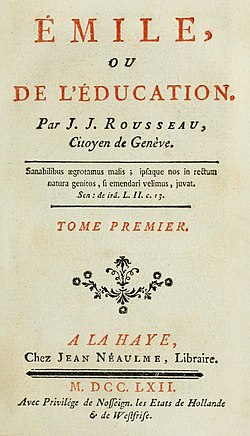
Published in 1762, Émile is an educational treatise on the place of the individual in society and became hugely influential.
Image source: Emile, or On Education
Apr 1762
% complete
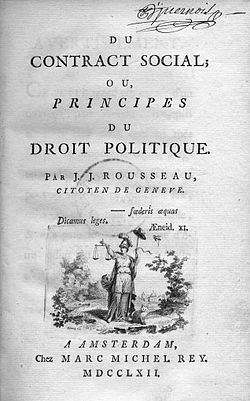
In April 1762, Rousseau published Du Contrat Social, one of the most influential works of political philosophy in the Western tradition.
Image source: The Social Contract
Nov 1770
% complete
Having begun writing the Confessions in 1765 to defend his reputation, Rousseau completed them in November 1770. Although not wishing to publish them then, he began offering group readings of portions of the book.
Image source: Confessions (Rousseau)
Dec 1770 - May 1771
% complete
Between December 1770 and May 1771, Rousseau made at least four group readings of the Confessions, the final reading lasting seventeen hours. After May 1771 the readings stopped when Madame d'Épinay asked her friend the chief of police to put a stop to them.
1772 - 1776
% complete
Also in 1772, Rousseau began writing Rousseau, Judge of Jean-Jacques, another attempt to reply to his critics, completing it in 1776.
1772
% complete
In 1772, Rousseau was invited to present recommendations for a new constitution for the Polish–Lithuanian Commonwealth, resulting in the Considerations on the Government of Poland, his last major political work.
Image source: Considerations on the Government of Poland
1776 - 1778
% complete
Between 1776 and 1778, Rousseau composed one of his finest works, Reveries of a Solitary Walker, ultimately interrupted by his death.
Image source: Reveries of the Solitary Walker
1762 - 1765
% complete
For more than two years Rousseau lived at Môtiers in Neuchâtel, spending his time reading and writing and meeting visitors such as James Boswell in December 1764. As a pastime he took up bobbin lace making.
Image source: Môtiers
Jul 11, 1762
% complete
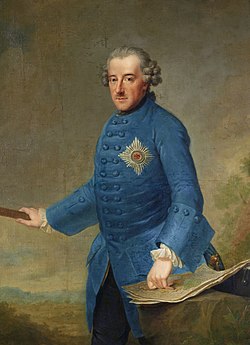
In July 1762, driven from France, Geneva, and Bern, Rousseau wrote to Frederick the Great describing how he had been expelled from these territories and seeking his protection.
Image source: Frederick the Great
Sep 7, 1765
% complete
Around midnight of 6–7 September 1765, stones were thrown at the house Rousseau was staying in, shattering some glass windows.
Sep 10, 1765 - Oct 17, 1765
% complete
Although within the Canton of Bern, from where he had been expelled two years previously, Rousseau was informally assured he could move into the island house without fear of arrest, and did so on 10 September 1765.
Oct 17, 1765
% complete
On 17 October 1765, the Senate of Bern ordered Rousseau to leave the island and all Bernese territory within fifteen days.
Image source: Canton of Bern
Oct 29, 1765
% complete
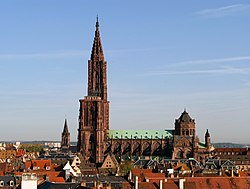
On 29 October 1765, Rousseau left the Île de St.-Pierre and moved to Strasbourg.
Image source: Strasbourg
Dec 9, 1765
% complete
On 9 December 1765, having secured a passport from the French government, Rousseau left Strasbourg for Paris, where he arrived a week later and lodged in a palace of his friend, the Prince of Conti.
Image source: Louis François, Prince of Conti
Jan 1, 1766
% complete
On 1 January 1766, Grimm included in his 'Correspondance littéraire' a letter said to have been written by Frederick the Great to Rousseau.
Image source: Friedrich Melchior, Baron von Grimm
Jan 4, 1766
% complete
On 4 January 1766, Rousseau left Paris with David Hume, the merchant De Luze, and his pet dog Sultan. During the rough sea crossing, Rousseau impressed Hume by spending ten hours on deck while Hume remained confined to his bunk.
Image source: David Hume
Jan 13, 1766
% complete
Mar 22, 1766
% complete
On 22 March 1766, Rousseau and Thérèse set forth for Wootton, against Hume's advice.
Image source: Wootton, Staffordshire
Apr 3, 1766
% complete
On 3 April 1766, a daily newspaper published the letter constituting Horace Walpole's hoax on Rousseau—without naming Walpole as author—which compounded Rousseau's grief and contributed to the rupture with Hume.
Image source: Horace Walpole
Oct 1766 - Nov 1766
% complete
In October 1766, Hume's version of the quarrel was translated into French and published in France; in November it was published in England.
May 22, 1767
% complete
On 22 May 1767, Rousseau and Thérèse embarked from Dover for Calais, reentering France even though an arrest warrant against him was still in place.
Image source: Dover
Jun 21, 1767
% complete
Subsequently, on 21 June 1767, Rousseau moved to a chateau of the Prince of Conti in Trie.
Image source: Trie-Château
Jan 29, 1768
% complete
On 29 January 1768, the theatre at Geneva was destroyed by burning, and Voltaire mendaciously accused Rousseau of being the culprit.
Image source: Voltaire
Jun 1768
% complete
In June 1768, Rousseau left Trie, leaving Thérèse behind, and went first to Lyon and subsequently to Bourgoin.
Image source: Bourgoin-Jallieu
Aug 30, 1768
% complete
Rousseau invited Thérèse to Bourgoin and married her under his alias 'Renou' in a faux civil ceremony on 30 August 1768.
Image source: Thérèse Levasseur
Jan 1769
% complete
In January 1769, Rousseau and Thérèse went to live in a farmhouse near Grenoble.
Image source: Grenoble
Apr 10, 1770
% complete
On 10 April 1770, Rousseau and Thérèse left for Lyon, where he befriended Horace Coignet, a fabric designer and amateur musician.
Image source: Lyon
Oct 24, 1776
% complete
On 24 October 1776, as Rousseau was walking on a narrow street in Paris, a nobleman's carriage came rushing by from the opposite direction.
1777
% complete
In 1777, Rousseau received a royal visitor, when the Holy Roman Emperor Joseph II came to meet him.
Image source: Joseph II, Holy Roman Emperor
1778
% complete
In the spring of 1778, the Marquis Girardin invited Rousseau to live in a cottage in his château at Ermenonville.
Image source: Ermenonville Forest
Jul 2, 1778
% complete
Jean-Jacques Rousseau died on 2 July 1778 at Ermenonville.
Jul 4, 1778
% complete
On 4 July 1778, Rousseau was buried on the Île des Peupliers, a tiny wooded island in a lake at Ermenonville, which became a place of pilgrimage for his many admirers.
1782
% complete
Rousseau's Confessions were finally published posthumously in 1782. They initiated the modern autobiography and exemplified the late 18th-century 'Age of Sensibility', with its focus on subjectivity and introspection.
1785
% complete
In 1785, two years before America's constitutional convention, Noah Webster relied heavily on Rousseau's Social Contract while writing Sketches of American Policy, one of the earliest widely published arguments for a strong central government in America.
Image source: Noah Webster
1788
% complete
As early as 1788, Madame de Staël published her Letters on the works and character of J.-J. Rousseau.
Image source: Germaine de Staël
1791
% complete
The Marquis de Sade's Justine, or the Misfortunes of Virtue (1791) partially parodied and used as inspiration Rousseau's sociological and political concepts in the Discourse on Inequality and The Social Contract.
Image source: Justine (de Sade novel)
Aug 1793
% complete
The ceremony held at the site of the demolished Bastille in August 1793, organized by Jacques-Louis David, featured a cantata based on Rousseau's democratic pantheistic deism as expounded in the 'Profession de foi d'un vicaire savoyard' in book four of Émile.
Image source: French Revolution
Oct 11, 1794
% complete
On 11 October 1794, Rousseau's remains were moved to the Panthéon, where they were placed near those of Voltaire.
Image source: Panthéon
Or browse the full history timeline directory, with more than 2,000 topics.
This Jean-Jacques Rousseau timeline was generated with the help of AI, using information found on the internet.
We work hard to keep these timelines accurate, but mistakes do get through. If you spot one, email us at [email protected] and we'll fix it for future visitors.
Generate yours with AI or build it from scratch, for free.
Export your timeline, add your own events, edit or remove AI-generated events, and much more
No credit card required.
Cancel anytime.
Cancel anytime.
You can create an unlimited number of timelines with up to 10 events on each one, customize how they look, export them to PDF, PNG, PowerPoint, CSV, and Excel, and share them with a link. Paid plans raise the event limit and add features like spreadsheet imports and collaborators.
Yes. You can cancel your subscription from your account page at any time, and you will not be charged again. Your subscription stays active for the rest of the period you already paid for.
Yes. We will email you a reminder before the annual renewal, and we will also email you a receipt.
Yes. You can email us within 15 days of any payment, and we will issue you a full refund.
Check out our pricing docs or send us an email anytime: [email protected].