
-
Use Cases
-
Resources
-
Pricing
1000
% complete
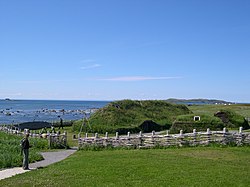
The L'Anse aux Meadows Viking village in northern Newfoundland represents an earlier European presence in North America than Cartier's voyages.
Image source: L'Anse aux Meadows
1534 - 1542
% complete
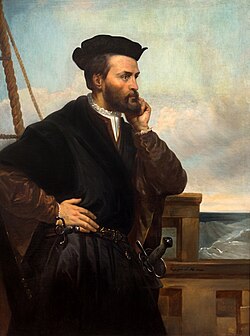
Cartier's explorations consolidated France's claim to territory later colonized as New France, and his third voyage produced the first documented European attempt to settle North America since Lucas Vázquez de Ayllón's effort in 1526–1527.
Image source: Jacques Cartier
Sep 1, 1557
% complete
Jacques Cartier died at age 65 on September 1, 1557, during an epidemic, possibly of typhus, although many sources list his cause of death as unknown.
1605
% complete
No permanent European settlements were made in Canada before 1605, when Pierre Dugua and Samuel Champlain founded Port Royal in Acadia.
Image source: Port-Royal (Acadia)
1608
% complete
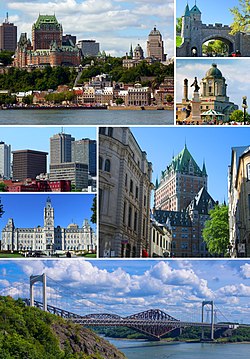
In 1608, King Henry IV sent Samuel de Champlain to New France as governor, where he built a permanent settlement and fur-trading post called Quebec.
Image source: Quebec City
1608 - 1850
% complete
After the French colony developed, the name Canada was used for the small French colony on these shores, while French colonists were called Canadiens until the mid-nineteenth century, when the name broadened to other colonies.
1861 - 1899
% complete
The Banque Jacques-Cartier existed and printed banknotes between 1861 and 1899 in Lower Canada, later Quebec.
1992
% complete
Canadian rock band The Tragically Hip referenced Jacques Cartier in their 1992 song “Looking for a Place to Happen.”
Image source: The Tragically Hip
2005
% complete
In 2005, Cartier's Bref récit et succincte narration de la navigation faite en MDXXXV et MDXXXVI was named one of the 100 most important books in Canadian history by the Literary Review of Canada.
2006
% complete
The identified colony stood where the Rivière du Cap Rouge meets the St. Lawrence River. Evidence included burnt wooden timbers dated to the mid-sixteenth century and a fragment of an Istoriato plate made in Faenza, Italy, between 1540 and 1550.
Image source: Charlesbourg-Royal
Aug 18, 2006
% complete
On August 18, 2006, Quebec Premier Jean Charest announced that Canadian archaeologists had discovered the precise location of Cartier's lost first colony, Charlesbourg-Royal.
1491
% complete
Jacques Cartier was born in 1491 in Saint-Malo, the port city on the northeastern coast of Brittany.
1520
% complete
In 1520, Cartier improved his social position by marrying Mary Catherine des Granches, a member of a leading aristocratic family.
1524
% complete
Before Cartier's royal commission, Francis I had invited, though not formally commissioned, Florentine explorer Giovanni da Verrazzano to investigate the eastern coast of North America on France's behalf.
Image source: Giovanni da Verrazzano
1534
% complete
In 1534, Jean Le Veneur, bishop of Saint-Malo and abbot of Mont Saint-Michel, introduced Cartier to King Francis I at the Manoir de Brion.
1534
% complete
Cartier claimed land near the St. Lawrence River in 1534, although France paid little attention to the proposed colony for the next 60 years.
1534
% complete
During a stop at Îles aux Oiseaux, now the Rochers-aux-Oiseaux federal bird sanctuary northeast of Brion Island, Cartier's crew killed around 1,000 birds, most of them great auks.
Apr 20, 1534
% complete
On 20 April 1534, Cartier sailed under a commission from Francis I, hoping to find a western passage to the wealthy markets of the East Indies.
Sep 1534
% complete
Cartier returned to France in September 1534 convinced that he had reached an Asian land.
1535
% complete
Cartier undertook a second expedition to the St. Lawrence region in 1535, extending the exploration begun during his first voyage.
1535
% complete
During the second voyage, Cartier left his main ships in a harbour near Stadacona and continued in his smallest vessel.
1535
% complete
Cartier decided to spend the winter of 1535–1536 at Stadacona, by which time it was too late for the expedition to return safely to France.
Oct 2, 1535
% complete
Cartier arrived at Hochelaga, the site of present-day Montreal, on October 2, 1535.
Nov 1535 - Apr 1536
% complete
From mid-November 1535 to mid-April 1536, the French fleet lay frozen solid at the mouth of the St. Charles River beneath the Rock of Quebec.
May 1536
% complete
As he prepared to return to France in early May 1536, Cartier kidnapped Chief Donnacona so that he could personally describe the northern country called the Kingdom of Saguenay, reputed to contain gold, rubies and other treasures.
Jul 16, 1536
% complete
After sailing down the St. Lawrence and crossing the Atlantic, Cartier and his men reached Saint-Malo on 16 July 1536, ending the second voyage.
Oct 17, 1540
% complete
On October 17, 1540, Francis I ordered Cartier to return to Canada and support a colonization project as its captain general.
1541 - 1542
% complete
The winter of 1541–1542 was spent in the settlement established during the third voyage, although no records survive describing the period in detail.
Jan 15, 1541
% complete
On January 15, 1541, Cartier was supplanted by Jean-François de La Rocque de Roberval, who was appointed the first lieutenant general of French Canada.
Image source: Jean-François Roberval
May 23, 1541
% complete
Cartier departed Saint-Malo on May 23, 1541, beginning his third voyage with five ships.
1542
% complete
After Cartier's departure, Roberval took command of Charlesbourg-Royal, the attempted French settlement.
Jun 1542
% complete
Cartier left for France in early June 1542 and encountered Roberval and his ships along the Newfoundland coast.
1543
% complete
Charlesbourg-Royal was abandoned in 1543 after disease, foul weather and hostility from Indigenous people drove the would-be settlers to despair.
Or browse the full history timeline directory, with more than 2,000 topics.
This Jacques Cartier timeline was generated with the help of AI, using information found on the internet.
We work hard to keep these timelines accurate, but mistakes do get through. If you spot one, email us at [email protected] and we'll fix it for future visitors.
Generate yours with AI or build it from scratch, for free.
Export your timeline, add your own events, edit or remove AI-generated events, and much more
No credit card required.
Cancel anytime.
Cancel anytime.
You can create an unlimited number of timelines with up to 10 events on each one, customize how they look, export them to PDF, PNG, PowerPoint, CSV, and Excel, and share them with a link. Paid plans raise the event limit and add features like spreadsheet imports and collaborators.
Yes. You can cancel your subscription from your account page at any time, and you will not be charged again. Your subscription stays active for the rest of the period you already paid for.
Yes. We will email you a reminder before the annual renewal, and we will also email you a receipt.
Yes. You can email us within 15 days of any payment, and we will issue you a full refund.
Check out our pricing docs or send us an email anytime: [email protected].