-
Use Cases
-
Resources
-
Pricing
Mercantilism was an economic theory and practice dominant in Europe from roughly the 16th to the 18th centuries. It held that national strength depended on accumulating wealth, especially gold and silver, through a favorable balance of trade. Governments promoted exports, restricted imports, acquired colonies for raw materials, and chartered powerful trading companies such as the British East India Company, shaping global commerce and colonial expansion. More Less
1400
Walter Rodney describes mercantilism as the period of worldwide development of European commerce which began in the 15th century with the voyages of Portuguese and Spanish explorers to Africa, Asia, and the New World, laying the groundwork for mercantile theory.
1450 - 1800
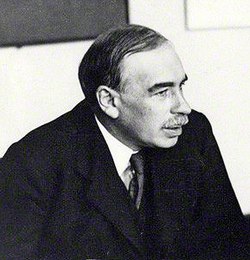
Mercantilism became the dominant school of economic thought in Europe throughout the late Renaissance and early modern period (from the 15th to the 18th centuries) before the advent of Classical liberalism.
Image source: Mercantilism

1544 - 1617
Italy produced noted writers of mercantilist themes, including Giovanni Botero (1544–1617), whose works contributed to the development of mercantilist thought alongside Antonio Serra.
Image source: Giovanni Botero

1557
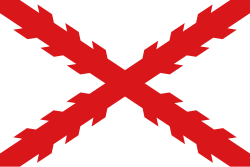
The culmination of Spanish mercantilist policies led to Spain defaulting in 1557, with further defaults following in 1575 and 1596 as the strain of imperial finances mounted.
Image source: Spanish Empire
1613
The Italian economist and mercantilist Antonio Serra is considered to have written one of the first treatises on political economy in his 1613 work, A Short Treatise on the Wealth and Poverty of Nations.
Image source: Antonio Serra

1618 - 1648
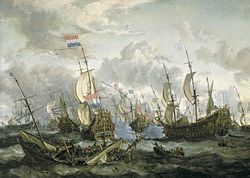
Mercantilism became prominent in Central Europe and Scandinavia after the Thirty Years' War (1618–48), with Christina of Sweden, Jacob Kettler of Courland, and Christian IV of Denmark being notable proponents.
Image source: Thirty Years' War

1500
Mercantilism arose in France in the early 16th century soon after the monarchy had become the dominant force in French politics, beginning a long tradition of state-directed economic policy.
1539
In 1539, an important French decree banned the import of woolen goods from Spain and some parts of Flanders, an early protectionist measure. Over the rest of the 16th century, further protectionist measures were introduced.
1600 - 1800
In the French economy, the triangular trade method was integral in the continuation of mercantilism throughout the 17th and 18th centuries, connecting Europe, Africa, and the Americas in a system of commerce.
Image source: Triangular trade

1613 - 1621
The ideology of mercantilism was embodied in New France through the establishment under Royal Charter of corporate trading monopolies including La Compagnie des Marchands, which operated from 1613 to 1621.
This Mercantilism timeline was generated with the help of AI, using information found on the internet.
We work hard to keep these timelines accurate, but mistakes do get through. If you spot one, email us at [email protected] and we'll fix it for future visitors.
Generate yours with AI or build it from scratch, for free.