-
Use Cases
-
Resources
-
Pricing
The Eastern Orthodox Church is one of the oldest Christian traditions, tracing its roots to the earliest Christian communities in the Eastern Roman (Byzantine) Empire. It developed a distinct identity through theological, liturgical, and cultural differences with the Western Church, culminating in the Great Schism of 1054. Today it is the second-largest Christian communion in the world, centered on self-governing national and regional churches united in doctrine and sacramental life. More Less
325
% complete
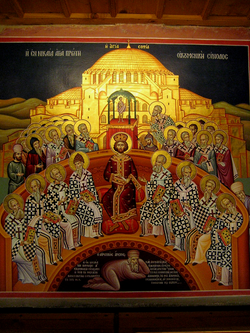
Emperor Constantine convened the first ecumenical council at Nicaea to address the Arian controversy. The council produced the original Nicene Creed and established a shared doctrinal foundation for Christianity, later central to Orthodox theology.
Image source: First Council of Nicaea
381
% complete
The second ecumenical council expanded the Nicene Creed into its full form still used by the Orthodox Church today and affirmed the divinity of the Holy Spirit, while granting Constantinople honorary precedence after Rome.
Image source: First Council of Constantinople
431
% complete
The third ecumenical council condemned Nestorianism and proclaimed Mary as Theotokos (God-bearer), a title of profound importance in Orthodox devotion and Christology.
Image source: Council of Ephesus
451
% complete
The fourth ecumenical council defined Christ as having two natures, divine and human, in one person. Its decisions were accepted by the churches that became Eastern Orthodoxy but rejected by Oriental Orthodox churches.
Image source: Council of Chalcedon
863 - 867
% complete
A dispute over the patriarchate of Constantinople and papal authority led to mutual excommunications between Pope Nicholas I and Patriarch Photios, foreshadowing the later East-West schism.
Image source: Photian schism
1054
% complete
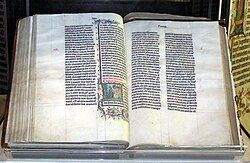
Mutual excommunications between Cardinal Humbert and Patriarch Michael Cerularius formalized the split between Rome and Constantinople over issues including papal supremacy and the filioque clause, creating the enduring divide between Catholic and Orthodox Churches.
Image source: East–West Schism
Apr 12, 1204
% complete
Crusader forces captured and brutally sacked Constantinople, establishing the Latin Empire and deepening Orthodox resentment toward the West, making reconciliation between the churches far more difficult.
Image source: Sack of Constantinople
1438 - 1445
% complete
Byzantine delegates, seeking Western military aid against the Ottomans, signed a decree of union with Rome at Florence, but the union was overwhelmingly rejected by Orthodox clergy and laity back home.
Image source: Council of Florence
Feb 27, 380
% complete
Emperor Theodosius I issued the Edict of Thessalonica, declaring Nicene Christianity the official state religion of the Roman Empire, greatly elevating the status of the church that would become the Eastern Orthodox Church.
537
% complete
Emperor Justinian I completed the Hagia Sophia in Constantinople, an architectural marvel that served for nearly a thousand years as the cathedral of the Ecumenical Patriarchate and the spiritual heart of Byzantine Orthodoxy.
Image source: Hagia Sophia
1341 - 1351
% complete
The theological disputes surrounding hesychasm, defended by Gregory Palamas with his distinction between God's essence and energies, were resolved in favor of Palamas at councils in Constantinople, shaping Orthodox mystical theology.
Image source: Gregory Palamas
May 29, 1453
% complete
Ottoman forces captured Constantinople, ending the Byzantine Empire. Sultan Mehmed II allowed the Orthodox Church to continue functioning under Ottoman rule, making Christians a protected but subordinate millet.
Image source: Fall of Constantinople
863
% complete
The brothers Cyril and Methodius began their mission to Great Moravia, devising the Glagolitic alphabet and translating liturgical texts into Old Church Slavonic, laying the groundwork for Slavic Orthodox Christianity.
Image source: Cyril and Methodius
988
% complete
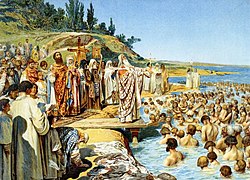
Prince Vladimir the Great converted to Orthodox Christianity and had the population of Kiev baptized in the Dnieper River, bringing Kievan Rus' into the Byzantine Orthodox world and founding Russian Orthodoxy.
Image source: Christianization of Kievan Rus'
1589
% complete
Ecumenical Patriarch Jeremiah II elevated Metropolitan Job of Moscow to patriarchal rank, creating an independent autocephalous Russian Patriarchate and affirming Moscow's role as a leading center of Orthodoxy.
Image source: Patriarch of Moscow and all Rus'
1596
% complete
Part of the Kyivan metropolitanate entered into communion with Rome while retaining Byzantine rites, splitting Orthodox believers in the Polish-Lithuanian Commonwealth and sparking centuries of religious conflict in Eastern Europe.
Image source: Union of Brest
1654 - 1667
% complete
Patriarch Nikon's liturgical reforms, intended to align Russian practice with Greek usage, provoked fierce resistance. Those who rejected the reforms, the Old Believers, were anathematized and endured persecution for centuries.
Image source: Old Believers
1794
% complete
Monks from Valaam Monastery arrived on Kodiak Island to minister to Russian fur traders and native Alaskans, marking the beginning of Orthodoxy in North America and producing saints like Herman of Alaska.
Image source: Russian Orthodox Church
1721
% complete
Peter the Great abolished the Russian Patriarchate and replaced it with the Most Holy Synod, placing the Russian Church under state control for nearly two hundred years until the patriarchate was restored in 1917.
Image source: Most Holy Synod
1821 - 1830
% complete
The Greek revolt against Ottoman rule, blessed by figures such as Patriarch Gregory V who was executed in retaliation, led to the establishment of an independent Greece and eventually an autocephalous Church of Greece.
Image source: Greek War of Independence
1833
% complete
The newly independent Kingdom of Greece declared its church autocephalous, separating it from the Ecumenical Patriarchate of Constantinople, though full recognition came only in 1850.
Image source: Church of Greece
Nov 1917
% complete
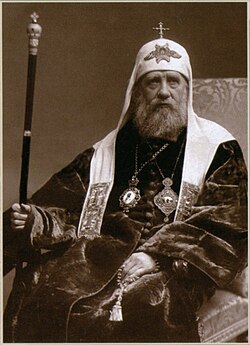
Amid the Russian Revolution, a local council restored the Moscow Patriarchate and elected Tikhon Bellavin as patriarch, just before the Bolshevik regime launched decades of persecution against the Church.
Image source: Patriarch Tikhon of Moscow
1922 - 1991
% complete
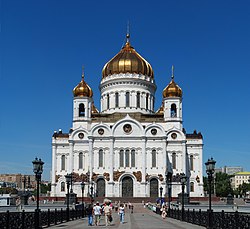
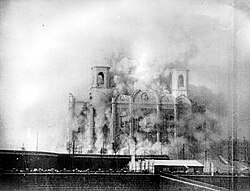
Under Soviet rule, thousands of Orthodox priests, monks, and laypeople were executed or imprisoned, churches were destroyed or closed, and the Church survived only under severe restrictions until the fall of communism.
Image source: Persecution of Christians in the Soviet Union
Jan 1964
% complete
Pope Paul VI and Ecumenical Patriarch Athenagoras I met in Jerusalem in 1964, the first meeting of a pope and ecumenical patriarch in over five hundred years, leading to the mutual lifting of the anathemas of 1054 in 1965.
Image source: Catholic–Eastern Orthodox relations
1970
% complete
The Moscow Patriarchate granted autocephaly to the Russian Orthodox Greek Catholic Church in America, which renamed itself the Orthodox Church in America, becoming the first autocephalous Orthodox church in North America.
1988
% complete
The thousandth anniversary of the baptism of Kievan Rus' was celebrated widely across the Soviet Union, marking a turning point in which the Soviet state relaxed restrictions and the Russian Church experienced a dramatic revival.
Dec 26, 1991
% complete
The collapse of communist regimes across Eastern Europe allowed the reopening of thousands of churches and monasteries, a surge in monasticism and pilgrimage, and renewed public influence for Orthodox churches throughout the region.
Image source: Dissolution of the Soviet Union
Jun 19, 2016 - Jun 26, 2016
% complete
For the first time in over twelve hundred years, most autocephalous Orthodox churches gathered for a pan-Orthodox council in Crete, issuing documents on topics such as fasting, marriage, and relations with other Christians, though several churches declined to attend.
Image source: Pan-Orthodox Council
Oct 15, 2018
% complete
After Constantinople moved toward recognizing an independent Orthodox Church of Ukraine, the Russian Orthodox Church severed full communion with the Ecumenical Patriarchate, producing the most serious internal split in modern Orthodoxy.
Image source: 2018 Moscow–Constantinople schism
Jan 5, 2019
% complete
Ecumenical Patriarch Bartholomew signed the tomos granting autocephaly to the new Orthodox Church of Ukraine, uniting previously competing jurisdictions and reshaping the ecclesiastical landscape of Ukraine.
Image source: Orthodox Church of Ukraine
Or browse the full history timeline directory, with more than 2,000 topics.
This Eastern Orthodox Church timeline was generated with the help of AI, using information found on the internet.
We work hard to keep these timelines accurate, but mistakes do get through. If you spot one, email us at [email protected] and we'll fix it for future visitors.
Generate yours with AI or build it from scratch, for free.
Export your timeline, add your own events, edit or remove AI-generated events, and much more
No credit card required.
Cancel anytime.
Cancel anytime.
You can create an unlimited number of timelines with up to 10 events on each one, customize how they look, export them to PDF, PNG, PowerPoint, CSV, and Excel, and share them with a link. Paid plans raise the event limit and add features like spreadsheet imports and collaborators.
Yes. You can cancel your subscription from your account page at any time, and you will not be charged again. Your subscription stays active for the rest of the period you already paid for.
Yes. We will email you a reminder before the annual renewal, and we will also email you a receipt.
Yes. You can email us within 15 days of any payment, and we will issue you a full refund.
Check out our pricing docs or send us an email anytime: [email protected].