-
Use Cases
-
Resources
-
Pricing
200
Christian communities were established in Roman Britain by at least the third century. Although evidence is limited, bishops from Britain attended the Councils of Arles in 314 and Rimini in 359, showing that organized British Christianity existed before the Anglo-Saxon migrations.
Image source: Christianity in Roman Britain
597
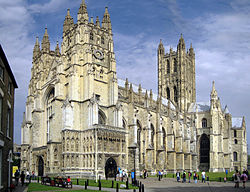
Augustine of Canterbury arrived in Kent in 597 at the head of a mission sent by Pope Gregory the Great. His work, supported by King Æthelberht's conversion and Queen Bertha's Christianity, established Canterbury as the leading episcopal center of the English church.
Image source: Gregorian mission
664
The Synod of Whitby settled a dispute in the Northumbrian church over the calculation of Easter and related Roman and Celtic customs. King Oswiu accepted the Roman practice, strengthening the church's alignment with Rome and encouraging greater institutional unity.
Image source: Synod of Whitby
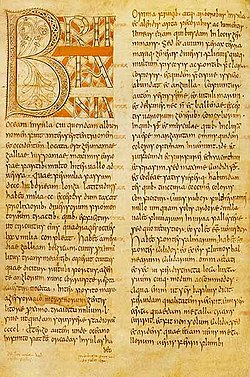
668
Theodore of Tarsus became archbishop of Canterbury in 668 and reorganized the English church. He held councils, clarified diocesan boundaries, promoted learning, and helped establish a more coherent ecclesiastical structure across Anglo-Saxon England.
1066 - 1087
After the Norman Conquest, William I replaced many English bishops and abbots with Norman churchmen and reorganized ecclesiastical administration. The reforms tied English institutions more closely to continental models while preserving Canterbury's primacy.
Image source: Norman Conquest
1162
Thomas Becket, formerly Henry II's chancellor, was consecrated archbishop of Canterbury in 1162. He soon defended clerical privileges and ecclesiastical jurisdiction against royal authority, creating a constitutional and spiritual conflict with the king.
Image source: Thomas Becket
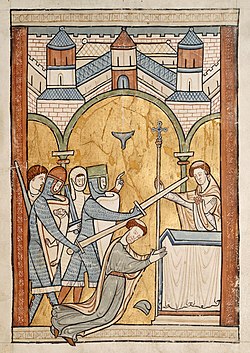
Dec 29, 1170
Four knights killed Archbishop Thomas Becket in Canterbury Cathedral in 1170 after interpreting Henry II's angry words as a command. Becket was rapidly venerated as a martyr, and his shrine became one of medieval Europe's most important pilgrimage destinations.
Image source: Thomas Becket
Jun 15, 1215
Magna Carta declared that the English church should be free and retain its rights and liberties. Its opening clause reflected the continuing importance of ecclesiastical independence in disputes between the English crown, bishops, and wider political society.
Image source: Magna Carta
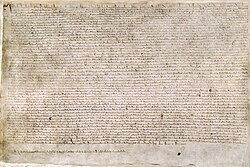
1370 - 1384
John Wycliffe criticized clerical wealth, papal authority, and aspects of late medieval doctrine. His followers, known as Lollards, promoted vernacular scripture and reform ideas that later influenced English Protestant debates, although Wycliffe himself lived before the Reformation.
Image source: John Wycliffe
1533
Thomas Cranmer became archbishop of Canterbury in 1533 and helped secure the annulment of Henry VIII's marriage to Catherine of Aragon. He became the principal theological and liturgical architect of the emerging Church of England.
Image source: Thomas Cranmer
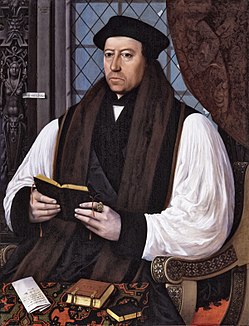
1534
The Act of Supremacy of 1534 declared Henry VIII the supreme head on earth of the Church of England. It ended papal jurisdiction in England and formalized the royal control that enabled the English Reformation, while leaving many traditional doctrines initially intact.
Image source: Acts of Supremacy
1536 - 1540
The Crown suppressed England's monasteries, priories, convents, and friaries between 1536 and 1540. Their lands and wealth were transferred or sold, transforming English religious, economic, and social life and removing major centers of traditional Catholic practice.
Image source: Dissolution of the monasteries
1549
Cranmer's first Book of Common Prayer introduced a largely English-language order of worship across the Church of England. It consolidated the Eucharist, daily offices, baptism, marriage, burial, and other rites into a common national liturgical standard.
Image source: Book of Common Prayer
Jun 10, 1549 - Aug 1549
Resistance to the English Prayer Book and wider religious and economic changes produced major uprisings in Devon and Cornwall in 1549. Royal forces suppressed the rebellion, demonstrating the political and cultural tensions created by the Reformation.
Image source: Prayer Book Rebellion
1552
The second Book of Common Prayer, authorized under Edward VI in 1552, reflected more clearly Reformed theology. It revised the communion service, removed many sacrificial and devotional elements, and became a major source for later Anglican worship.
1553 - 1558
Mary I reunited the English church with Rome and reversed Edwardian religious reforms. Protestant leaders including Thomas Cranmer were executed, while many others went into exile, creating memories that deeply shaped later Protestant identity.
Image source: Mary I of England
1559
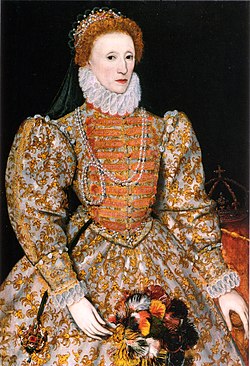
The settlement under Elizabeth I restored royal supremacy and established a Protestant national church with episcopal government and a revised Prayer Book. It sought a durable compromise between Catholic continuity and Reformed doctrine, though it satisfied neither all Catholics nor all Puritans.
Image source: Elizabethan Religious Settlement
1563
The Church of England approved the Thirty-Nine Articles in 1563, providing a concise statement of its doctrinal position. The articles addressed scripture, sacraments, justification, church authority, and disputed Catholic and Protestant teachings.
Image source: Thirty-nine Articles
1611
The Authorized Version, commonly called the King James Bible, was published in 1611. Commissioned under James I and produced by Anglican scholars, it became enormously influential in English-speaking Christianity and Anglican preaching and literary culture.
Image source: King James Version
Aug 24, 1662
The Act of Uniformity of 1662 required ministers to use the revised Prayer Book and accept episcopal structures. Around two thousand Puritan and other nonconforming clergy left their livings, establishing a major boundary between Anglican establishment and dissent.
Image source: Great Ejection
1699
The Society for Promoting Christian Knowledge was founded in London to distribute Christian literature, support schools, and encourage religious education. It became one of the key voluntary organizations behind Anglican missionary and educational work.
Image source: Society for Promoting Christian Knowledge
1701
The Society for the Propagation of the Gospel in Foreign Parts was established to support Anglican ministry in English colonies. It sent clergy, distributed books, founded schools, and helped create durable Anglican institutions across the Atlantic world, often within colonial systems.
May 24, 1738
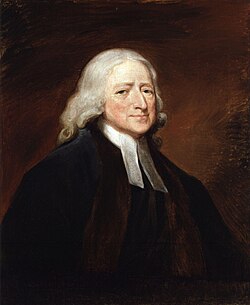
John Wesley experienced a profound assurance of faith at a meeting in Aldersgate Street in 1738. He remained an Anglican priest, but his subsequent revival preaching and organization of societies helped generate Methodism within and eventually beyond the Church of England.
Image source: John Wesley
1814
Samuel Marsden preached the first recorded Christian sermon in New Zealand in 1814, inaugurating sustained Anglican missionary activity. The Church Missionary Society later supported Māori-language education and churches, while colonial expansion produced deep and lasting conflicts.
Image source: Church Mission Society
1833
The Oxford Movement began with John Keble's Assize Sermon and the publication of the Tracts for the Times. It defended apostolic succession, sacramental worship, and the catholic heritage of Anglicanism, while provoking major debates over doctrine and church authority.
Image source: Oxford Movement
Jul 1867 - Aug 1867
The first Lambeth Conference brought bishops from across the Anglican world together in London at the invitation of Archbishop Charles Longley. It created a continuing forum for consultation among autonomous Anglican provinces without establishing a centralized legislative authority.
1893
The General Synod of the Church of England in the Dominion of Canada was formed in 1893, marking the development of an autonomous national Anglican structure. It later became the Anglican Church of Canada as ecclesiastical identity separated from direct English governance.
Sep 27, 1947
The Church of South India united Anglican, Methodist, Presbyterian, and Congregational traditions in 1947. Its creation was a landmark in church union and demonstrated how Anglican episcopacy could be incorporated into a broader united-church model.
Image source: Church of South India
1954
The 1954 Anglican Congress in Minneapolis emphasized the worldwide character of Anglicanism and the church's mission in a rapidly changing postwar world. Its themes encouraged cooperation among provinces and helped popularize the concept of mutual responsibility within the Communion.
1968
The Anglican Consultative Council was established in 1968 as a representative body bringing together bishops, clergy, and laity from the Communion's provinces. It became one of the Communion's four Instruments of Communion and provided a structured forum for global cooperation.
1976 - 1993
The Episcopal Church approved women's ordination in 1976, followed by developments in other provinces. The issue generated sustained theological and institutional disagreement, including alternative oversight and impaired communion between some Anglican bodies.
1989
Barbara Clementine Harris was consecrated assistant bishop of Massachusetts in 1989, becoming the first woman bishop in the Anglican Communion. Her consecration accelerated worldwide discussion about gender, authority, and the future of ordained ministry.
Image source: Barbara Harris (bishop)
1994
Following the Priests (Ordination of Women) Measure, the Church of England ordained its first women priests in 1994. The change followed decades of debate and created new arrangements for clergy and parishes that could not accept women's priestly ministry.
1998
The 1998 Lambeth Conference adopted Resolution 1.10 on human sexuality. Its language affirmed the dignity of all people while rejecting same-sex sexual practice and blessing same-sex unions, becoming a major source of continuing disagreement across the Anglican Communion.
Nov 2, 2003
The Episcopal Diocese of New Hampshire elected Gene Robinson, who was consecrated bishop in 2003 as the first openly gay partnered bishop in the Anglican Communion. His consecration intensified global disputes over sexuality, authority, and the boundaries of communion.
Jun 2008
Conservative Anglican leaders and representatives met in Jerusalem for the first Global Anglican Future Conference in 2008. The gathering produced the Jerusalem Declaration and strengthened networks that challenged the direction of several established Anglican provinces.
Jun 22, 2009
The Anglican Church in North America was formed by churches and clergy who had separated from the Episcopal Church and Anglican Church of Canada over theology and sexuality. It identifies as Anglican but is not a province of the officially recognized Anglican Communion.
Jan 26, 2015
Libby Lane was consecrated bishop of Stockport in 2015, becoming the first woman bishop in the Church of England. Her consecration followed parliamentary approval of legislation ending the church's previous restriction of episcopal office to men.
Or browse the full history timeline directory, with more than 2,500 topics.
This History of the Anglican Church timeline was generated with the help of AI, using information found on the internet.
We work hard to keep these timelines accurate, but mistakes do get through. If you spot one, email us at [email protected] and we'll fix it for future visitors.
Generate yours with AI or build it from scratch, for free.
Export your timeline, add your own events, edit or remove AI-generated events, and much more
No credit card required.
Cancel anytime.
Cancel anytime.
You can create an unlimited number of timelines with up to 10 events on each one, customize how they look, export them to PDF, PNG, PowerPoint, CSV, and Excel, and share them with a link. Paid plans raise the event limit and add features like spreadsheet imports and collaborators.
Yes. You can cancel your subscription from your account page at any time, and you will not be charged again. Your subscription stays active for the rest of the period you already paid for.
Yes. We will email you a reminder before the annual renewal, and we will also email you a receipt.
Yes. You can email us within 15 days of any payment, and we will issue you a full refund.
Check out our pricing docs or send us an email anytime: [email protected].