-
Use Cases
-
Resources
-
Pricing
1 AD - 99 AD
Coptic history begins with the introduction of Christianity into Egypt during the Roman period. The Coptic Church understands this beginning as the foundation of a history extending to the present day.
Image source: Christianity in Egypt
1 AD - 99 AD
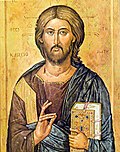
The Egyptian Church, now more than nineteen centuries old, regards itself as the subject of many prophecies in the Old Testament. This belief forms an important part of its understanding of its historical identity.
Image source: Coptic Orthodox Church
1 AD - 99 AD
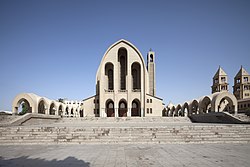
According to the tradition summarized in the source material, Christianity entered Egypt through Mark’s arrival in Alexandria. His arrival is treated as the starting point of the Egyptian Christian story.
1 AD - 199
Christianity spread throughout Egypt within half a century of Mark’s arrival in Alexandria. The rapid expansion established communities beyond the city and laid the basis for the later Coptic Church.
100 - 199
As Christianity spread into the countryside, scriptures were translated into the local language, Coptic. Translation helped Christian teaching reach Egyptian-speaking communities.
Image source: Coptic language

100 - 199
During the 2nd century, Christianity began to spread into rural areas of Egypt. This movement extended Christian life beyond the major urban centers.
100 AD - 150 AD
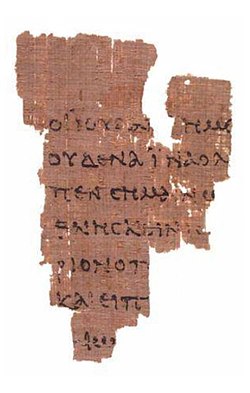
A fragment of the Gospel of John written in Coptic was found in Upper Egypt and can be dated to the first half of the 2nd century. It provides material evidence for early Christian textual culture in Egypt.
Image source: Gospel of John
200 AD
New Testament writings found in Bahnasa in Middle Egypt date around the year 200 AD. They are cited as evidence that Christianity had already spread widely through Egypt by that time.
100 - 199
Wood-carving techniques were used by blind scholars to read and write. The practice is described as occurring fifteen centuries before Braille and reflects the distinctive educational methods attributed to the Egyptian tradition.
100 - 199
The question-and-answer method of commentary began in the Egyptian Christian context. This approach became part of the intellectual and teaching traditions associated with the church.
Image source: Catechetical School of Alexandria
200 - 299
Many Egyptian Christians went into the desert during the 3rd century. They sought lives devoted to prayer, work, seclusion, and worship of God.
Image source: Desert Fathers
200 - 299
The Egyptian desert became a setting in which Christians combined prayer and labor with deliberate seclusion. This way of life formed the spiritual background of the later monastic movement.
300 - 499
Jerome, who traveled through Egypt, translated the Bible into Latin. His work is included in the tradition of wider Christian developments connected in the source material with Egypt.
300 - 399
The rule associated with Basil the Great, developed after his engagement with Egyptian monasticism, came to be followed by the Eastern Orthodox Churches. This illustrates the influence attributed to Egypt’s monastic model.
300 - 399
The activities of Anthony, Paul, Macarius, and Pachomius marked the beginning of the organized monastic movement. Egyptian monasticism combined solitary devotion with communal forms of religious life.
300 - 399
Pachomius the Cenobite helped organize communal monasticism in Egypt during the 4th century. His work provided a model for monks living together under an organized rule.
300 - 399
Macarius the Great was among the leaders who organized Egyptian monasticism during the 4th century. His role connected the earlier solitary tradition with the developing monastic movement.
Image source: Macarius of Egypt
300 - 399
Paul is identified in the source material as the world’s first anchorite. His life represents the solitary form of Egyptian desert asceticism.
Image source: Paul of Thebes
300 - 399
Anthony the Great was one of the figures who organized the Egyptian monastic movement in the 4th century. His example helped shape the tradition of Christian solitary life.
Image source: Anthony the Great
357 AD
Basil the Great, Archbishop of Caesarea of Cappadocia, visited Egypt around 357 AD. He drew on the Egyptian example while founding and organizing monasticism in Asia Minor.
Image source: Basil of Caesarea
400 AD
Jerome came to Egypt around 400 AD while traveling toward Jerusalem. He recorded details of his experiences in letters, preserving an account of the Egyptian Christian environment.
Image source: Jerome
400 - 499
By the end of the 5th century, hundreds of monasteries and thousands of cells and caves were scattered throughout the Egyptian desert. The scale of settlement demonstrates the expansion of Egyptian monastic life.
Image source: Christian monasticism
400 - 499
The Egyptian example became a source for Christian monasticism beyond Egypt. The source material presents later monastic traditions as stemming either directly or indirectly from this example.
500 - 599
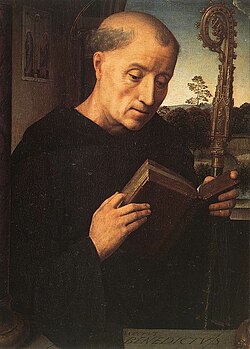
Benedict founded the Benedictine Order in the 6th century on the model of Pachomius. The Benedictine form was stricter, while retaining a connection to the Egyptian communal monastic example.
Image source: Benedict of Nursia
300 - 399
The dispute initiated by Arius became known as Arianism and spread throughout the Christian world. It concerned Christian theological questions and is distinct from Nazi racial ideology, Aryanism.
300 - 399
In the 4th century, Arius, an Alexandrian presbyter, began a theological dispute concerning the nature of Christ. The controversy spread throughout the Christian world.
400 - 499
Another theological dispute arose in the 5th century over the teachings of Nestorius, Patriarch of Constantinople. He taught that God the Logos was not hypostatically joined with human nature but dwelt in the man Jesus.
400 - 499
The teachings of Nestorius generated a major theological dispute involving the Christian world, including the Egyptian church. The controversy became part of the doctrinal history surrounding the Copts.
Image source: Nestorianism
1805 - 1848
The position of the Copts began to improve early in the 19th century under the stability and tolerance associated with Muhammad Ali’s dynasty. This marked a change in the community’s circumstances.
Image source: Muhammad Ali of Egypt
1855
The jizya tax was abolished in 1855 under Sa'id Pasha. The change accompanied the Coptic community’s ceasing to be regarded by the state as an administrative unit.
Image source: Jizya
1855
In 1855, the Coptic community ceased to be regarded by the state as an administrative unit. This development occurred alongside the abolition of the jizya under Sa'id Pasha.
Image source: Copts
1919
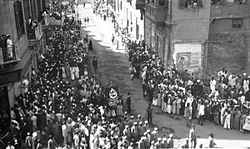
The Egyptian Revolution of 1919 brought an uprising against British occupation. It forms part of the modern political history surrounding Egypt and the Coptic community.
Image source: 1919 Egyptian Revolution
Or browse the full history timeline directory, with more than 2,500 topics.
This Coptic Church History timeline was generated with the help of AI, using information found on the internet.
We work hard to keep these timelines accurate, but mistakes do get through. If you spot one, email us at [email protected] and we'll fix it for future visitors.
Generate yours with AI or build it from scratch, for free.
Export your timeline, add your own events, edit or remove AI-generated events, and much more
No credit card required.
Cancel anytime.
Cancel anytime.
You can create an unlimited number of timelines with up to 10 events on each one, customize how they look, export them to PDF, PNG, PowerPoint, CSV, and Excel, and share them with a link. Paid plans raise the event limit and add features like spreadsheet imports and collaborators.
Yes. You can cancel your subscription from your account page at any time, and you will not be charged again. Your subscription stays active for the rest of the period you already paid for.
Yes. We will email you a reminder before the annual renewal, and we will also email you a receipt.
Yes. You can email us within 15 days of any payment, and we will issue you a full refund.
Check out our pricing docs or send us an email anytime: [email protected].