
-
Use Cases
-
Resources
-
Pricing
1500 - 1599
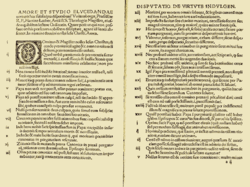
Presbyterians trace their historical origins to the Protestant Reformation of the sixteenth century, the broad religious movement that challenged established Western Catholic structures and produced the Reformed Protestant tradition.
Image source: Reformation
1509 - 1564
French theologian and lawyer John Calvin developed writings that consolidated Reformed theological thought. His work built on earlier sermons and writings by Huldrych Zwingli and became foundational for Presbyterian theology.
Image source: John Calvin
1560
John Knox, a former Catholic priest who studied with Calvin in Geneva, carried Calvin's teachings back to Scotland and led the Scottish Reformation of 1560, establishing a central foundation for the Presbyterian tradition.
Image source: Scottish Reformation
1640
Immigrants from Scotland and Ireland brought Presbyterianism to America as early as 1640. Immigration remained an important source of Presbyterian growth throughout the colonial era.
1706
Seven ministers led by Francis Makemie established the first American presbytery in Philadelphia, creating an organized Presbyterian governing structure in the colonies.
1717
The Synod of Philadelphia was created in 1717 as a broader governing body following the establishment of the first American presbytery.
Image source: Synod of the Trinity
1942
As neo-orthodoxy and liberalism became influential in PCUS seminaries and merger discussions continued, renewal organizations formed. These included Presbyterian Churchmen United, the Presbyterian Evangelistic Fellowship, and the Concerned Presbyterians.
1942
Beginning in 1942, the Presbyterian Church in the United States experimented with revising its confessional standards. Later theological developments intensified conservative concerns within the denomination.
1966
Conservatives within the PCUS founded Reformed Theological Seminary in 1966 because of concerns about the direction of denominational seminaries.
1967
Opponents of a proposed merger objected to the United Presbyterian Church's adherence to the Auburn Affirmation and the Confession of 1967. They criticized what they viewed as amorphous biblical doctrine, a lax sexual ethic, and ecumenical engagement with bodies outside the Reformed faith.
Dec 1973
Delegates representing about 260 congregations and more than 41,000 communicant members who had left the PCUS gathered at Briarwood Presbyterian Church in Birmingham, Alabama, and organized the National Presbyterian Church.
1974
The denomination adopted its present name, Presbyterian Church in America, the day after taking the name National Reformed Presbyterian Church.
1974
Men concerned about the direction of the Kenyon Case sent four representatives from an informal committee considering alternatives to the UPCUSA to the second General Assembly of the Presbyterian Church in America.
1974
After protests from a UPCUSA congregation with the same name in Washington, D.C., the denomination renamed itself the National Reformed Presbyterian Church at its Second General Assembly.
1975
The Presbyterian Church in America joined the Orthodox Presbyterian Church, Reformed Presbyterian Church of North America, Reformed Presbyterian Church Evangelical Synod, and Christian Reformed Church in North America as a charter member of NAPARC.
1975
The Siouxlands Presbytery was formed with South Dakota as its territory after the Presbyterian realignment of the 1970s.
Jul 29, 1975
Churches that seceded from the UPCUSA formed Ascension Presbytery, which was officially organized on July 29, 1975.
1979
The Presbyterian Church in America began discussions with the Reformed Presbyterian Church, Evangelical Synod, itself formed through a union involving the Evangelical Presbyterian Church and the Reformed Presbyterian Church, General Synod.
1982
Following the PCA's joining and receiving with the RPCES, Siouxlands Presbytery expanded from South Dakota to include Minnesota, North Dakota, Nebraska, and Iowa.
Jun 12, 1982 - Jun 14, 1982
The RPCES Synod voted to join the PCA on June 12, 1982, and the PCA General Assembly voted to receive the RPCES on June 14. The merger united two conservative denominations and brought 25,718 RPCES communicant members in 187 congregations into the PCA.
1982
The first Korean presbytery in the Presbyterian Church in America was formed in 1982, beginning the growth of Korean-language presbyteries within the denomination.
1983 - 1990
From 1983 to 1990, the PCUS allowed churches to leave with their property. Early PCA growth was largely driven by these secessions rather than by organic expansion alone.
1986
During the four years after 1986, congregations voluntarily left the OPC for the PCA, particularly in California, Montana, and Pennsylvania, with additional congregations coming from Alaska.
1986
In 1986, the PCA again invited the Orthodox Presbyterian Church to join it, but the invitation was not accepted.
1988
At its 16th General Assembly, the PCA adopted an official statement opposing abortion and euthanasia, describing euthanasia or mercy-killing, including suicide, as murder.
1995
In 1995, the PCA was described as one of the fastest-growing denominations in the United States, having experienced steady growth since its founding in 1973.
1996
Dissenting Christian Reformed and Reformed Church in America members formed Covenant Presbyterian Church in Holland, Michigan, under Tom Vanden Heuvel, citing concerns that the Christian Reformed Church had departed from its original commitment to scriptural clarity and authority.
1996
Beginning in 1996, congregations from the Presbyterian Church (USA) began joining the PCA; about 23 PC(USA) congregations had joined by the time described in the source material.
2004
First Presbyterian Church in Charleston, Mississippi, formerly a PC(USA) congregation, voted in 2004 to join the PCA rather than the Evangelical Presbyterian Church.
2008
In 2008, the Presbyterian Church of Brazil and the Presbyterian Church in America entered into a full fraternal relationship.
2009
In 2009, the PCA reported a net loss in members for the first time, marking a change from its previous pattern of steady denominational growth.
Dec 31, 2011
As of December 31, 2011, the PCA reported 1,771 churches across all 50 states, the District of Columbia, Puerto Rico, and five Canadian provinces.
2012
In 2012, the PCA reported 1,777 congregations, consisting of 1,474 particular churches and 303 mission churches, with total membership of 364,019.
2012
At its 41st General Assembly in 2012, the PCA and the National Presbyterian Church in Mexico entered into an assembly-level ecclesiastical relationship.
2013
In 2013, Michael Oh was appointed chief executive officer of the Lausanne Committee for World Evangelization, reflecting the PCA's participation in wider evangelical leadership.
2014
In 2014, Lloyd Kim was appointed coordinator of Mission to the World, the PCA's international missions organization.
2014
By the 2014 PC(USA) General Assembly, many departing churches were joining the Evangelical Presbyterian Church or ECO. Conservative congregations continued to affiliate with the PCA, partly because those alternatives accepted women ministers.
Mar 21, 2015
University Reformed Church was granted dismissal by its RCA classis on March 21, 2015, in the context of the broader Presbyterian and Reformed realignment described in the source material.
Jun 23, 2016
The PCA General Assembly approved a statement on racial reconciliation that acknowledged corporate and historical sins, including racial segregation, exclusion from membership and presbyteries, defenses of white supremacy, and failures during and after the Civil Rights era.
2017
In 2017, the PCA elected Alexander Jun as its first non-Anglo moderator.
2019
The PCA officially affirmed the Nashville Statement at its annual General Assembly in 2019.
2019
Walter Kim was elected president of the National Association of Evangelicals in 2019.
2020
Julius Kim was selected as president of The Gospel Coalition in 2020.
Image source: The Gospel Coalition
2020
The PCA's Committee Report on Human Sexuality concluded in 2020 that Christians generally should not identify themselves as gay Christians, even when abstaining from homosexual activity, because it regarded homoerotic desires as sinful in nature.
Oct 22, 2021
After investigations and appeals concerning PCA pastor Greg Johnson's public statements about his sexual orientation, the denomination's Standing Judicial Commission ruled in his favor by a vote of 16 to 7 on October 22, 2021.
Jun 22, 2022
The PCA voted on June 22, 2022, to leave the National Association of Evangelicals, ending its membership in that organization.
Nov 2022
In November 2022, Memorial Presbyterian Church in St. Louis voted to withdraw from the PCA, citing continued attacks within the denomination. Greg Johnson left the PCA with the congregation.
Or browse the full history timeline directory, with more than 2,500 topics.
This Presbyterian Church History timeline was generated with the help of AI, using information found on the internet.
We work hard to keep these timelines accurate, but mistakes do get through. If you spot one, email us at [email protected] and we'll fix it for future visitors.
Generate yours with AI or build it from scratch, for free.
Export your timeline, add your own events, edit or remove AI-generated events, and much more
No credit card required.
Cancel anytime.
Cancel anytime.
You can create an unlimited number of timelines with up to 10 events on each one, customize how they look, export them to PDF, PNG, PowerPoint, CSV, and Excel, and share them with a link. Paid plans raise the event limit and add features like spreadsheet imports and collaborators.
Yes. You can cancel your subscription from your account page at any time, and you will not be charged again. Your subscription stays active for the rest of the period you already paid for.
Yes. We will email you a reminder before the annual renewal, and we will also email you a receipt.
Yes. You can email us within 15 days of any payment, and we will issue you a full refund.
Check out our pricing docs or send us an email anytime: [email protected].