-
Use Cases
-
Resources
-
Pricing
Middle Eastern cuisine encompasses the culinary traditions of the Levant, Mesopotamia, Arabia, Persia, and surrounding regions. Its history spans thousands of years, shaped by ancient agriculture, trade routes like the Silk Road, Islamic Golden Age gastronomy, Ottoman expansion, and modern globalization, producing iconic dishes such as hummus, falafel, kebabs, baklava, and pilafs. More Less
9000 BCE
% complete
Early farming communities in the Fertile Crescent, spanning modern Iraq, Syria, and Turkey, domesticated wild wheat. This breakthrough laid the agricultural foundation for bread, beer, and grain-based dishes that remain staples of Middle Eastern cuisine today.
Image source: Fertile Crescent
8000 BCE
% complete
Communities in the Zagros Mountains of modern Iran and Iraq began herding sheep and goats, establishing a tradition of pastoralism that supplied meat, milk, yogurt, and cheese—cornerstones of the Middle Eastern diet.
Image source: Animal husbandry
3500 BCE
% complete
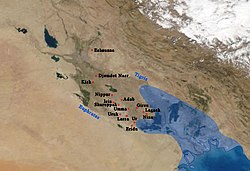
In the city-states of Sumer, cuneiform tablets recorded rations of bread, beer, onions, dates, and fish. Beer brewing became institutionalized, and organized temple kitchens produced some of history's first large-scale cooked meals.
Image source: Sumer
2500 BCE
% complete
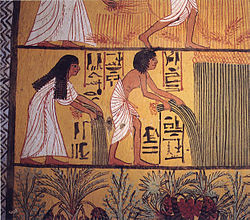
Along the Nile, Egyptian bakeries and breweries mass-produced dozens of bread varieties and thick beer for workers and elites alike. Tomb paintings depict the full production chain, showing food's central role in Egyptian society and religion.
Image source: Ancient Egyptian cuisine
1700 BCE
% complete
Three cuneiform tablets preserve around forty recipes for elaborate stews flavored with leeks, garlic, cumin, coriander, and mint—among the oldest written cookbooks in the world, revealing sophisticated ancient Mesopotamian gastronomy.
Image source: Babylonian religion
1200 BCE
% complete
Seafaring Phoenician merchants carried olive trees, grapevines, and preservation techniques throughout the Mediterranean, disseminating Levantine flavors and laying groundwork for the region's enduring olive oil and wine traditions.
Image source: Phoenicia
550 BCE - 330 BCE
% complete
The Persian imperial court fused ingredients from across its vast empire, popularizing rice dishes, stuffed fruits, saffron, and pomegranate sauces. Persian culinary refinement would influence later Arab and Ottoman cooking profoundly.
Image source: Achaemenid Empire
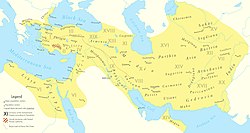
63 BCE - 636 CE
% complete
Centuries of Greco-Roman administration integrated the Levant into Mediterranean trade networks, spreading new crops, olive oil presses, and communal dining customs while local specialties like za'atar herbs and flatbreads endured.
Image source: Levant
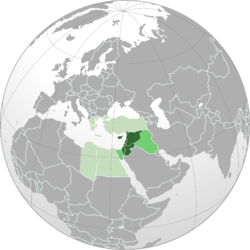
632 CE - 750 CE
% complete
The rapid expansion of the caliphates linked Arabia, Persia, the Levant, Egypt, and North Africa under one political and linguistic umbrella, allowing ingredients, techniques, and chefs to travel freely and blend into a shared high cuisine.
Image source: Early Muslim conquests
762 CE
% complete
Under Abbasid rule, Baghdad's markets overflowed with spices from India, sugar from Khuzestan, and citrus from Syria. Court kitchens employed hundreds of cooks, and urban food culture flourished with restaurants-like cookshops serving the public.
Image source: Abbasid Caliphate
800 CE
% complete
Persian and Arab agronomists expanded sugarcane production across Iraq, Egypt, and the Levant. Sugar became central to confections like halva, marzipan, and early sherbet drinks, giving rise to the word 'sugar' entering European languages via Arabic.
Image source: History of sugar
1226 CE
% complete
Muhammad bin Hasan al-Baghdadi compiled over 160 recipes including tharid, kebabs, and sweet dumplings, documenting medieval Baghdad's cuisine and preserving techniques like distillation and rosewater perfuming for later generations.
1325 CE - 1354 CE
% complete
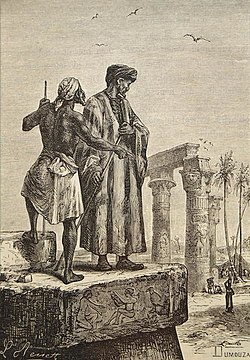
The Moroccan traveler Ibn Battuta recorded meals across North Africa, Egypt, Anatolia, and Arabia, offering vivid accounts of regional dishes, hospitality customs, and the remarkable culinary uniformity of the Islamic world's elite tables.
Image source: Ibn Battuta
1450 CE
% complete
Sufi mystics in Yemen began brewing qahwa from beans grown in the mountains. Coffee drinking spread to Mecca, Cairo, Damascus, and Istanbul, where coffeehouses became vibrant social hubs for conversation, poetry, and politics.
Image source: Coffeehouse
May 29, 1453
% complete
The Ottomans made Istanbul their capital, merging Turkish, Byzantine, Balkan, and Arab food traditions. The imperial palace kitchens grew into one of the world's largest culinary organizations, feeding up to ten thousand people daily.
Image source: Fall of Constantinople
1500 CE - 1800 CE
% complete
Over centuries, Topkapı's helvahane and matbah-i amire refined pilafs, dolmas, kebabs, and pastries into an elaborate hierarchy of dishes. Palace innovations trickled down to households, defining what is now known as Turkish classical cooking.
Image source: Topkapı Palace
1500 CE - 1600 CE
% complete
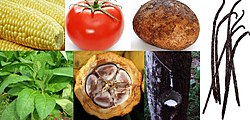
Tomatoes, peppers, maize, and pumpkins arrived via Ottoman trade routes and were rapidly adopted. Tomatoes transformed stews and salads, chili peppers spiced Anatolian and Levantine cooking, and corn entered breads and street snacks.
Image source: Columbian exchange
1554 CE
% complete
Syrian merchants opened Istanbul's first coffeehouses in 1554, sparking a boom that saw hundreds of kahvehane open across the empire. Coffee culture became so entrenched that Ottoman law briefly considered banning it as seditious gathering grounds.
1600 CE
% complete
Layered filo pastries filled with nuts and soaked in syrup were perfected in Ottoman kitchens, likely building on earlier Central Asian and Byzantine layered dough traditions. Baklava became a symbol of imperial generosity, sent to janissary barracks each Ramadan.
Image source: Baklava
1640 CE - 1680 CE
% complete
The celebrated traveler Evliya Çelebi described guild feasts, street vendors, and regional specialties from Bosnia to Egypt in his Seyahatname, providing an unmatched snapshot of seventeenth-century Ottoman eating habits and market life.
Image source: Evliya Çelebi
1805 CE - 1848 CE
% complete
Egypt's modernizing viceroy expanded cotton, sugarcane, and rice cultivation with state monopolies, reshaping rural diets, export economies, and the availability of staple ingredients across Egyptian kitchens and markets.
Image source: Muhammad Ali of Egypt
1864 CE
% complete
As printing spread through the Ottoman world, cookbooks in Turkish and Arabic reached home cooks directly for the first time, standardizing recipes and democratizing palace-inspired dishes previously transmitted orally or through professional chefs.
1880 CE
% complete
In late nineteenth-century Egypt, fried patties of fava beans seasoned with herbs appeared in Alexandria and Cairo, possibly inspired by British fried cutlets. Known as ta'amiya in Egypt and falafel elsewhere, it became the region's iconic fast food.
Image source: Falafel
1890 CE - 1920 CE
% complete
Mass emigration from Mount Lebanon carried tabbouleh, hummus, kibbeh, and arak to the Americas. Lebanese restaurants in São Paulo, Detroit, and Paris introduced Middle Eastern mezze dining to millions of new customers.
Image source: Lebanese diaspora
1922 CE
% complete
With the empire's fall, shared Ottoman dishes were nationalized: baklava, kebabs, and meze were claimed by Greece, Turkey, Lebanon, and others. National cookbooks emerged, reframing a common imperial cuisine as distinct patriotic traditions.
Image source: Partition of the Ottoman Empire
1948 CE - 1960 CE
% complete
New immigrants from Europe, North Africa, Yemen, and Iraq blended Ashkenazi, Mizrahi, and Arab-Palestinian foodways. Sabich, shakshuka, and hummus became national symbols, creating one of the world's youngest fusion cuisines.
Image source: Israeli cuisine
2008 CE
% complete
The Israeli-British chef's London restaurants and bestselling cookbooks introduced za'atar, sumac, tahini, and pomegranate molasses to Western home cooks, driving worldwide demand for Middle Eastern ingredients and restaurant concepts.
Image source: Yotam Ottolenghi
2009 CE
% complete
Lebanese restaurateurs prepared record-breaking hummus platters to assert ownership of the dish amid 'hummus wars' with Israel. The debates highlighted how deeply food embodies identity, heritage, and geopolitics across the Middle East.
Image source: Hummus
2013 CE - 2020 CE
% complete
UNESCO inscribed the Mediterranean diet (2013), Arabic coffee and lavash bread (2014–2016), and the art of Palestinian embroidery alongside foodways like couscous (2020) on its intangible heritage list, affirming cuisine as living cultural heritage.
Image source: Intangible cultural heritage
Or browse the full history timeline directory, with more than 2,000 topics.
This History of Middle Eastern Cuisine timeline was generated with the help of AI, using information found on the internet.
We work hard to keep these timelines accurate, but mistakes do get through. If you spot one, email us at [email protected] and we'll fix it for future visitors.
Generate yours with AI or build it from scratch, for free.
Export your timeline, add your own events, edit or remove AI-generated events, and much more
No credit card required.
Cancel anytime.
Cancel anytime.
You can create an unlimited number of timelines with up to 10 events on each one, customize how they look, export them to PDF, PNG, PowerPoint, CSV, and Excel, and share them with a link. Paid plans raise the event limit and add features like spreadsheet imports and collaborators.
Yes. You can cancel your subscription from your account page at any time, and you will not be charged again. Your subscription stays active for the rest of the period you already paid for.
Yes. We will email you a reminder before the annual renewal, and we will also email you a receipt.
Yes. You can email us within 15 days of any payment, and we will issue you a full refund.
Check out our pricing docs or send us an email anytime: [email protected].