-
Use Cases
-
Resources
-
Pricing
The history of Spanish cuisine reflects centuries of cultural exchange, blending Roman olive oil traditions, Moorish spices and agriculture, ingredients brought from the New World such as tomatoes and peppers, and regional specialties like paella, gazpacho, and jamón ibérico. From ancient Iberian roots through medieval influences to the modern tapas movement and world-renowned molecular gastronomy pioneered by chefs like Ferran Adrià, Spanish food has evolved into one of the most celebrated culinary traditions globally. More Less
Jan 1, 500 - Dec 31, 599
% complete
It is believed that rice was first introduced to the Iberian peninsula in the 6th century by the Byzantines, laying an early agricultural foundation for what would later become one of the most iconic staples of Spanish cuisine.
Image source: Rice
Jan 1, 700 - Dec 31, 1499
% complete
Following the Muslim conquest in the 8th century, the Arabs expanded rice cultivation across the Iberian peninsula, developing irrigation systems and wetland farming that made rice a lasting element of Spanish agriculture and cuisine.
Image source: Al-Andalus
Jan 1, 711
% complete
The Muslim conquest of the Iberian peninsula in the 8th century brought Arab culture and agriculture to Spain, transforming its foodways and setting the stage for centuries of culinary exchange between Christian and Muslim traditions.
Image source: Muslim conquest of Spain
1324
% complete
The Llibre de Sent Soví, dated 1324, is one of the earliest cookbooks in Spain. Written in Catalan, it records medieval recipes and techniques, providing invaluable insight into the cooking of the Crown of Aragon.
Image source: Crema catalana
1520
% complete
Ruperto de Nola's Llibre de Coch, published in 1520 in Catalan, became one of Spain's most influential early cookbooks, codifying recipes that blended medieval Catalan cooking with new ingredients arriving from the Americas.
Image source: Llibre del Coch
1561
% complete
Before 1561, Madrid had no special regional identity. That year, King Philip II made it the capital of Spain, turning it into a political and cultural hub whose cuisine would gradually absorb influences from all corners of the country.
Image source: Madrid
1492
% complete
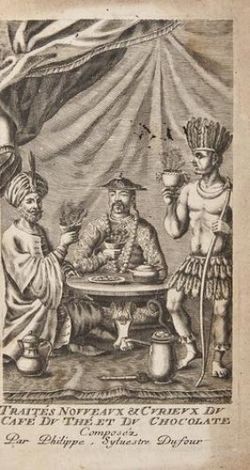
The arrival of Europeans in the Americas in 1492 initiated the advent of new culinary elements for Spain, including tomatoes, potatoes, maize, bell peppers, spicy peppers, paprika, vanilla, and cocoa — ingredients that would transform Spanish cooking forever.
Image source: Christopher Columbus
1492 - Dec 31, 1799
% complete
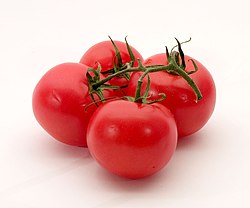
Among the American products introduced to Spain after 1492 was the tomato, which over the following centuries evolved from a curiosity into one of the most essential ingredients in Spanish kitchens, central to dishes like gazpacho and pan con tomate.
Image source: Tomato
1492 - Dec 31, 1799
% complete
The potato, native to the Andes, arrived via the Columbian exchange following 1492 and eventually became a fundamental staple of Spanish home cooking, appearing in tortilla de patatas and countless regional stews.
Image source: Potato
1492 - Dec 31, 1799
% complete
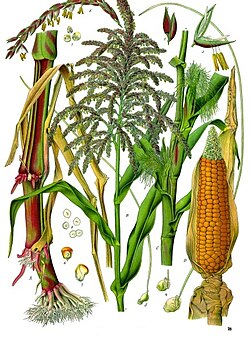
Maize (corn) came to Spain through the Columbian exchange after 1492, becoming especially important in northern regions such as Galicia and Asturias, where it entered breads and traditional dishes like broa and talos.
Image source: Maize
1492 - Dec 31, 1799
% complete
Peppers from the Americas, both sweet bell peppers and spicy varieties, were introduced to Spain after 1492 and were gradually embraced, becoming integral to dishes like pimientos de padrón and countless sofritos.
Image source: Capsicum
1492 - Dec 31, 1799
% complete
Derived from American peppers brought back after 1492, paprika (pimentón) became a defining seasoning of Spanish cuisine, essential to chorizo and countless traditional dishes across the peninsula.
Image source: Paprika
1492 - Dec 31, 1699
% complete
Vanilla and cocoa, treasures of the New World, reached Spain after 1492 and fueled a national passion for chocolate drinks and sweets, with Spain becoming Europe's gateway for these exotic flavors.
Image source: History of chocolate
1600 - 1699
% complete
According to the 17th-century account of Madame d'Aulnoy, chocolate was barely available in Spain at the time, and on the rare occasions that it was, it would come 'from afar, preserved in pig's tripes and full of worms.'
Image source: Madame d'Aulnoy
1700 - 1799
% complete
By the 18th century, many American ingredients such as peppers and tomatoes had been fully incorporated into Spanish cuisine, marking the completion of the Columbian exchange's transformation of Spain's food culture.
Image source: Spanish cuisine
1760 - 1799
% complete
In the late 18th century, French ambassador Jean-François de Bourgoing judged negatively the changes happening in Spain: 'Spanish cooking, which they have inherited, is not generally pleasing to foreigners,' reflecting French disdain for local foodways.
Image source: Jean-François de Bourgoing
1800 - 1899
% complete
For most of the 19th century, the Spanish aristocracy consumed a set of dishes that was largely an imitation of French cuisine, reflecting the prestige and dominance of French gastronomy among European elites.
Image source: Haute cuisine
1800 - 1899
% complete
Throughout the 19th century, the French cooking paradigm was dominant across Europe, including in Spain, shaping elite dining and professional kitchens while marginalizing indigenous Spanish culinary traditions.
Image source: French cuisine
1875 - 1916
% complete
Gastronome and writer Mariano Pardo de Figueroa, known as Dr. Thebussem, helped gestate modern Spanish cuisine in the late-19th to early-20th century, promoting the study and appreciation of Spain's own culinary heritage.
Image source: Mariano Pardo de Figueroa
1875 - 1920
% complete
Modern Spanish cuisine was gestated in the late-19th to early-20th century through the work of gastronomes and writers who sought to define and celebrate a distinctly Spanish way of cooking, moving beyond foreign models.
1900 - 1929
% complete
In the early 20th century, prominent gastronome Manuel Puga e Parga (known as Picadillo) praised the simplicity and authenticity of Galician cooking, celebrating dishes such as lacón con grelos or caldeiradas in opposition to the perceived sophistication of French cuisine.
Image source: Manuel María Puga y Parga
1900 - 1950
% complete
The rise of Spanish gastronomes who celebrated native dishes marked an important step in the process of straying away from the French cooking paradigm, which had dominated the 19th century in Europe.
1972
% complete
The influential cooking book 1080 recetas de cocina by Simone Ortega, first published in 1972, became a hit in Spain and remains as of 2019 the third best-selling book ever in the history of the country, after Don Quixote and the Bible.
Image source: Simone Ortega
1984
% complete
Televised cooking shows started in Spain in 1984 with Con las manos en la masa, bringing cooking into Spanish living rooms and popularizing culinary knowledge through television.
Image source: Televisión Española
2009
% complete
Joan Roca, Jordi Roca i Fontané, and Josep Roca i Fontané earned three Michelin stars in 2009 for their restaurants El Celler de Can Roca, Rocambolesc, Can Roca, Mas Marroch, and Cap Roig in Girona, plus Roca Barcelona.
Image source: El Celler de Can Roca
2013
% complete
In 2013, El Celler de Can Roca was selected as the best restaurant in the world by Restaurant magazine, cementing Catalonia's place at the forefront of global gastronomy.
2017
% complete
According to a 2017 report, the Spanish government has taken steps to shorten the traditional long lunch break in an effort to end the workday earlier, signaling potential change to deeply rooted mealtime customs.
Image source: Siesta
Or browse the full history timeline directory, with more than 2,000 topics.
This History of Spanish Cuisine timeline was generated with the help of AI, using information found on the internet.
We work hard to keep these timelines accurate, but mistakes do get through. If you spot one, email us at [email protected] and we'll fix it for future visitors.
Generate yours with AI or build it from scratch, for free.
Export your timeline, add your own events, edit or remove AI-generated events, and much more
No credit card required.
Cancel anytime.
Cancel anytime.
You can create an unlimited number of timelines with up to 10 events on each one, customize how they look, export them to PDF, PNG, PowerPoint, CSV, and Excel, and share them with a link. Paid plans raise the event limit and add features like spreadsheet imports and collaborators.
Yes. You can cancel your subscription from your account page at any time, and you will not be charged again. Your subscription stays active for the rest of the period you already paid for.
Yes. We will email you a reminder before the annual renewal, and we will also email you a receipt.
Yes. You can email us within 15 days of any payment, and we will issue you a full refund.
Check out our pricing docs or send us an email anytime: [email protected].