-
Use Cases
-
Resources
-
Pricing
Protestantism is a major branch of Christianity that emerged in the 16th century from the Reformation, a movement challenging the authority and practices of the Roman Catholic Church. Sparked by Martin Luther's 95 Theses in 1517, it emphasized salvation by faith alone, the authority of Scripture, and the priesthood of all believers. Protestantism diversified into numerous denominations, including Lutheranism, Calvinism, Anglicanism, and Anabaptism, profoundly shaping European history, politics, culture, and global Christianity. More Less
Oct 31, 1517
% complete
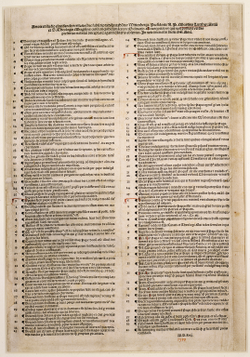
Martin Luther, a German Augustinian monk and professor of theology, posted his Ninety-five Theses on the door of the Castle Church in Wittenberg. The theses criticized the sale of indulgences and other abuses in the Catholic Church, sparking a debate that would ignite the Protestant Reformation and permanently divide Western Christianity.
Image source: Ninety-five Theses
Jun 27, 1519 - Jul 16, 1519
% complete
In the Leipzig Debate, Martin Luther faced Johann Eck in a public disputation over theology and church authority. Luther boldly asserted that popes and councils could err and that Scripture alone was authoritative, pushing him toward an open break with Rome and clarifying the doctrinal foundations of the Reformation.
Image source: Leipzig Debate
Jan 3, 1521
% complete
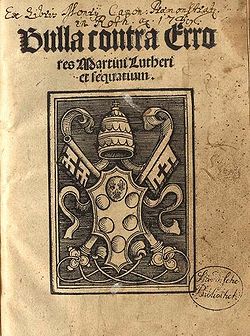
After refusing to recant his writings, Martin Luther was formally excommunicated by Pope Leo X through the papal bull Decet Romanum Pontificem. This severed Luther from the Catholic Church and set the stage for his appearance before Emperor Charles V at the Diet of Worms.
Image source: Exsurge Domine
Apr 17, 1521
% complete
At the Diet of Worms, Martin Luther stood before Holy Roman Emperor Charles V and famously refused to retract his teachings, declaring that to act against conscience was neither safe nor right. His defiance made him a hero to reformers and led to his condemnation as an outlaw by the Edict of Worms.
Image source: Diet of Worms
Sep 1522
% complete
While hiding at Wartburg Castle, Luther translated the New Testament into German, publishing the September Testament in 1522. His vernacular Bible made Scripture accessible to ordinary Germans, standardized the German language, and embodied the Reformation principle that believers should read the Bible for themselves.
Image source: Luther Bible
Jan 29, 1523
% complete
Ulrich Zwingli, a Swiss priest, began preaching reform in Zurich based solely on Scripture. After public disputations in 1523 won him official support, Zurich abolished the Mass, removed religious images, and became a center of the Swiss Reformation, developing a distinct Reformed tradition alongside Lutheranism.
Image source: Huldrych Zwingli
1526
% complete
William Tyndale completed the first English translation of the New Testament directly from Greek, printed in Worms and smuggled into England. His clear, powerful prose shaped later English Bibles including the King James Version. He was eventually arrested and executed for heresy in 1536.
Image source: Tyndale Bible
Oct 1, 1529 - Oct 4, 1529
% complete
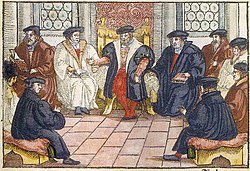
Luther and Zwingli met at Marburg Castle hoping to unite the Lutheran and Reformed movements. They agreed on fourteen points but famously split over the Eucharist: Luther insisted Christ was truly present in the bread and wine, while Zwingli saw it as symbolic. The disagreement permanently divided the Protestant movement.
Image source: Marburg Colloquy
Jun 25, 1530
% complete
Lutheran princes and cities presented the Augsburg Confession to Emperor Charles V at the Diet of Augsburg. Written chiefly by Philip Melanchthon, it summarized Lutheran doctrine and became the foundational confessional document of Lutheranism, defining what Protestants believed and defended.
1534
% complete
After Pope Clement VII refused to annul his marriage to Catherine of Aragon, Henry VIII had Parliament pass the Act of Supremacy, declaring himself Supreme Head of the Church of England. Though initially doctrinally conservative, this break launched the English Reformation and created a national Protestant church.
Image source: English Reformation
1541
% complete
John Calvin returned to Geneva in 1541 and implemented his vision of a reformed Christian commonwealth, codified in his Ecclesiastical Ordinances. Geneva became a model city of discipline, education, and missionary zeal, publishing Calvin's Institutes and sending trained pastors across Europe.
Image source: John Calvin
1559
% complete
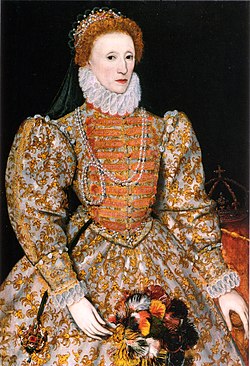
Queen Elizabeth I established a moderate Protestant settlement for England through the Act of Uniformity and Act of Supremacy, restoring the Book of Common Prayer and royal supremacy while retaining episcopal structure. This compromise defined Anglicanism and shaped its via media between Catholicism and continental Protestantism.
Image source: Elizabethan Religious Settlement
1524 - 1525
% complete
Inspired partly by Reformation ideas about Christian freedom, German peasants rose up against their feudal lords in a massive revolt. Luther condemned the uprising, urging princes to suppress it violently. The brutal crushing of the rebellion killed tens of thousands and pushed the Reformation toward closer alliance with secular rulers.
Image source: German Peasants' War
Dec 13, 1545 - Dec 4, 1563
% complete
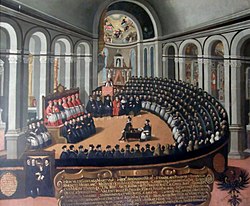
The Catholic Church convened the Council of Trent to respond to the Protestant challenge. It reaffirmed Catholic doctrines such as transubstantiation, justification by faith and works, and the authority of tradition, while reforming abuses. The council hardened the division between Catholics and Protestants for centuries.
Image source: Council of Trent
Sep 25, 1555
% complete
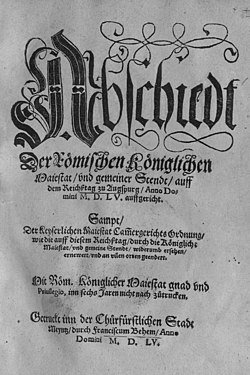
The Peace of Augsburg ended religious warfare in the Holy Roman Empire by allowing each prince to choose either Lutheranism or Catholicism for his territory under the principle cuius regio, eius religio. It granted legal recognition to Lutheranism but excluded Calvinists, sowing seeds of future conflict.
Image source: Peace of Augsburg
1562 - 1598
% complete
Conflict between French Catholics and Huguenots (French Calvinists) erupted into decades of civil war marked by massacres, assassinations, and shifting alliances, including the St. Bartholomew's Day Massacre of 1572. The wars ended with the Edict of Nantes granting Huguenots limited toleration.
Image source: French Wars of Religion
Aug 24, 1572
% complete
Beginning in Paris and spreading across France, Catholic mobs and soldiers murdered thousands of Huguenots following the attempted assassination of Admiral Gaspard de Coligny. The massacre shocked Europe, deepened confessional hatreds, and prompted many Protestants to question obedience to Catholic monarchs.
Aug 1588
% complete
King Philip II of Spain sent a massive Armada to invade Protestant England and restore Catholicism. English ships, aided by storms, destroyed or scattered the fleet. The defeat preserved English Protestantism, boosted national confidence, and marked the beginning of Spain's decline as Europe's dominant power.
Image source: Spanish Armada
Apr 13, 1598
% complete
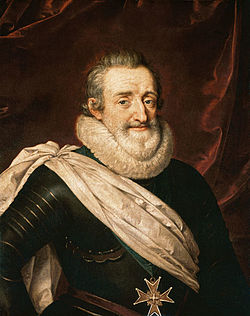
King Henry IV of France, a former Huguenot, issued the Edict of Nantes granting Protestants substantial rights, including freedom of worship in designated places and access to office. It brought an end to the French Wars of Religion, though it was revoked by Louis XIV in 1685, triggering a new Huguenot exodus.
Image source: Edict of Nantes
1618 - 1648
% complete
Beginning with the Defenestration of Prague, the Thirty Years' War pitted Catholic and Protestant powers across the Holy Roman Empire in one of history's most destructive conflicts. Millions died from war, famine, and disease before the Peace of Westphalia ended the fighting and entrenched religious pluralism in Europe.
Image source: Thirty Years' War
Jan 23, 1579
% complete
Northern Dutch provinces united against Spanish rule, forming a federation committed to the Reformed faith. The Dutch Republic became a haven for persecuted Protestants, Jews, and dissenters, and its Reformed church, commerce, and printing presses made it a powerhouse of international Protestantism.
1611
% complete
Commissioned by King James I, the Authorized Version of the Bible was translated by scholars and became the most influential English book ever produced. Its majestic language shaped English literature, worship, and culture for centuries and spread worldwide with British empire and missions.
Image source: King James Version
Nov 1620
% complete
English Separatist Puritans sailed on the Mayflower and founded Plymouth Colony in New England, seeking freedom to worship according to their congregational principles. Their migration began the establishment of Protestant colonies in North America that would profoundly shape American religious life.
Image source: Plymouth Colony
1643 - 1653
% complete
Summoned by the English Parliament during the Civil War, the Westminster Assembly of divines produced the Westminster Confession of Faith, Larger and Shorter Catechisms, and Directory for Worship. These documents became the enduring doctrinal standards of Presbyterian churches worldwide.
Image source: Westminster Assembly
1652
% complete
George Fox began preaching that the 'Inner Light' of Christ dwells in every person, founding the Religious Society of Friends (Quakers). Rejecting sacraments, clergy, and oaths, Quakers endured persecution yet grew into a distinctive denomination known for pacifism, simplicity, and social activism.
Image source: Quakers
1730 - 1743
% complete
Revivalist preachers like Jonathan Edwards and George Whitefield sparked a wave of evangelical conversions across the American colonies. The Awakening emphasized personal conversion, emotional preaching, and lay participation, fostering intercolonial unity, new denominations, and attitudes that fed into the American Revolution.
Image source: First Great Awakening
May 24, 1738
% complete
John Wesley felt his 'heart strangely warmed' at a Moravian meeting in London, experiencing assurance of salvation by faith. His subsequent open-air preaching, organization of societies and classes, and emphasis on holiness launched Methodism, which revitalized Christianity in Britain and America.
Image source: John Wesley
1795 - 1835
% complete
Camp meetings like Cane Ridge ignited massive revivals across the American frontier. The Second Great Awakening spawned new denominations, promoted temperance and abolition, empowered women in church life, and cemented evangelicalism as the dominant force in American Protestantism.
Image source: Second Great Awakening
Aug 1806
% complete
Five Williams College students took shelter from a storm and prayed for world evangelization, inspiring the formation of the American Board of Commissioners for Foreign Missions in 1810. This student prayer meeting catalyzed the modern Protestant missionary movement that sent missionaries around the globe.
Image source: Haystack Prayer Meeting
Mar 25, 1807
% complete
Driven by the tireless campaigning of evangelical Anglican William Wilberforce and the Clapham Sect, Parliament abolished the British slave trade. Evangelical Protestant moral conviction thus reshaped law and society, leading later to full emancipation in the British Empire in 1833.
Image source: Slave Trade Act 1807
Apr 9, 1906
% complete
Led by William J. Seymour, a revival at a former warehouse on Azusa Street in Los Angeles featured speaking in tongues, racial integration, and ecstatic worship. The revival launched global Pentecostalism, now among the fastest-growing branches of Christianity worldwide.
Image source: Azusa Street Revival
Aug 23, 1948
% complete
Protestant and Orthodox churches gathered in Amsterdam to found the World Council of Churches, promoting ecumenical unity, mission, and social justice. The WCC became the principal forum for mainline Protestant cooperation and dialogue with other Christian traditions.
Image source: World Council of Churches
1949
% complete
Billy Graham's 1949 Los Angeles crusade catapulted him to fame, beginning decades of mass evangelistic campaigns broadcast worldwide. Graham became the face of postwar evangelicalism, bridging denominational divides and making evangelical Protestantism a major cultural and political force in America.
Image source: Billy Graham
Oct 11, 1962 - Dec 8, 1965
% complete
The Catholic Church's Second Vatican Council embraced ecumenism, recognizing Protestants as separated brethren and inviting their observers. Documents like Unitatis Redintegratio transformed Catholic-Protestant relations, opening an era of dialogue, joint declarations, and cooperation after centuries of hostility.
Image source: Second Vatican Council
Oct 31, 1999
% complete
On the anniversary of the Ninety-five Theses, Lutheran and Catholic representatives signed a joint declaration resolving the core theological dispute of the Reformation, affirming a common understanding of justification by grace through faith. Later endorsed by Methodists, Anglicans, and Reformed bodies, it marked historic reconciliation.
Image source: Joint Declaration on the Doctrine of Justification
Or browse the full history timeline directory, with more than 2,000 topics.
This Protestantism timeline was generated with the help of AI, using information found on the internet.
We work hard to keep these timelines accurate, but mistakes do get through. If you spot one, email us at [email protected] and we'll fix it for future visitors.
Generate yours with AI or build it from scratch, for free.
Export your timeline, add your own events, edit or remove AI-generated events, and much more
No credit card required.
Cancel anytime.
Cancel anytime.
You can create an unlimited number of timelines with up to 10 events on each one, customize how they look, export them to PDF, PNG, PowerPoint, CSV, and Excel, and share them with a link. Paid plans raise the event limit and add features like spreadsheet imports and collaborators.
Yes. You can cancel your subscription from your account page at any time, and you will not be charged again. Your subscription stays active for the rest of the period you already paid for.
Yes. We will email you a reminder before the annual renewal, and we will also email you a receipt.
Yes. You can email us within 15 days of any payment, and we will issue you a full refund.
Check out our pricing docs or send us an email anytime: [email protected].