
-
Use Cases
-
Resources
-
Pricing
Jean Piaget (1896–1980) was a Swiss psychologist renowned for his pioneering theory of cognitive development. His work revolutionized our understanding of how children acquire knowledge, introducing key concepts such as schemas, assimilation, accommodation, and the four stages of cognitive development. More Less
Aug 9, 1896
% complete
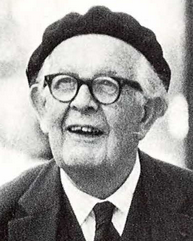
Jean William Fritz Piaget was born in 1896 in Neuchâtel, in the Francophone region of Switzerland. He would grow up to become one of the most influential psychologists of the twentieth century, known for his pioneering work on child development and genetic epistemology.
Image source: Jean Piaget
1918
% complete
Piaget received a doctorate in 1918 from the University of Neuchâtel, marking the formal beginning of his academic career in the natural sciences before he turned his attention to psychology and child development.
1918 - 1919
% complete
After completing his doctorate, Piaget undertook post-doctoral training in Zürich from 1918 to 1919, where he was briefly exposed to psychoanalysis, an approach he would later reject as insufficiently empirical.
1919 - 1921
% complete
From 1919 to 1921, Piaget pursued post-doctoral training in Paris, where he worked on the standardization of intelligence tests and became fascinated by the reasoning errors children made, which he saw as windows into their thought processes.
1921
% complete
In 1921, Piaget returned to Switzerland as director of the Rousseau Institute in Geneva. The theorist we recognize today only emerged when he moved to Geneva, working for Édouard Claparède as director of research at the institute.
1923
% complete
In 1923, Piaget married Valentine Châtenay (7 January 1899 – 3 July 1983). The couple had three children, whom Piaget studied from infancy, using their development as a foundation for many of his observations about cognitive growth.
1925 - 1929
% complete
From 1925 to 1929, Piaget worked as a professor of psychology, sociology, and the philosophy of science at the University of Neuchatel, continuing his research on child development during this period.
1929 - 1968
% complete
In 1929, Piaget accepted the post of Director of the International Bureau of Education and remained the head of this international organization until 1968, shaping educational policy on a global stage for nearly four decades.
1955
% complete
Piaget created the International Center for Genetic Epistemology in Geneva in 1955 while on the faculty of the University of Geneva, and directed the center until his death in 1980, fostering interdisciplinary research on knowledge acquisition.
Mar 11, 1964 - Mar 18, 1964
% complete
Having taught at the University of Geneva, and at the University of Paris in 1964, Piaget was invited to serve as chief consultant at two conferences at Cornell University (11–13 March) and the University of California, Berkeley (16–18 March).
Sep 16, 1980
% complete
Piaget died on 16 September 1980, and, as he had requested, was buried with his family in an unmarked grave in the Cimetière des Rois (Cemetery of Kings) in the Plainpalais district of Geneva.
1919
% complete
In 1919, Piaget was hired by Théodore Simon to standardize psychometric measures for use with French children. This work sparked his deep interest in how children think and reason, setting him on the path toward his theory of cognitive development.
Sep 1980
% complete
Shortly before his death, Piaget was involved in a debate about the relationships between innate and acquired features of language, at the Centre Royaumont pour une Science de l'Homme, discussing his point of view with linguist Noam Chomsky as well as Hilary Putnam and Stephen Toulmin. The debate was later published as Language and Learning (Harvard University Press, 1980).
1926
% complete
Piaget's La Représentation du monde chez l'enfant, published in 1926, examined how young children understand the world around them, contributing to his growing reputation as a leading figure in developmental psychology.
1928
% complete
Judgment and Reasoning in the Child was published in 1928 by Harcourt, Brace and Company, further documenting Piaget's investigations into children's logic and moral reasoning through interviews and observation.
1932
% complete
Piaget's book The Moral Judgment of the Child, published in 1932, was radical for two reasons: his use of philosophical criteria to define morality (as universalizable, generalizable, and obligatory) and his rejection of equating cultural norms with moral norms. It held that children construct their own moral world views.
Image source: Moral psychology
1934
% complete
As Director of the International Bureau of Education, Piaget declared in 1934 that "only education is capable of saving our societies from possible collapse, whether violent, or gradual", reflecting his conviction that education was central to social progress.
1936
% complete
Published in French in 1936, La naissance de l'intelligence chez l'enfant (translated as The Origins of Intelligence in Children, New York: International University Press, 1952) detailed Piaget's observations of infant sensorimotor development.
1941
% complete
Piaget's La genèse du nombre chez l'enfant (1941), translated as The Child's Conception of Number (London: Routledge and Kegan Paul, 1952), explored how children develop an understanding of number and quantity.
1945
% complete
La formation du symbole chez l'enfant; imitation, jeu et reve, image et représentation was published in 1945 and later translated as Play, Dreams and Imitation in Childhood (New York: Norton, 1962), examining symbolic play and imitation in children.
1947
% complete
La psychologie de l'intelligence (1947), translated as The Psychology of Intelligence (London: Routledge and Kegan Paul, 1950), presented a systematic overview of Piaget's theory of intelligence as active adaptation to the environment.
1950
% complete
Piaget's L'épistémologie génétique (1950), later translated as The Principles of Genetic Epistemology (New York: Basic Books, 1972), laid out his central project: studying the origins and development of knowledge itself.
1955
% complete
Written with Bärbel Inhelder, De la logique de l'enfant à la logique de l'adolescent (1955) was translated as The Growth of Logical Thinking from Childhood to Adolescence (New York: Basic Books, 1958), charting the transition to formal operational thought.
1960
% complete
Child's Conception of Geometry was published in New York by Basic Books in 1960, translating La Géométrie spontanée de l'enfant (1948), Piaget's study of children's spontaneous geometric understanding.
1964
% complete
Six études de psychologie (1964) was translated as Six psychological studies (New York: Random House, 1967), offering concise summaries of Piaget's key ideas across different stages of intellectual development.
1968
% complete
Piaget's Le Structuralisme (1968), translated as Structuralism (New York: Harper & Row, 1970), examined structuralist thought across disciplines and its relationship to his own constructivist framework.
1936
% complete
For his work, Piaget received an honorary doctorate from Harvard in 1936, one of many honors recognizing his groundbreaking contributions to psychology and education.
1972
% complete
In 1972, Piaget was awarded the Erasmus Prize, recognizing his profound contributions to European culture, science, and education through his theories of cognitive development.
1979
% complete
In 1979, Piaget received the Balzan Prize for Social and Political Sciences, honoring his transformative influence on the understanding of human development and learning.
2000
% complete
By the end of the 20th century, Piaget ranked second only to B.F. Skinner among eminent psychologists, reflecting the enduring influence of his theory of cognitive development on psychology and education.
2016
% complete
A 2016 systematic review of education research showed that constructivist approaches to early childhood education inspired by Piaget and Vygotsky are less effective than comprehensive approaches that incorporate direct skills teaching, prompting reassessment of his legacy in pedagogy.
Image source: Constructivism (philosophy of education)
Or browse the full history timeline directory, with more than 2,000 topics.
This Jean Piaget timeline was generated with the help of AI, using information found on the internet.
We work hard to keep these timelines accurate, but mistakes do get through. If you spot one, email us at [email protected] and we'll fix it for future visitors.
Generate yours with AI or build it from scratch, for free.
Export your timeline, add your own events, edit or remove AI-generated events, and much more
No credit card required.
Cancel anytime.
Cancel anytime.
You can create an unlimited number of timelines with up to 10 events on each one, customize how they look, export them to PDF, PNG, PowerPoint, CSV, and Excel, and share them with a link. Paid plans raise the event limit and add features like spreadsheet imports and collaborators.
Yes. You can cancel your subscription from your account page at any time, and you will not be charged again. Your subscription stays active for the rest of the period you already paid for.
Yes. We will email you a reminder before the annual renewal, and we will also email you a receipt.
Yes. You can email us within 15 days of any payment, and we will issue you a full refund.
Check out our pricing docs or send us an email anytime: [email protected].