-
Use Cases
-
Resources
-
Pricing
1879
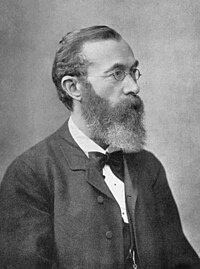
Wilhelm Wundt, often regarded as the father of experimental psychology, establishes the first psychology laboratory at the University of Leipzig, Germany. This marks the beginning of psychology as a scientific discipline.
Image source: Wilhelm Wundt
1898
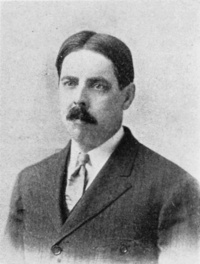
Edward Thorndike formulates the law of effect, stating that behaviors followed by positive consequences are more likely to be repeated, while behaviors followed by negative consequences are less likely to be repeated.
Image source: Edward Thorndike
1899
Sigmund Freud publishes "The Interpretation of Dreams," introducing psychoanalysis as a method for understanding the unconscious mind and revolutionizing the field of psychology.
Image source: Sigmund Freud
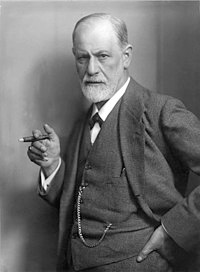
1903
Ivan Pavlov's experiments with dogs demonstrate classical conditioning, showing how behaviors can be learned through associations between stimuli and responses.
Image source: Ivan Pavlov
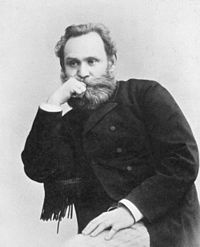
1920
John B. Watson conducts the "Little Albert" experiment, demonstrating the principles of classical conditioning by conditioning a fear response in a young child.
Image source: John B. Watson
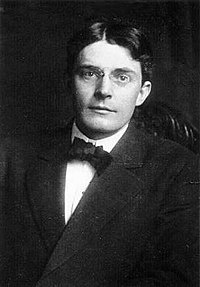
1938
B.F. Skinner conducts experiments on operant conditioning, demonstrating how behavior can be shaped through reinforcement or punishment.
Image source: B. F. Skinner
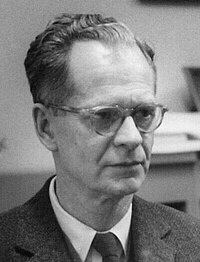
1962
Stanley Schachter proposes the two-factor theory of emotion, suggesting that emotions are the result of physiological arousal combined with cognitive interpretation.
Image source: Stanley Schachter
1942
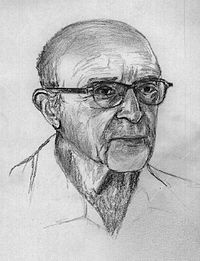
Carl Rogers develops client-centered therapy, emphasizing the importance of empathy, unconditional positive regard, and active listening in therapeutic relationships.
Image source: Carl Rogers
1958
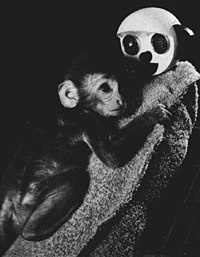
Harry Harlow conducts experiments on infant rhesus monkeys, demonstrating the importance of social and emotional bonds in early development.
Image source: Harry Harlow
1961
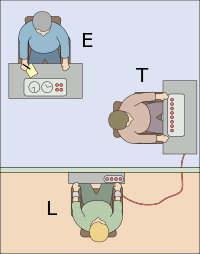
Stanley Milgram conducts a series of controversial experiments on obedience, revealing the willingness of individuals to obey authority figures, even when it conflicts with their personal conscience.
Image source: Milgram experiment
1961
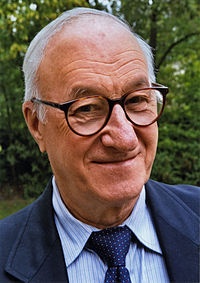
Albert Bandura conducts the Bobo doll experiment, demonstrating the power of observational learning and the influence of role models on behavior.
Image source: Albert Bandura
1961
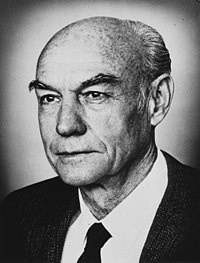
Roger Sperry's split-brain research, conducted on patients with severed corpus callosums, reveals the specialization of brain hemispheres and their distinct functions.
Image source: Roger Wolcott Sperry
1970
Mary Ainsworth develops the Strange Situation experiment to study attachment patterns in infants, leading to the identification of different attachment styles.
1971
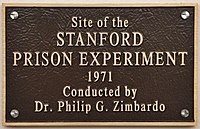
Philip Zimbardo conducts the Stanford Prison Experiment, revealing the powerful impact of situational factors on human behavior and the potential for abuse of power.
Image source: Stanford prison experiment
1974
Elizabeth Loftus conducts groundbreaking research on the malleability of human memory, demonstrating how false memories can be implanted and how eyewitness testimony can be influenced.
Image source: Elizabeth Loftus
1974
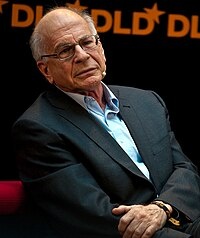
Daniel Kahneman and Amos Tversky collaborate on research that uncovers numerous cognitive biases, challenging the assumption of human rationality in decision-making.
Image source: Daniel Kahneman
1952
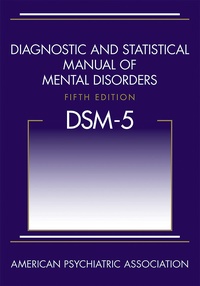
The American Psychiatric Association publishes the first edition of the Diagnostic and Statistical Manual of Mental Disorders (DSM), providing a standardized classification system for mental disorders.
Image source: DSM-5
1955
Albert Ellis develops Rational Emotive Behavior Therapy (REBT), a form of cognitive-behavioral therapy that emphasizes challenging irrational beliefs to promote emotional well-being.
1960
Aaron Beck develops cognitive therapy, a form of psychotherapy that focuses on identifying and challenging negative thought patterns to treat mental health conditions.
Image source: Aaron Beck
1973
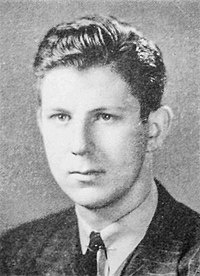
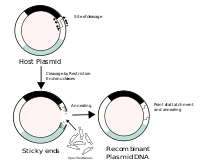
Stanley Cohen and Herbert Boyer successfully create the first recombinant DNA molecule, a significant breakthrough in genetic engineering and biotechnology.
Image source: Recombinant DNA
Or browse the full history timeline directory, with more than 2,500 topics.
This History of Psychology timeline was generated with the help of AI, using information found on the internet.
We work hard to keep these timelines accurate, but mistakes do get through. If you spot one, email us at [email protected] and we'll fix it for future visitors.
Generate yours with AI or build it from scratch, for free.
Export your timeline, add your own events, edit or remove AI-generated events, and much more
No credit card required.
Cancel anytime.
Cancel anytime.
You can create an unlimited number of timelines with up to 10 events on each one, customize how they look, export them to PDF, PNG, PowerPoint, CSV, and Excel, and share them with a link. Paid plans raise the event limit and add features like spreadsheet imports and collaborators.
Yes. You can cancel your subscription from your account page at any time, and you will not be charged again. Your subscription stays active for the rest of the period you already paid for.
Yes. We will email you a reminder before the annual renewal, and we will also email you a receipt.
Yes. You can email us within 15 days of any payment, and we will issue you a full refund.
Check out our pricing docs or send us an email anytime: [email protected].