-
Use Cases
-
Resources
-
Pricing
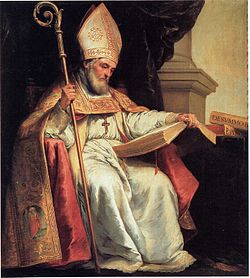
Thomas Aquinas was an Italian Dominican friar, philosopher, and theologian widely regarded as one of the most influential thinkers in Western history. He synthesized Aristotelian philosophy with Christian theology, producing landmark works such as the Summa Theologiae. His teachings, known as Thomism, continue to shape Catholic doctrine and scholastic philosophy today. More Less
1225
% complete
Thomas Aquinas was most likely born in the family castle of Roccasecca, near Aquino, controlled at that time by the Kingdom of Sicily (in present-day Lazio, Italy), around 1225.
Image source: Thomas Aquinas
1239
% complete
After the military conflict between Frederick II and Pope Gregory IX spilled into the abbey in early 1239, Landulf and Theodora had Thomas enrolled at the studium generale in Naples (known today as the University of Naples Federico II).
Image source: University of Naples Federico II
1244
% complete
By 1244, seeing that all her attempts to dissuade Thomas had failed, Theodora sought to save the family's dignity, arranging for Thomas to escape at night through a window.
1245
% complete
In 1245, Thomas was sent to study at the Faculty of the Arts at the University of Paris, where he most likely met Dominican scholar Albertus Magnus, then the holder of the Chair of Theology at the College of St.
1248
% complete
When Albertus was sent by his superiors to teach at the new studium generale at Cologne, in 1248, Thomas followed him, declining Pope Innocent IV's offer to appoint him abbot of Monte Cassino as a Dominican.
Image source: Albertus Magnus
1252
% complete
In 1252, Thomas returned to Paris to study for a master's degree in theology.
1252 - 1257
% complete
From 1252 to 1257, Thomas lived and worked with Saint Bonaventure of Bagnoregio, of whom he became a fraternal friend.
Image source: Bonaventure
1273
% complete
He preached to the people of Naples every day in Lent of 1273. It is traditionally held that on one occasion, in 1273, at the Dominican convent of Naples in the chapel of Saint Nicholas, Thomas was said by the sacristan Domenic of Caserta to be levitating in prayer with tears before an icon of the crucified Christ.
Dec 6, 1273
% complete
On 6 December 1273, another mystical experience reportedly took place, after which Thomas ceased writing, leaving his Summa Theologiae unfinished.
1255
% complete
In 1255, along with Saint Bonaventure, Thomas was involved in the dispute between secular masters and masters of the mendicant orders, with the former contesting the right to teach at the University of Paris.
1256
% complete
In early 1256, Thomas was appointed by direct intervention of Pope Alexander IV as regent master in theology at Paris. One of his first works upon assuming this office was Contra impugnantes Dei cultum et religionem, a defense of the mendicant orders, which had come under attack by William of Saint-Amour.
1256 - 1259
% complete
During his tenure from 1256 to 1259, Thomas wrote numerous works, including Quaestiones Disputatae de Veritate, Quaestiones quodlibetales, and commentaries on Boethius's De trinitate and De hebdomadibus.
1259
% complete
In 1259 Thomas completed his first regency at the studium generale and left Paris so that others in his order could gain this teaching experience.
1259 - 1265
% complete
Among Thomas's body of work is the Summa contra Gentiles (1259–1265), along with the Disputed Questions on Truth (1256–1259) and numerous commentaries on Christian Scripture and on Aristotle.
Image source: Summa contra Gentiles
Sep 29, 1260
% complete
He returned to Naples where he was appointed as general preacher by the provincial chapter of 29 September 1260.
Sep 1261
% complete
In September 1261 he was called to Orvieto as conventual lector, where he was responsible for the pastoral formation of the friars unable to attend a studium generale.
Image source: Orvieto
1265 - 1274
% complete
Thomas's best-known work is the unfinished Summa Theologica, or Summa Theologiae (1265–1274), which is a comprehensive guide to the theology of the Catholic Church.
Image source: Summa Theologica
1265 - 1268
% complete
This same year, he was ordered by the Dominican Chapter of Anagni to teach at the studium conventuale at the Roman convent of Santa Sabina, founded in 1222. He remained there until he was called back to Paris in 1268.
Image source: Santa Sabina
Feb 1265
% complete
In February 1265, the newly elected Pope Clement IV summoned Thomas to Rome to serve as papal theologian.
Image source: Pope Clement IV
1266
% complete
A year before Thomas re-assumed the regency at the 1266–67 Paris disputations, Franciscan master William of Baglione accused Thomas of encouraging Averroists, most likely counting him as one of the 'blind leaders of the blind'.
1268 - 1272
% complete
In 1268, the Dominican Order assigned Thomas to be regent master at the University of Paris for a second time, a position he held until early 1272. In November 1268, he left Viterbo with his associate and secretary Reginald of Piperno on their way to Paris.
1269 - 1272
% complete
Thomas Aquinas's thought on evil draws on an Augustinian inheritance that he systematises through the sixteen Quaestiones disputatae de malo (Paris, 1269–1272) and the corresponding articles of the Summa Theologiae.
Image source: List of works by Thomas Aquinas
1270 - 1272
% complete
In what appears to be an attempt to counteract the growing fear of Aristotelian thought, Thomas conducted a series of disputations between 1270 and 1272: De virtutibus in communi, De virtutibus cardinalibus, and De spe.
Dec 10, 1270
% complete
On 10 December 1270, the Bishop of Paris, Étienne Tempier, issued an edict condemning thirteen Aristotelian and Averroistic propositions as heretical and excommunicating anyone who continued to support them.
1272
% complete
In 1272, Thomas took leave from the University of Paris when the Dominicans from his home province called upon him to establish a studium generale wherever he liked and staff it as he pleased.
1274
% complete
In 1274, Pope Gregory X summoned Thomas to attend the Second Council of Lyon. The council was to open 1 May 1274, and it was Gregory's attempt to try to heal the Great Schism of 1054, which had divided the Catholic Church in the West from the Eastern Orthodox Church.
Mar 7, 1274
% complete
Thomas died on 7 March 1274 while giving commentary on the Song of Songs.
Jul 18, 1323
% complete
Fifty years after Thomas's death, on 18 July 1323, Pope John XXII, seated in Avignon, pronounced Thomas a saint.
Image source: Pope John XXII
Jan 28, 1369
% complete
His remains were translated from Fossanova to the Church of the Jacobins in Toulouse, France, on 28 January 1369.
Image source: Church of the Jacobins
Apr 15, 1567
% complete
Pope Pius V declared Thomas Aquinas a Doctor of the Church on 15 April 1567 with the Papal bull Mirabilis Deus, and ranked his feast with those of the four great Latin fathers: Ambrose, Augustine of Hippo, Jerome and Pope Gregory I. This happened within the historical timeframe of the 'second scholasticism', a trend during the 16th and 17th centuries.
Image source: Doctor of the Church
1789 - 1974
% complete
Between 1789 and 1974 Thomas's remains were held in the Basilica of Saint-Sernin. In 1974 they were returned to the Church of the Jacobins, where they have remained ever since.
Image source: Basilica of Saint-Sernin, Toulouse
1969
% complete
Since this date commonly falls within Lent, the 1969 revision of the calendar moved his memorial to 28 January, the date of the translation of his relics to the Church of the Jacobins, Toulouse.
Image source: General Roman Calendar
1277
% complete
In 1277, Étienne Tempier, the same bishop of Paris who had issued the condemnation of 1270, issued another, more extensive, condemnation.
Image source: Condemnations of 1210–1277
1321
% complete
In the Divine Comedy (completed c. 1321), Dante Alighieri sees the glorified soul of Thomas in the Heaven of the Sun with the other great exemplars of religious wisdom.
Image source: Divine Comedy
1486
% complete
The famous 15th-century witch-hunter's manual, the Malleus Maleficarum, also written by a member of the Dominican Order, begins by quoting Thomas Aquinas refuting the Episcopi and goes on to cite Thomas Aquinas over a hundred times.
Image source: Malleus Maleficarum
1570
% complete
The first edition of Thomas's complete works, the so-called editio Piana (from Pius V, the Pope who commissioned it), was produced in 1570 at the studium of the Roman convent at Santa Maria sopra Minerva, the forerunner of the Pontifical University of Saint Thomas Aquinas, Angelicum.
Image source: Pontifical University of Saint Thomas Aquinas
1801 - 1900
% complete
During the 19th century, a movement that came to be known as neo-scholasticism revived Catholic scholarly interest in scholasticism generally and Thomas in particular, as well as the work of the Thomists of second scholasticism.
Image source: Neo-scholasticism
1840
% complete
'Social justice' is a term that arose in the 19th century in the writings of Luigi Taparelli, and it was his term for the reality Thomas Aquinas called 'legal justice' or 'general justice'.
Image source: Luigi Taparelli
1872
% complete
Abbé Migne published an edition of the Summa Theologiae, in four volumes, as an appendix to his Patrologiae Cursus Completus; English editions followed, including Joseph Rickaby's in 1872.
Image source: Joseph Rickaby
1879
% complete
This movement was given papal support in Aeterni Patris, the 1879 encyclical by Pope Leo XIII stating that Thomas's theology was a definitive exposition of Catholic doctrine. That same year, Leo XIII instituted the Pontifical Academy of Saint Thomas Aquinas, putting into practice Aeterni Patris' recommendations.
Image source: Aeterni Patris
1880
% complete
In 1880 Thomas was declared the patron saint of all Catholic educational establishments.
1882 - 1930
% complete
Critical editions of Thomas's works include his commentaries on Aristotle's On Interpretation and Posterior Analytics, prepared by Thomas Maria Zigliara, in the first volume (1882), the Summa Theologiae in nine volumes from 1888 to 1906, and the Summa contra Gentiles in three volumes from 1918 to 1930.
1898
% complete
Girolamo Maria Mancini, professor of theology at the Collegium Divi Thomae de Urbe, published Thomae Aquinatis doctoris angelici in 1898.
Image source: Thomas Aquinas
1907
% complete
In Pascendi Dominici gregis, the 1907 encyclical by Pope Pius X, the Pope said professors cannot set St. Thomas aside, especially in metaphysical questions, without grave detriment.
Image source: Pascendi Dominici gregis
Sep 1, 1910
% complete
On 1 September 1910 Pius X addressed the letter Sacrorum Antistitum to all bishops and teachers of religious orders, by which he decreed that the Scholastic philosophy of Thomas was to be established as the foundation of sacred studies for young clerics.
Image source: Oath Against Modernism
1914
% complete
Pius X's 1914 decree Postquam sanctissimus gave further Vatican endorsement to 24 specific neo-scholastic theses of 'Official Catholic Philosophy' understood to be rooted in Thomism.
Image source: Integralism
1920 - 1960
% complete
In response to neo-scholasticism, Catholic scholars who were more sympathetic to modernity gained influence during the early 20th century in the nouvelle théologie movement (meaning 'new theology').
1921
% complete
General Catholic appreciation for Thomas remained strong in the 20th century, as seen in the praise offered by Pope Benedict XV's 1921 encyclical Fausto Appetente Die.
1951
% complete
Erwin Panofsky later would echo these views in Gothic Architecture and Scholasticism (1951).
Image source: Erwin Panofsky
1956
% complete
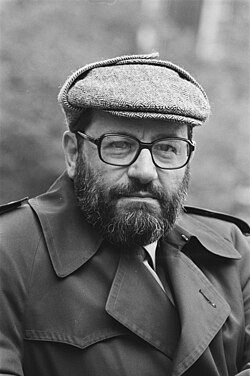
The influence of Thomas's aesthetics can also be found in the works of the Italian semiotician Umberto Eco, who wrote an essay on aesthetic ideas in Thomas (published in 1956 and republished in 1988 in a revised edition).
Image source: Umberto Eco
1957
% complete
Through the work of twentieth-century philosophers such as Elizabeth Anscombe (especially in her book Intention), Thomas's principle of double effect specifically and his theory of intentional activity generally have been influential.
Image source: G. E. M. Anscombe
Nov 20, 1974
% complete
On 20 November 1974, Paul VI wrote the apostolic letter Lumen ecclesiae, inviting the Dominicans to return to the source and rediscover the true doctrine of Thomas.
Image source: Lumen gentium
1997
% complete
With 70 quotations, predominantly in the field of Catholic liturgy, Thomas is one of the most frequently cited authors of the 1997 Catechism of the Catholic Church.
Image source: Catechism of the Catholic Church
1998
% complete
Similarly, Pope John Paul II's 1998 encyclical Fides et ratio praised Thomas, continuing the long tradition of papal appreciation for his thought.
Image source: Fides et ratio
Or browse the full history timeline directory, with more than 2,000 topics.
This Thomas Aquinas timeline was generated with the help of AI, using information found on the internet.
We work hard to keep these timelines accurate, but mistakes do get through. If you spot one, email us at [email protected] and we'll fix it for future visitors.
Generate yours with AI or build it from scratch, for free.
Export your timeline, add your own events, edit or remove AI-generated events, and much more
No credit card required.
Cancel anytime.
Cancel anytime.
You can create an unlimited number of timelines with up to 10 events on each one, customize how they look, export them to PDF, PNG, PowerPoint, CSV, and Excel, and share them with a link. Paid plans raise the event limit and add features like spreadsheet imports and collaborators.
Yes. You can cancel your subscription from your account page at any time, and you will not be charged again. Your subscription stays active for the rest of the period you already paid for.
Yes. We will email you a reminder before the annual renewal, and we will also email you a receipt.
Yes. You can email us within 15 days of any payment, and we will issue you a full refund.
Check out our pricing docs or send us an email anytime: [email protected].