-
Use Cases
-
Resources
-
Pricing
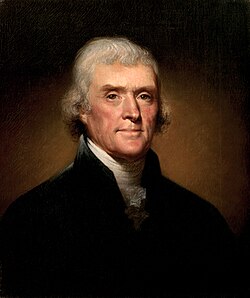
Thomas Jefferson (1743–1826) was an American Founding Father, principal author of the Declaration of Independence, third President of the United States, and founder of the University of Virginia. His advocacy for liberty, religious freedom, and westward expansion profoundly shaped the young American nation, though his legacy remains complex due to his ownership of enslaved people. More Less
Apr 13, 1743
% complete
Thomas Jefferson was born on April 13, 1743, at Shadwell plantation in colonial Virginia. He was the third of ten children born to Peter Jefferson, a planter and surveyor, and Jane Randolph Jefferson, who belonged to one of Virginia's most prominent families.
Image source: Thomas Jefferson
Mar 25, 1760
% complete
At age 16, Jefferson enrolled at the College of William & Mary in Williamsburg, Virginia, where he studied mathematics, metaphysics, and philosophy under Professor William Small, who greatly influenced his intellectual development.
1762
% complete
After graduating, Jefferson read law under the prominent lawyer and teacher George Wythe for five years, gaining admission to the Virginia bar in 1767 and establishing himself as one of the most learned lawyers in the colonies.
Image source: George Wythe
1768
% complete
Jefferson began designing and building Monticello, his mountaintop home near Charlottesville, Virginia. The neoclassical estate, which he continued to modify throughout his life, reflected his passion for architecture and became an enduring symbol of his legacy.
Image source: Monticello
Jan 1, 1772
% complete
Jefferson married Martha Wayles Skelton, a wealthy widow, on January 1, 1772. The couple had six children, though only two daughters survived to adulthood. Martha's death in 1782 deeply affected Jefferson, who never remarried.
Image source: Martha Jefferson
Sep 6, 1782
% complete
Martha Jefferson died at Monticello after complications following childbirth. Grief-stricken, Jefferson reportedly burned their correspondence and withdrew into mourning, never remarrying during the remaining four decades of his life.
1785
% complete
Jefferson published Notes on the State of Virginia, his only full-length book, covering Virginia's natural resources, society, and government. The work showcased his scientific interests but also contained controversial views on race that continue to be debated.
Image source: Notes on the State of Virginia
May 11, 1769
% complete
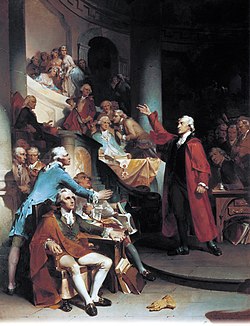
Jefferson began his political career when he was elected to the Virginia House of Burgesses in 1769, where he served alongside figures like Patrick Henry and George Washington and grew increasingly opposed to British colonial policies.
Image source: House of Burgesses
Aug 1, 1774
% complete
Jefferson published A Summary View of the Rights of British America, a pamphlet arguing that the colonists possessed natural rights independent of Parliament. The work established his reputation as a powerful voice for American rights.
Jun 11, 1776 - Jul 4, 1776
% complete
As a member of the Second Continental Congress, the 33-year-old Jefferson was chosen to draft the Declaration of Independence. His eloquent articulation of natural rights, including 'life, liberty, and the pursuit of happiness,' became the defining statement of American ideals.
Image source: United States Declaration of Independence
Oct 7, 1776
% complete
Returning from Congress, Jefferson served in the Virginia House of Delegates, where he spearheaded reforms including the Virginia Statute for Religious Freedom, disestablishment of the Anglican Church, and abolition of primogeniture and entails.
Image source: Virginia House of Delegates
Jun 1, 1779 - Jun 12, 1781
% complete
Jefferson served two terms as wartime governor of Virginia. His tenure was marred by the British invasion led by Benedict Arnold and Cornwallis, and Jefferson narrowly escaped capture at Monticello by British cavalry in June 1781.
Image source: Governor of Virginia
Aug 17, 1784 - Sep 26, 1789
% complete
Jefferson succeeded Benjamin Franklin as U.S. Minister to France, arriving in Paris in 1785. He witnessed the early stages of the French Revolution and developed a lasting affinity for French culture and ideas about liberty.
Image source: List of ambassadors of the United States to France
Sep 26, 1789 - Dec 31, 1793
% complete
President George Washington appointed Jefferson as the nation's first Secretary of State. In this role, he clashed with Treasury Secretary Alexander Hamilton over fiscal policy, foreign affairs, and the scope of federal power, laying groundwork for America's first party system.
Image source: United States Secretary of State
1792
% complete
Jefferson and James Madison founded the Democratic-Republican Party in opposition to Hamilton's Federalists, championing agrarian interests, states' rights, strict constitutional construction, and sympathy with revolutionary France.
Image source: Democratic-Republican Party
Mar 4, 1797 - Mar 4, 1801
% complete
As runner-up to John Adams in the 1796 election, Jefferson became Vice President under his rival. During his term, he anonymously wrote the Kentucky Resolutions asserting states' rights and opposed the Alien and Sedition Acts.
Image source: Vice President of the United States
Dec 3, 1800 - Feb 17, 1801
% complete
Jefferson defeated incumbent John Adams in a contentious election that resulted in an electoral tie with Aaron Burr, resolved by the House of Representatives after 36 ballots. Jefferson called it the 'Revolution of 1800,' marking the first peaceful transfer of power between parties.
Image source: 1800 United States presidential election
Mar 4, 1801
% complete
Jefferson was inaugurated as the third President of the United States in Washington, D.C. In his address, he famously declared 'We are all Republicans, we are all Federalists,' pledging reconciliation after bitter partisan conflict.
Jun 10, 1801 - Jun 10, 1805
% complete
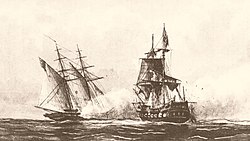
Jefferson refused to continue paying tribute to the Barbary states of North Africa, leading to war with Tripoli. The conflict ended with a treaty favorable to the United States and demonstrated the new nation's willingness to project naval power abroad.
Image source: First Barbary War
Apr 30, 1803
% complete
Jefferson's administration purchased the Louisiana Territory from France for $15 million, roughly doubling the size of the United States and securing control of the Mississippi River and New Orleans, one of the most consequential land deals in history.
Image source: Louisiana Purchase
May 14, 1804 - Sep 23, 1806
% complete
Meriwether Lewis and William Clark set out from Camp Dubois to explore the Louisiana Territory and find a route to the Pacific Ocean. Jefferson commissioned the expedition, which returned with invaluable maps, specimens, and knowledge of the West.
Image source: Lewis and Clark Expedition
Mar 4, 1805
% complete
Jefferson won re-election overwhelmingly in 1804, carrying every state except Connecticut and Delaware, and delivered his second inaugural address emphasizing peace, prosperity, and reduced national debt.
Image source: Second inauguration of Thomas Jefferson
Dec 22, 1807 - Mar 1, 1809
% complete
In response to British and French interference with American shipping during the Napoleonic Wars, Jefferson signed the Embargo Act prohibiting all foreign trade. The policy devastated the American economy and proved deeply unpopular.
Image source: Embargo Act of 1807
Mar 4, 1809
% complete
Jefferson completed two terms and retired to Monticello, handing the presidency to his protégé James Madison. He left office having doubled the nation's territory while facing criticism over the failed embargo policy.
Jan 1, 1812 - Jul 4, 1826
% complete
Encouraged by Benjamin Rush, Jefferson renewed friendship with former rival John Adams through a remarkable exchange of letters covering politics, religion, philosophy, and history, producing some of the finest political correspondence in American letters.
Image source: Relationship of Alexander Hamilton and Thomas Jefferson
Jan 30, 1815
% complete
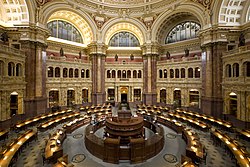
Facing financial difficulties, Jefferson sold his personal library of nearly 6,500 volumes to Congress to replace books destroyed when the British burned Washington in 1814, forming the foundation of the modern Library of Congress.
Image source: Library of Congress
Jan 25, 1819 - Mar 7, 1825
% complete
One of Jefferson's proudest achievements was founding the University of Virginia at Charlottesville. He designed its buildings and curriculum, insisted on religious freedom in admissions, and considered it among his three greatest accomplishments.
Image source: University of Virginia
Apr 22, 1820
% complete
Observing the Missouri Compromise crisis, Jefferson wrote that the slavery question alarmed him 'like a fire bell in the night,' warning that the sectional dispute over slavery threatened the survival of the Union.
Image source: Missouri Compromise
Jul 4, 1826
% complete
Thomas Jefferson died at Monticello on July 4, 1826, the 50th anniversary of the Declaration of Independence, hours before John Adams died the same day. His gravestone listed his authorship of the Declaration and the Virginia Statute for Religious Freedom, and his founding of the University of Virginia.
Image source: Thomas Jefferson
Or browse the full history timeline directory, with more than 2,000 topics.
This Thomas Jefferson timeline was generated with the help of AI, using information found on the internet.
We work hard to keep these timelines accurate, but mistakes do get through. If you spot one, email us at [email protected] and we'll fix it for future visitors.
Generate yours with AI or build it from scratch, for free.
Export your timeline, add your own events, edit or remove AI-generated events, and much more
No credit card required.
Cancel anytime.
Cancel anytime.
You can create an unlimited number of timelines with up to 10 events on each one, customize how they look, export them to PDF, PNG, PowerPoint, CSV, and Excel, and share them with a link. Paid plans raise the event limit and add features like spreadsheet imports and collaborators.
Yes. You can cancel your subscription from your account page at any time, and you will not be charged again. Your subscription stays active for the rest of the period you already paid for.
Yes. We will email you a reminder before the annual renewal, and we will also email you a receipt.
Yes. You can email us within 15 days of any payment, and we will issue you a full refund.
Check out our pricing docs or send us an email anytime: [email protected].