-
Use Cases
-
Resources
-
Pricing
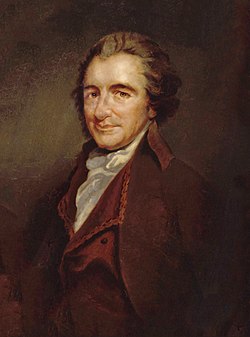
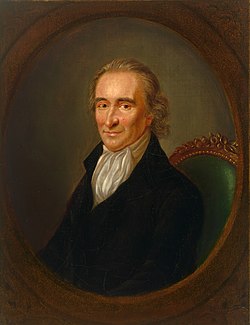
Thomas Paine (1737-1809) was an English-born American political activist, philosopher, and revolutionary whose pamphlets, including Common Sense and The American Crisis, were instrumental in inspiring the American Revolution. He later wrote Rights of Man in defense of the French Revolution and The Age of Reason, advocating deism. More Less
1750
% complete
Paine apprenticed under his father as a staymaker (corset maker), learning the trade that he would practice intermittently throughout his early adult years.
1756
% complete
Paine served for a short period aboard the privateer ship King of Prussia during the Seven Years' War, an adventurous episode in his otherwise modest early career.
1768
% complete
Paine was appointed an excise officer collecting taxes on goods in Lewes, Sussex, where he became involved in local politics and debate clubs, honing his skills as a writer and agitator.
Image source: Excise
1774
% complete
After lobbying Parliament for better pay for excise officers, Paine was dismissed from his post. Bankrupt and separated from his wife, he decided to seek a new life in America with a letter of introduction from Benjamin Franklin.
Image source: Thomas Paine
Nov 30, 1774
% complete
Seriously ill during the voyage, Paine arrived in Philadelphia carrying letters of recommendation from Benjamin Franklin. He soon found work editing Pennsylvania Magazine and immersed himself in colonial political life.
Image source: Common Sense
1776
% complete
During the Revolutionary War campaign, Paine accompanied General Nathanael Greene's forces and witnessed the retreat across New Jersey, experiences that inspired his American Crisis writings.
Image source: Nathanael Greene
Jan 10, 1776
% complete
Paine's pamphlet Common Sense argued forcefully for American independence from Britain in plain language accessible to ordinary colonists. It sold hundreds of thousands of copies and dramatically shifted public opinion toward independence.
Dec 19, 1776 - 1783
% complete
Beginning with the famous words 'These are the times that try men's souls,' Paine's Crisis papers bolstered Continental Army morale during the darkest days of the Revolutionary War. George Washington had the first essay read aloud to his troops at Valley Forge.
Image source: The American Crisis
Apr 17, 1777
% complete
The Continental Congress appointed Paine secretary to the Committee on Foreign Affairs, though he was later forced to resign after publishing confidential information about French aid negotiations.
Image source: Committee of Secret Correspondence
Dec 30, 1780
% complete
In Public Good, Paine attacked claims by Virginia and speculators over western lands, defending the rights of settlers in territories claimed by states, demonstrating his consistent concern for ordinary people's interests.
Image source: Public good
Aug 26, 1785
% complete
In recognition of his wartime contributions, the Continental Congress awarded Paine $3,000, and New York State gave him a farm at New Rochelle, providing him some financial security.
1786
% complete
An enthusiastic inventor, Paine designed a single-arch iron bridge and promoted it on both sides of the Atlantic, traveling to Europe in 1787 to seek support for its construction.
Apr 1787
% complete
Paine traveled to London and Paris to promote his bridge design, but became increasingly drawn into European political affairs, meeting leading reformers and radicals in Britain and France.
Jul 14, 1789
% complete
Paine was in Paris around the outbreak of the French Revolution, supported by the Marquis de Lafayette. He observed the revolutionary fervor firsthand and engaged with French reformers.
Image source: French Revolution
Nov 1, 1790
% complete
Edmund Burke published Reflections on the Revolution in France, condemning the revolution. Burke's attack on the revolution and on Paine's friend Lafayette provoked Paine into writing a lengthy reply.
Image source: Reflections on the Revolution in France
Mar 13, 1791
% complete
Paine's Rights of Man defended the French Revolution against Burke's critique and articulated principles of natural rights, popular sovereignty, and republican government. It became an immediate bestseller despite being banned in Britain.
Feb 16, 1792
% complete
Part II proposed progressive taxation, old-age pensions, and public education, making Paine one of the earliest advocates of welfare-state ideas. Its radicalism alarmed the British government.
Image source: Rights of Man
Sep 1792
% complete
Despite speaking little French, Paine was elected to the National Convention by four departments and chose to represent Calais. He participated in drafting debates over France's new constitution.
Image source: National Convention
Sep 13, 1792
% complete
Warned by William Blake that he faced arrest, Paine fled to France just before the British government issued a warrant for his arrest. He was convicted in absentia and outlawed from returning to Britain.
Jan 15, 1793
% complete
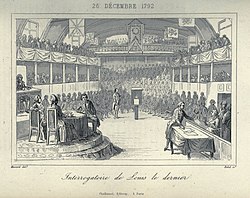
In a controversial speech before the National Convention, Paine argued against the death penalty for King Louis XVI, suggesting banishment instead. His mercy stance alienated Jacobin radicals like Robespierre and Marat.
Image source: Trial of Louis XVI
Dec 28, 1793
% complete
Because he was born in Britain, Paine was arrested as a foreign national under the Law of Suspects and imprisoned in Luxembourg Palace in Paris, where he nearly died during the height of the Terror.
Image source: Reign of Terror
Nov 4, 1794
% complete
American minister James Monroe intervened, arguing Paine was entitled to US citizenship protections. After Robespierre's fall, Paine was released from prison, though his health had been severely damaged.
Image source: James Monroe
1797
% complete
In this influential pamphlet, Paine argued that landowners owed compensation to those dispossessed by the institution of private property, proposing a fund financed by inheritance taxes to provide universal payments and pensions.
Image source: Agrarian Justice
1794 - 1807
% complete
Written partly in prison, The Age of Reason advocated deism and criticized institutional religion and revealed religion generally. It made Paine notorious among devout Christians and damaged his reputation in the United States.
Image source: The Age of Reason
Oct 30, 1802
% complete
Invited back by Thomas Jefferson, Paine returned to the United States after fifteen years abroad, settling first in Bordentown, New Jersey, near his old friend and patron Colonel John Kirkbride.
Jul 31, 1803
% complete
Returning to America, Paine published a letter accusing John Adams of wanting to be king and of plotting war with France, further estranging Federalists and contributing to Adams's electoral defeat in 1800.
Jun 8, 1809
% complete
Paine died impoverished at 59 Grove Street in Greenwich Village, largely ostracized due to his religious writings. Only six people attended his funeral, including his friend Margaret Brazier Bonneville.
Sep 1819
% complete
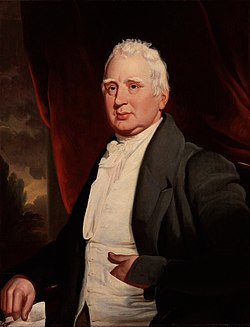
Ten years after his death, English radical journalist William Cobbett dug up Paine's remains and shipped them to England intending a heroic reburial, but the plan failed and the bones were ultimately lost.
Image source: William Cobbett
Oct 15, 1839
% complete
A monument honoring Paine was dedicated at New Rochelle, New York, marking the beginning of his gradual rehabilitation in American memory as a founder whose writings shaped both American independence and democratic ideals worldwide.
Image source: Thomas Paine Cottage
Or browse the full history timeline directory, with more than 2,000 topics.
This Thomas Paine timeline was generated with the help of AI, using information found on the internet.
We work hard to keep these timelines accurate, but mistakes do get through. If you spot one, email us at [email protected] and we'll fix it for future visitors.
Generate yours with AI or build it from scratch, for free.
Export your timeline, add your own events, edit or remove AI-generated events, and much more
No credit card required.
Cancel anytime.
Cancel anytime.
You can create an unlimited number of timelines with up to 10 events on each one, customize how they look, export them to PDF, PNG, PowerPoint, CSV, and Excel, and share them with a link. Paid plans raise the event limit and add features like spreadsheet imports and collaborators.
Yes. You can cancel your subscription from your account page at any time, and you will not be charged again. Your subscription stays active for the rest of the period you already paid for.
Yes. We will email you a reminder before the annual renewal, and we will also email you a receipt.
Yes. You can email us within 15 days of any payment, and we will issue you a full refund.
Check out our pricing docs or send us an email anytime: [email protected].