-
Use Cases
-
Resources
-
Pricing
The Eiffel Tower is a wrought-iron lattice tower in Paris, France, designed by Gustave Eiffel's engineering company for the 1889 Exposition Universelle (World's Fair). Standing 330 meters tall, it was the world's tallest structure until 1930 and remains one of the most visited paid monuments in the world, symbolizing French culture and engineering innovation. More Less
May 1884
% complete
In May 1884, working at home, Maurice Koechlin made a sketch of his idea, described as 'a great pylon, consisting of four lattice girders standing apart at the base and coming together at the top, joined together by metal trusses at regular intervals.'
Image source: Eiffel Tower
Mar 30, 1885
% complete
On 30 March 1885, Eiffel presented his plans to the Société des Ingénieurs Civils, discussing technical problems and emphasising practical uses, saying the tower would symbolise not only the art of the modern engineer but also the century of Industry and Science.
1886
% complete
Little progress was made until 1886, when Jules Grévy was re-elected as president of France and Édouard Lockroy was appointed as minister for trade, giving new momentum to the project for the 1889 Exposition Universelle.
Jan 8, 1887
% complete
After some debate about the exact location of the tower, a contract was signed on 8 January 1887. The deadline for bids was extended, but no French companies put themselves forward, and eventually the lift contract was given to Otis in July 1887.
Jan 28, 1887
% complete
Work on the foundations started on 28 January 1887. The tower was constructed by Eiffel's company from 1887 to 1889 as the centrepiece of the 1889 World's Fair, celebrating the centennial of the French Revolution.
Mar 31, 1888
% complete
The critical stage of joining the four legs at the first level was completed by the end of March 1888, a major milestone in the tower's assembly.
Mar 31, 1889
% complete
The main structural work was completed at the end of March 1889 and, on 31 March, Eiffel celebrated by leading a group of government officials, accompanied by representatives of the press, to the top of the tower.
Sep 10, 1889
% complete
Thomas Edison signed the guestbook with a message praising 'M Eiffel the Engineer the brave builder of so gigantic and original specimen of modern Engineering,' expressing his respect and admiration for all engineers.
1889
% complete
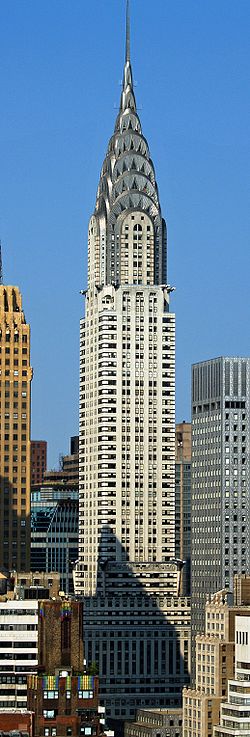
During its construction, the Eiffel Tower surpassed the Washington Monument to become by far the tallest human-made structure in the world, a title it held for 41 years until the Chrysler Building in New York City was finished in 1930.
1889
% complete
The mayor of Blackpool, Sir John Bickerstaffe, was so impressed on seeing the Eiffel Tower at the 1889 exposition that he commissioned a similar tower to be built in his town. It opened in 1894 and is 158.1 m (519 ft) tall.
Image source: Blackpool Tower
1930
% complete
In 1930, the tower lost the title of the world's tallest structure when the Chrysler Building in New York City was completed. However, due to a broadcasting aerial added in 1957, it is now taller than the Chrysler Building by 11 metres (36 ft).
Image source: Chrysler Building
1958
% complete
Tokyo Tower in Japan, built as a communications tower in 1958, was also inspired by the Eiffel Tower. That year the Eiffel Tower lost its standing as the world's tallest tower to Tokyo Tower but retains its status as the tallest freestanding structure in France.
Image source: Tokyo Tower
Jun 1990
% complete
In June 1990, a French court ruled that a special lighting display on the tower in 1989 to mark its 100th anniversary was an 'original visual creation' protected by copyright. The Court of Cassation upheld the ruling in March 1992. The author, Pierre Bideau, died in 2021, making the display under artistic copyright until 2092.
1991
% complete
In 1991, the Eiffel Tower was named part of a UNESCO World Heritage Site ('Paris, Banks of the Seine').
Image source: Paris
Nov 28, 2002
% complete
The tower received its 200,000,000th guest on 28 November 2002. More than 300 million people have visited the tower since it was completed in 1889.
2022
% complete
The tower received 5,889,000 visitors in 2022, having received 6.91 million in 2015 — the most visited monument with an entrance fee in the world. Following the 2024 Summer Olympics held in Paris, Mayor Anne Hidalgo proposed keeping the Olympic rings on the tower permanently.
1900
% complete
For the 1900 Exposition Universelle, the lifts in the east and west legs were replaced by lifts running as far as the second level constructed by the French firm Fives-Lille.
Oct 19, 1901
% complete
On 19 October 1901, Alberto Santos-Dumont, flying his No.6 airship, won a 100,000-franc prize offered by Henri Deutsch de la Meurthe for the first person to make a flight from Saint-Cloud around the Eiffel Tower and back.
Image source: Alberto Santos-Dumont
1909
% complete
In 1909, a permanent underground radio centre was built near the south pillar, which still exists today. The tower has been used for making radio transmissions since the beginning of the 20th century.
1910
% complete
Following the expiration of the original concession, the tower was permitted to remain, becoming an integral part of the International Time Service in 1910. From 1910, astronomical clocks of the Paris Observatory sent time signals daily through the tower within a radius of 5,000 km.
Image source: International Bureau of Weights and Measures
1910
% complete
In 1910, Father Theodor Wulf measured radiant energy at the top and bottom of the tower, contributing to early research into cosmic rays.
Image source: Theodor Wulf
Feb 4, 1912
% complete
On 4 February 1912, Austrian tailor Franz Reichelt died after jumping from the first level of the tower (a height of 57 m) to demonstrate his parachute design.
Image source: Franz Reichelt
Nov 20, 1913
% complete
On 20 November 1913, the Paris Observatory, using the Eiffel Tower as an aerial, exchanged wireless signals with the United States Naval Observatory, which used an aerial in Arlington County, Virginia.
Image source: Paris Observatory
1925
% complete
On two separate but related occasions in 1925, the con artist Victor Lustig 'sold' the tower for scrap metal in one of history's most famous confidence tricks.
Image source: Victor Lustig
1925 - 1934
% complete
From 1925 to 1934, illuminated signs for Citroën adorned three of the tower's sides, making it the tallest advertising space in the world at the time.
Image source: Citroën
Feb 1926
% complete
A year after Lustig's scams, in February 1926, pilot Leon Collet was killed trying to fly under the tower.
May 2, 1929
% complete
A bust of Gustave Eiffel by Antoine Bourdelle was unveiled at the base of the north leg on 2 May 1929.
Image source: Antoine Bourdelle
Apr 1935
% complete
In April 1935, the tower was used to make experimental low-resolution television transmissions, using a shortwave transmitter of 200 watts power.
1938
% complete
In 1938, the decorative arcade around the first level was removed.
1914
% complete
At the outbreak of World War I in 1914, a radio transmitter located in the tower jammed German radio communications, seriously hindering their advance on Paris and contributing to the Allied victory at the First Battle of the Marne.
Image source: First Battle of the Marne
1917
% complete
In 1917, the station intercepted a coded message between Germany and Spain that referenced 'Operative H-21.' This information contributed to the arrest, conviction, and execution of Mata Hari, the famous dancer accused of spying for Germany.
Image source: Mata Hari
1918
% complete
By 1918, the tower had become a symbol of Paris and of France after Guillaume Apollinaire wrote a nationalist poem in the shape of the tower (a calligram) to express his feelings about the war against Germany.
Image source: Guillaume Apollinaire
1940
% complete
Upon the German occupation of Paris in 1940, the lift cables were cut by the French. The tower was restricted to German visitors during the occupation and the lifts were not repaired until 1946.
1940
% complete
In 1940, German soldiers had to climb the tower to hoist a swastika-centred Reichskriegsflagge, but the flag was so large it blew away just a few hours later, and was replaced by a smaller one.
Aug 25, 1944
% complete
When the Allies neared Paris in August 1944, Hitler ordered General Dietrich von Choltitz to demolish the tower along with the rest of the city. On 25 August, before the Germans had been driven out, the German flag was replaced with a Tricolour by two men from the French Naval Museum, beating three men led by Lucien Sarniguet, who had lowered the Tricolour on 13 June 1940.
Image source: Liberation of Paris
Jan 3, 1956
% complete
A fire started in the television transmitter on 3 January 1956, damaging the top of the tower. Repairs took a year, and in 1957, the present radio aerial was added to the top.
1957
% complete
A television antenna was first installed on the tower in 1957, increasing its height by 18.7 m (61 ft). Work carried out in 2000 added a further 5.3 m (17 ft), giving a total height of 324 m (1,063 ft).
1964
% complete
In 1964, the Eiffel Tower was officially declared to be a historical monument by the Minister of Cultural Affairs, André Malraux.
Image source: Monument historique
1967
% complete
According to interviews, in 1967, Montreal Mayor Jean Drapeau negotiated a secret agreement with Charles de Gaulle for the tower to be dismantled and temporarily relocated to Montreal to serve as a landmark and tourist attraction during Expo 67.
Image source: Expo 67
1968
% complete
The tower was originally reddish brown; this changed in 1968 to a bronze colour known as 'Eiffel Tower Brown'. It has been completely repainted at least 19 times since it was built, most recently in 2010 when it was re-painted yellow-brown. Lead paint was used until 2001, when the practice was stopped out of environmental concern.
1982
% complete
In 1982, the original lifts between the second and third levels were replaced after 97 years in service. In 1983, the south pillar was fitted with an electrically driven Otis lift to serve the Jules Verne restaurant.
Mar 31, 1984
% complete
Robert Moriarty flew a Beechcraft Bonanza under the tower on 31 March 1984.
1986 - 1987
% complete
The engravings, painted over at the beginning of the 20th century, were restored in 1986–87 by the Société Nouvelle d'exploitation de la Tour Eiffel. The Fives-Lille lifts in the east and west legs, fitted in 1899, were extensively refurbished in 1986.
Oct 27, 1991
% complete
On 27 October 1991, Thierry Devaux, along with mountain guide Hervé Calvayrac, performed a series of acrobatic figures while bungee jumping from the second floor of the tower.
Image source: Bungee jumping
Dec 31, 1999
% complete
For its 'Countdown to the Year 2000' celebration on 31 December 1999, flashing lights and high-powered searchlights were installed on the tower. During the last three minutes of the year, the lights were turned on starting from the base and continuing to the top to welcome 2000 with a huge fireworks show. The lights sparkled blue for several nights to herald the new millennium.
Jun 21, 2003
% complete
The sparkling lights were turned on again on 21 June 2003, and the display was planned to last for 10 years before they needed replacing. An earlier sparkling display had continued for 18 months until July 2001.
2004
% complete
In 2004, the Eiffel Tower began hosting a seasonal ice rink on the first level. The tower has operated at its maximum capacity of about 7 million visitors per year since 2003.
Mar 31, 2005
% complete
Since 31 March 2005, digital terrestrial television (DTT) has been broadcast from the Eiffel Tower. Analogue television signals from the tower ceased on 8 March 2011.
2007 - 2017
% complete
The Jules Verne restaurant near the top of the tower was run by multi-Michelin star chef Alain Ducasse from 2007 to 2017. As of May 2019, it is managed by three-star chef Frédéric Anton. From 1937 until 1981, there had been a restaurant near the top of the tower.
Image source: Le Jules Verne
2014
% complete
A glass floor was installed on the first level during the 2014 refurbishment, offering visitors dramatic views down through the tower's iron lattice structure.
Or browse the full history timeline directory, with more than 2,000 topics.
This Eiffel Tower timeline was generated with the help of AI, using information found on the internet.
We work hard to keep these timelines accurate, but mistakes do get through. If you spot one, email us at [email protected] and we'll fix it for future visitors.
Generate yours with AI or build it from scratch, for free.
Export your timeline, add your own events, edit or remove AI-generated events, and much more
No credit card required.
Cancel anytime.
Cancel anytime.
You can create an unlimited number of timelines with up to 10 events on each one, customize how they look, export them to PDF, PNG, PowerPoint, CSV, and Excel, and share them with a link. Paid plans raise the event limit and add features like spreadsheet imports and collaborators.
Yes. You can cancel your subscription from your account page at any time, and you will not be charged again. Your subscription stays active for the rest of the period you already paid for.
Yes. We will email you a reminder before the annual renewal, and we will also email you a receipt.
Yes. You can email us within 15 days of any payment, and we will issue you a full refund.
Check out our pricing docs or send us an email anytime: [email protected].